પસંદ કરેલી કૃતિ · selected work
માધવ ક્યાંય નથી મધુવનમાં
Madhav Kyay Nathi Madhuvan Ma
Madhav Is Nowhere in the Grove
Harindra Dave, Geetkar · c. 1970
Krishna has left Vrindavan for Mathura, and the grove is still full of him — the flower tells the bee, the ripple tells the whirlpool, the kohl tells the eyes. A viraha song that measures divine absence not in cosmic grief but in the smallest human emptiness: a curd-pot no one bothers to break anymore.

માધવ ક્યાંય નથી મધુવનમાં !
ફૂલ કહે ભમરાને, ભમરો વાત વહે ગુંજનમાં……
માધવ ક્યાંય નથી.
કાલિંદીના જળ પર ઝૂકી પૂછે કદંબ ડાળી,
"યાદ તને, બેસી અહીં વેણુ વાતા'તા વનમાળી ?"
લહર વમળને કહે, વમળ એ વાત સ્મરે સ્પંદનમાં…
માધવ ક્યાંય નથી.
કોઈ ન માગે દાણ, કોઈની આણ ન વાટે ફરતી,
હવે કોઈ લજ્જાથી હસતાં રાવ કદી ક્યાં કરતી ?
નંદ કહે જશુમતીને, માતા વ્હાલ ઝરે લોચનમાં……
માધવ ક્યાંય નથી.
શિર પર ગોરસ મટુકી મારી વાટ ન કેમે ખૂટી,
અબ લગ કંકર એક ન વાગ્યો ગયાં ભાગ્ય મુજ ફૂટી !
કાજળ કહે આંખોને, આંખો વાત વહે અંસુવનમાં !…
માધવ ક્યાંય નથી મધુવનમાં !
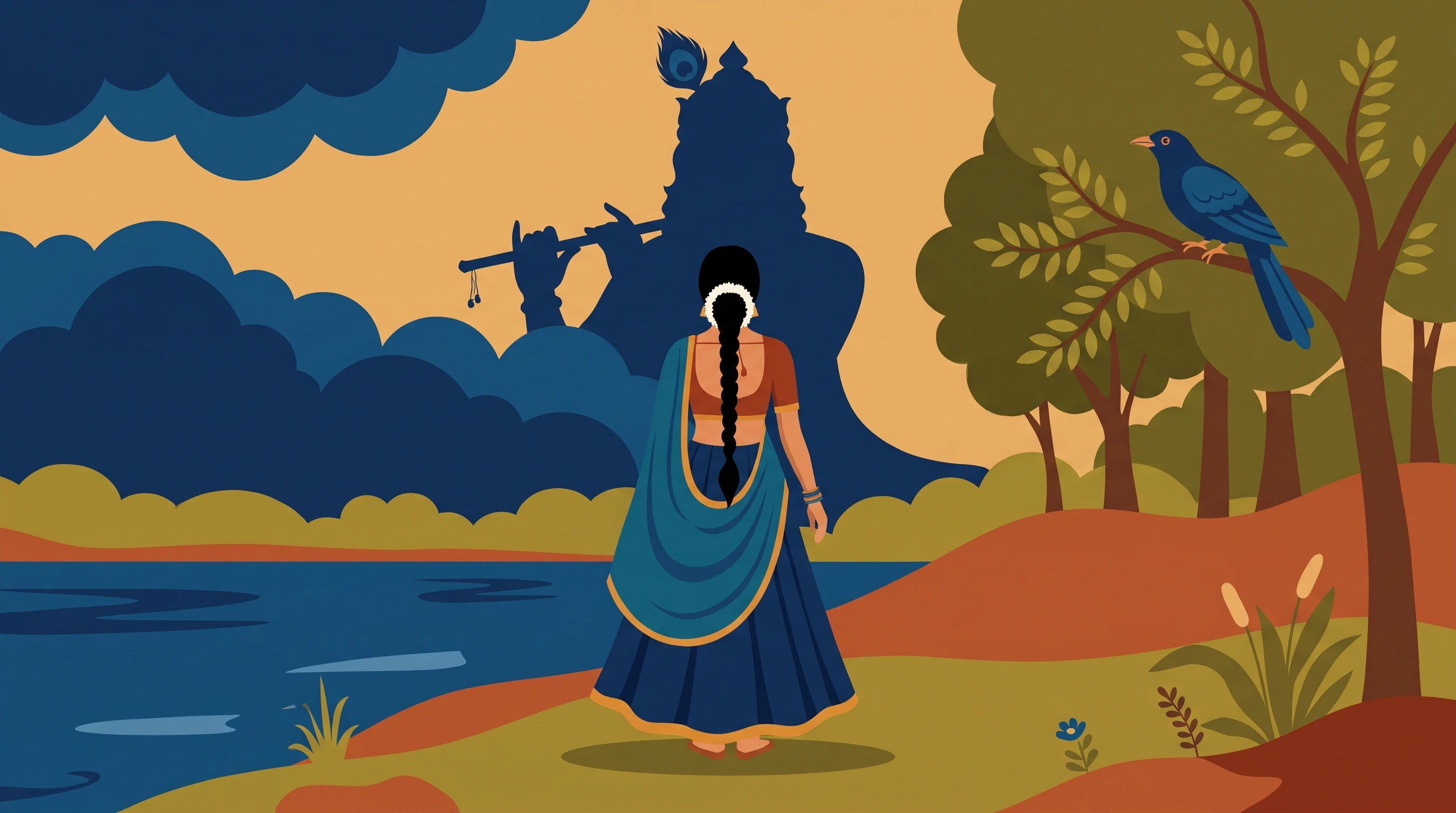
This is one of the eternal Gujarati Krishna songs, and its genius lies in a refusal: Krishna — Madhav — never appears. The poem is a viraha (separation) geet set in the aftermath of the god's departure from Vrindavan for Mathura, and it registers only his absence, felt through everything he once touched. Harindra Dave, a modern master of both the geet and the ghazal, builds the poem as a relay of whispered grief. The flower tells the bee, and the bee carries the word away in its buzzing — "ફૂલ કહે ભમરાને, ભમરો વાત વહે ગુંજનમાં." The kadamba branch bends over the waters of the Kalindi (the Yamuna) and asks whether it remembers Vanmali, the garland-wreathed one, sitting there playing his flute. Nobody answers directly; the ripple tells the whirlpool, and the whirlpool holds the memory in its pulsing. Absence passes from mouth to mouth like a rumor no one can confirm.
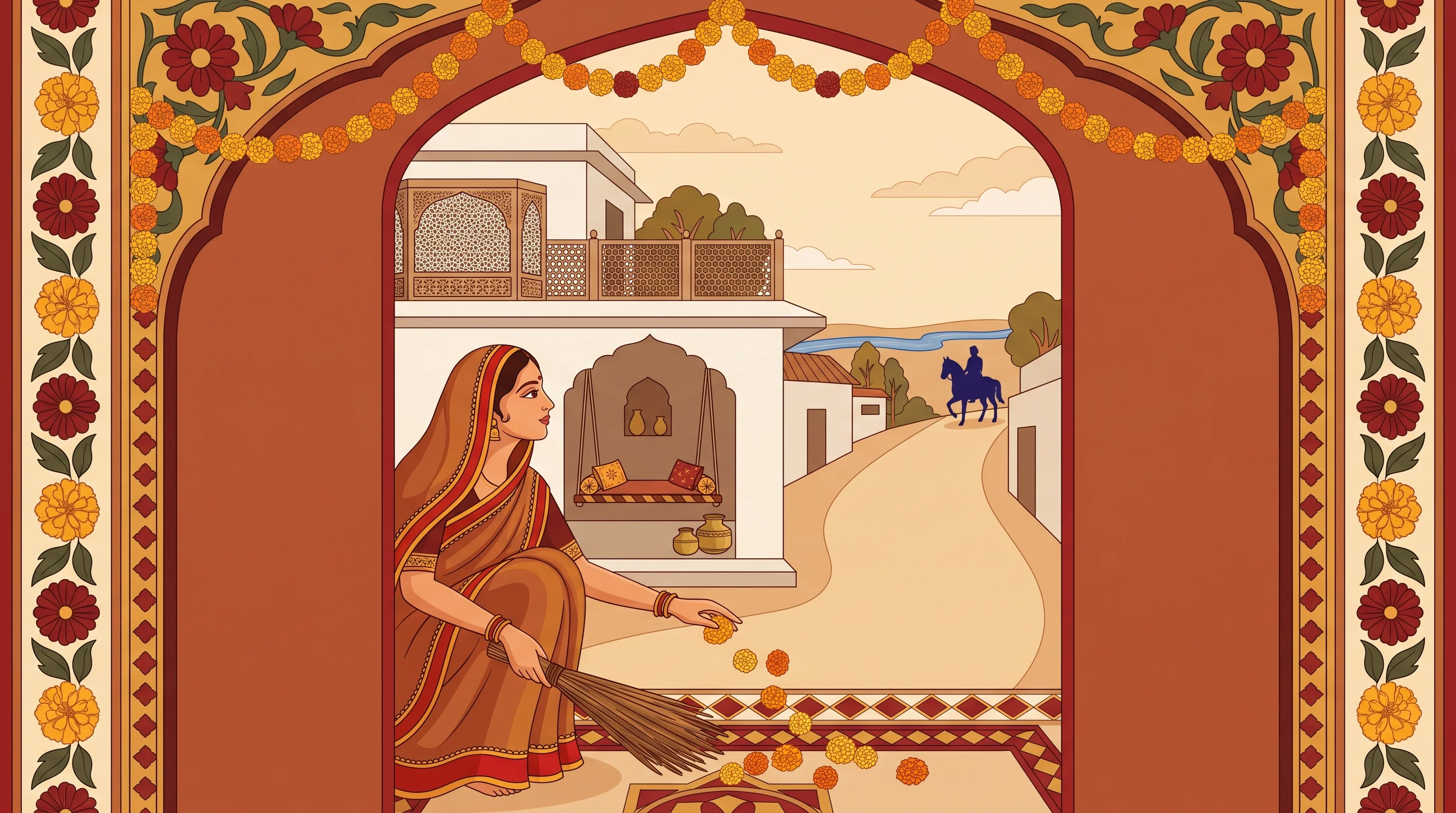
What makes the poem devastating is how it shrinks its grief. The third stanza moves from landscape to household: no one demands the daan — the playful toll of curds Krishna extorted from the milkmaids on the path — no one's sweet tyranny walks the lanes, no gopi laughingly lodges her mock-complaints anymore. Nanda tells Yashoda, and love simply drips from the mother's eyes. Then the last stanza narrows to a single woman with a pot of curds unbroken on her head: "અબ લગ કંકર એક ન વાગ્યો ગયાં ભાગ્ય મુજ ફૂટી" — "till now not one pebble has struck it; my fortune is shattered." It is a heartbreaking inversion of longing. She does not mourn a kindness withheld; she mourns that no one throws Krishna's mischievous pebbles at her pot anymore. Divine absence is made to ache like the most ordinary human emptiness. Technically, the poem tightens a screw with its sound: each stanza-tail rhymes on a locative -માં ending — ગુંજનમાં, સ્પંદનમાં, લોચનમાં, અંસુવનમાં — so that the title word મધુવનમાં, "in the grove," echoes faintly through every verse.
The line outlived the poem. Dave loved it enough to title his 1970 novel Madhav Kyayn Nathi, later carried into Hindi as Madhav Kahin Nahin Hain in 1995, the year of his death. The geet itself became a legendary Gujarati song — most widely circulated in Ashit Desai's setting sung by Hema Desai, though older listeners still recall an early composition by Paresh Bhatt. Generations of Gujaratis first met it as a school-textbook poem set to a raga, and critics place it in the eternal line of Krishna-bhakti that runs from Narsinh Mehta and Mira down through Dayaram. It earns that company honestly: by mourning the loss of a god's teasing rather than his majesty, the poem makes the infinite feel intimate, and the whole grove weeps in a register small enough to fit inside a single tear — "આંખો વાત વહે અંસુવનમાં."
હરીન્દ્ર દવે
Harindra Dave — born in the village of Khambhra in Kutch and shaped by a lifetime in Mumbai's newsrooms — was one of modern Gujarati literature's most beloved lyric poets and a career newspaperman. Of all poetic forms, two suited him best, the *geet* (song) and the *ghazal*, and he is regarded as a modern master of both; his collection *Hayati* won the Sahitya Akademi Award in 1978. By day he was an editor — sub-editor at the daily *Janashakti*, editor of the digest *Samarpan*, and from 1979 until his death the Editor-in-Chief of the *Janmabhoomi–Pravasi* group of newspapers — and a Goenka award marked his journalism. He was also a serious Krishna scholar whose 700-page study *Krishna ane Manav Sambandho* (1982) explored the god through the lens of human relationship, the same tender, worldly attention that animates his most famous song, *Madhav Kyayn Nathi*. A prolific novelist as well, he loved that line enough to title his 1970 novel after it. He won the Ranjitram Suvarna Chandrak in 1982 and, from Madhya Pradesh, the Kabir Award — honours for a poet who made the divine feel like a familiar, half-remembered ache.
All poems by Harindra Dave →