પસંદ કરેલી કૃતિ · selected work
ધારાવસ્ત્ર
Dharavastra
The Garment of Rain
Umashankar Joshi · 1975
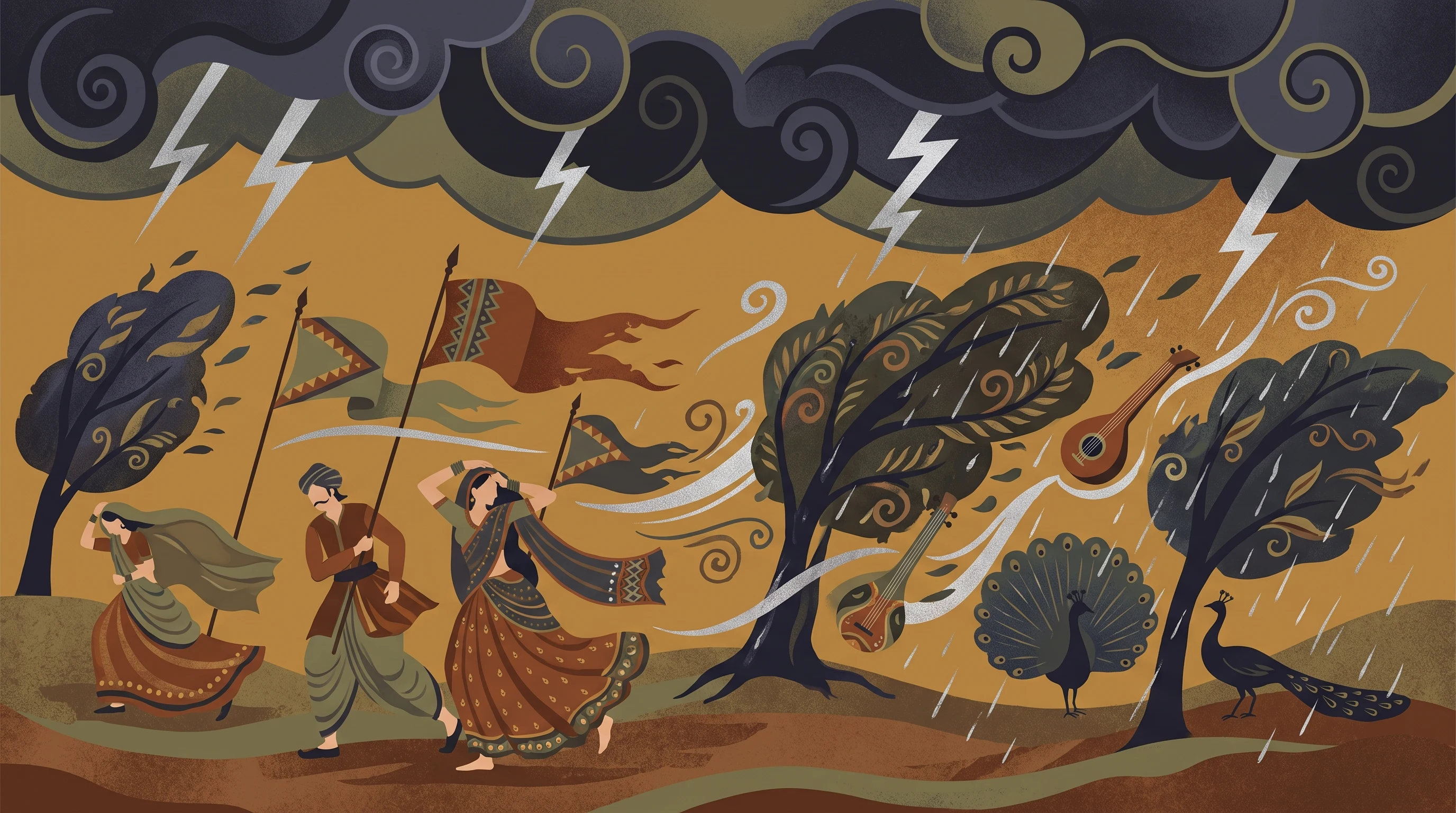
Ten lines for a passing squall. Something strides by, too fast to see — the sun is shoved aside, doors slam, and a garment woven of rain-streams flutters across the sky while the rooted trees flail their arms trying to catch its hem. Umashankar Joshi's late miniature, written in Delhi in August 1975.
કોઈ ઝપાટાભેર ચાલ્યું જાય,
ક્યાંથી, અચાનક…
સૂર્ય પણ જાણે
ક્ષણ હડસેલાઈ જાય.
ધડાક બારણાં ભિડાય.
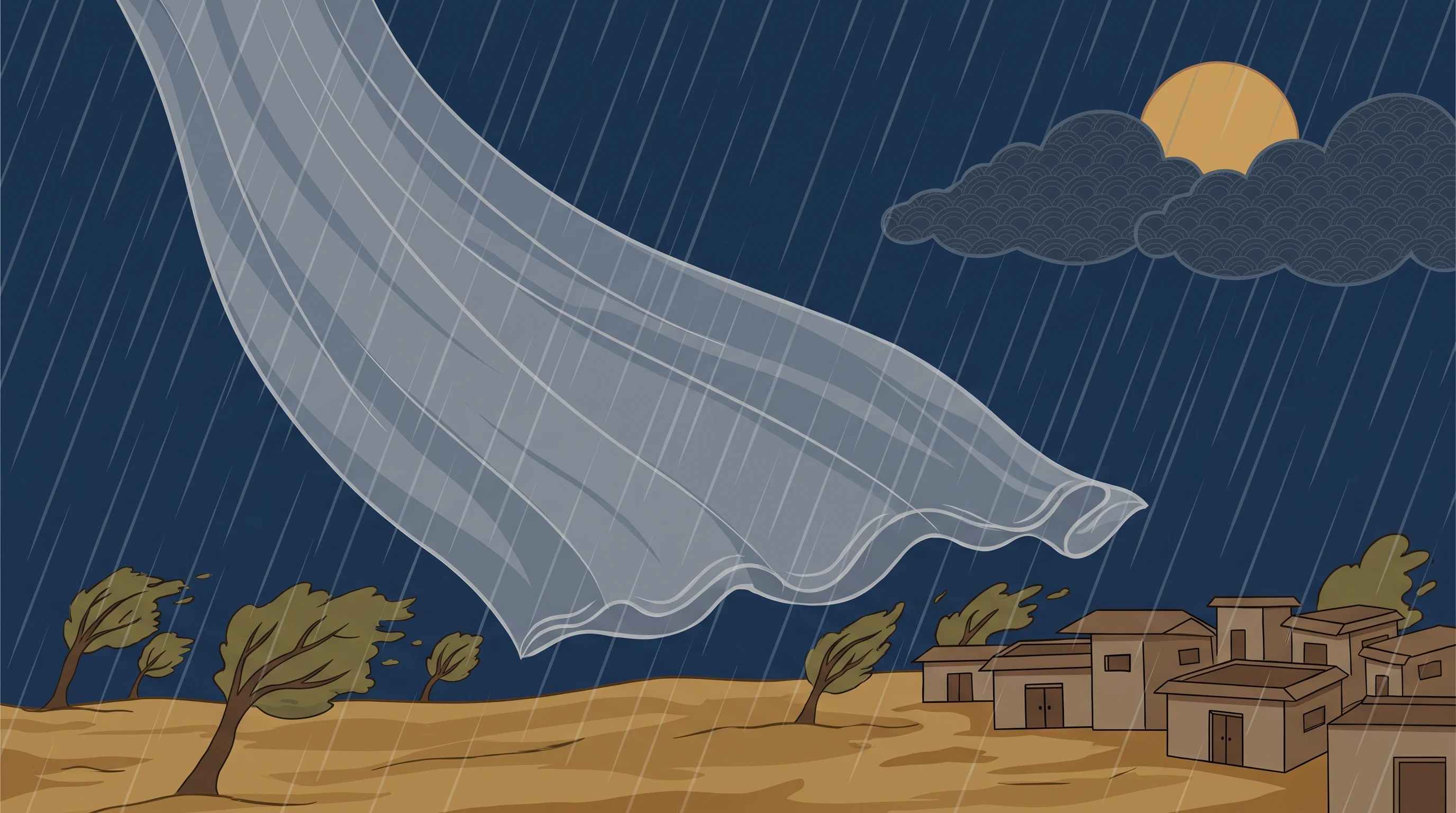
આકાશમાં ફરફરતું ધારાવસ્ત્ર
સૃષ્ટિને લેતું ઝપટમાં
ઓ… પણે લહેરાય.
પૃથ્વી-રોપ્યાં વૃક્ષ એને ઝાલવા
મથ્યાં કરે – વ્યર્થ હાથ વીંઝ્યાં કરે.
Everything about this poem is speed. કોઈ ઝપાટાભેર ચાલ્યું જાય — someone sweeps past — and before the sentence can even establish who, it has already given up: ક્યાંથી, અચાનક… — from where? suddenly… — the line trailing off into an ellipsis because the thing has gone by too fast for grammar. What follows is pure aftermath: the sun itself seems shoved aside for a moment, and doors slam — ધડાક બારણાં ભિડાય — the thundercrack rendered not as sky-noise but as the sound a house makes when something huge brushes past it. In five short lines Umashankar Joshi has caught the exact sensory signature of a monsoon squall's arrival: the light suddenly knocked away, the bang, the sense of a presence.
Only in the second stanza do we get the one thing the eye can actually hold: આકાશમાં ફરફરતું ધારાવસ્ત્ર — fluttering in the sky, a garment woven of rain-streams. The coinage does all the work. If the slanting silver curtain of a squall is a વસ્ત્ર, then someone is wearing it, and the unnamed walker of line one acquires a body precisely by never being shown — we see only the hem sweeping the whole creation into its fold, waving ઓ… પણે, "over — there," already far away. And then the heartbreak of the close: the trees, પૃથ્વી-રોપ્યાં, planted in the earth, try to catch it as it passes, flailing their branch-arms — વ્યર્થ, in vain. A tree is the earth's own hand stretched toward the sky, and the rain it reaches for is exactly the thing that cannot be held. Ten lines that begin as weather end as a parable of longing: the rooted and the moving, and the impossibility between them.
Written in Delhi in August 1975 and later placed at the head of the collection it named, the poem shows the late Umashankar at the far end of the arc that began with the enormous cosmic machinery of નિશીથ. The young poet built a Nataraja out of the whole night sky; the old one lets a god-sized presence pass through ten unrhymed lines without ever turning to look at it. The compression is the mastery — and the wet, flailing trees are as human a self-portrait as he ever drew.
ઉમાશંકર જોશી
Umashankar Joshi — poet, short-story writer, playwright, essayist, critic, editor and scholar — is one of the towering figures of modern Gujarati literature, often called a father-figure of its poetry. Born in the village of Bamna in Idar taluka, he came of age in the Gandhian era, joining the freedom movement as a student and serving time in jail during the civil-disobedience campaigns; his verse ever after fused lyric intimacy with social conscience. His first collection, *Gangotri* (1934), announced a major new voice, and the books that followed — *Nishith*, *Prachina*, *Aatithya*, *Vasant-varsha* — deepened it. In 1967 he became the first Gujarati writer to receive the Jnanpith Award, India's highest literary honour, for *Nishith*. For decades he edited the influential literary quarterly *Sanskriti*, served as Vice-Chancellor of Gujarat University and President of the Sahitya Akademi, and sat in the Rajya Sabha. His humanist credo lives in his most quoted line — *વ્યક્તિ મટીને બનું વિશ્વમાનવી*, "ceasing to be an individual, let me become a world-human."
All poems by Umashankar Joshi →