પસંદ કરેલી કૃતિ · selected work
એક ઘા
Ek Gha
A Single Blow
Kalapi, Saurashtra's Prince-Poet · 1896
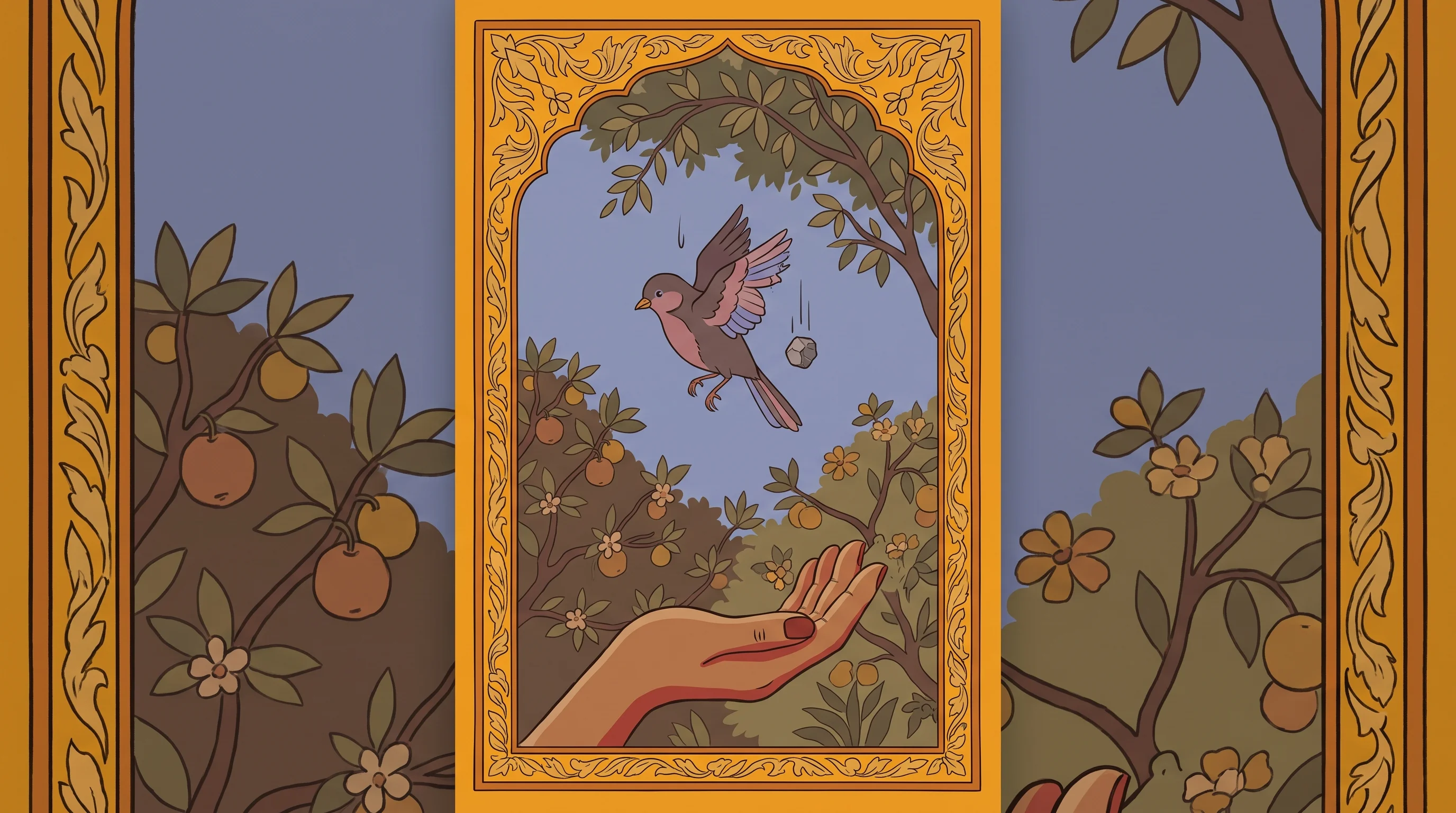
A boy throws a stone at a bird — and regrets it before it even lands. In sixteen slow, grave lines Kalapi turns one careless cruelty into the language's most enduring meditation on remorse: that a wound, once dealt, can never be unmade, and trust, once gone, returns in no age.
તે પંખીની ઉપર પથરો ફેંકતાં ફેંકી દીધો,
છૂટ્યો તે ને અરર! પડી ફાળ હૈયા મહીં તો
રે રે! લાગ્યો દિલ પર અને શ્વાસ રૂંધાઇ જાતાં
નીચે આવ્યું તરુ ઉપરથી પાંખ ઢીલી થતાંમાં.
મેં પાળ્યું તે તરફડી મરે હસ્ત મ્હારા જ થી આ,
પાણી છાંટ્યું દિલ ધડકતે ત્હોય ઊઠી શક્યું ના;
ક્યાંથી ઊઠે? જખમ દિલનો ક્રૂર હસ્તે કરેલો!
ક્યાંથી ઊઠે? હૃદય કુમળું છેક તેનું અહોહો!
આહા! કિન્તુ કળ ઊતરી ને આંખ તો ઊઘડી એ,
મૃત્યુ થાશે? જીવ ઊગરશે? કોણ જાણી શકે એ?
જીવ્યું, આહા! મધુર ગમતાં ગીત ગાવા ફરીને,
આ વાડીનાં મધુર ફલને ચાખવાને ફરી ને.
રે રે! કિન્તુ ફરી કદી હવે પાસ મ્હારી ન આવે,
આવે ત્હોયે ડરી ડરી અને ઈચ્છતું ઊડવાને;
રે રે! શ્રદ્ધા ગત થઈ પછી કોઈ કાળે ન આવે,
લાગ્યા ઘાને વિસરી શકવા કાંઇ સામર્થ્ય ના છે.
Kalapi — the pen name of Sursinhji Takhtasinhji Gohil, prince and Thakor of the small Saurashtra state of Lathi — was barely twenty-two when he dated this poem 6 June 1896. He is remembered as the great romantic of the Pandit-yug, the "poet of love" (પ્રેમનો કવિ) who fused the Persian-Urdu ghazal's ache with the Romanticism of Wordsworth and Keats, and who poured his own anguished love for Shobhana, a maid in the royal household, into his verse. એક ઘા ("A Single Blow") captures a smaller, quieter wound, but no less exact. The narrative could not be plainer: a boy throws a stone at a bird, and before the stone has even landed a shudder falls within his heart — પડી ફાળ હૈયા મહીં. The bird is struck, its breath chokes, its wing goes slack, and it tumbles from the tree into the very hands that harmed it.
What gives the incident its weight is the meter. Kalapi writes in મંદાક્રાંતા (Mandakranta), the slow, long-limbed Sanskrit measure Kalidasa chose for the Meghaduta — an unexpectedly grave vessel for so domestic a scene, and it is exactly this mismatch that transfigures a childhood accident into elegy. The middle stanzas circle in helpless repetition: he sprinkles water on the bird, but ક્યાંથી ઊઠે? જખમ દિલનો ક્રૂર હસ્તે કરેલો! — "how can it rise? a wound of the heart, dealt by a cruel hand." The interjections રે રે! and the twice-asked ક્યાંથી ઊઠે? function as an anaphora of guilt, the mind returning again and again to the thing it cannot undo. Even the flicker of hope in the third stanza — the eyes open, the bird may yet live to sing and taste the garden's fruit again — is only the setup for the poem's true blow.
That blow is the final couplet, and it is why the poem has outlived its occasion. Even if the bird survives, Kalapi writes, it will never again come near the hand that hurt it; and if it does, it will come trembling, wanting only to fly away: આવે ત્હોયે ડરી ડરી અને ઈચ્છતું ઊડવાને. Then the anecdote opens into maxim — રે રે! શ્રદ્ધા ગત થઈ પછી કોઈ કાળે ન આવે, / લાગ્યા ઘાને વિસરી શકવા કાંઇ સામર્થ્ય ના છે: once trust has departed it returns in no age, and there is no power on earth able to forget a wound once dealt. Read ever since as an allegory of betrayal and the irreversibility of harm — between people, or between the human and the natural world — the poem became a fixture of Gujarati school readers, studied by children who would carry that last line into adulthood as proverb. It is often paired with Kalapi's gentler bird poem, રે પંખીડા! સુખથી ચણજો, about a creature set free: two halves of a single tenderness, one wounding and one releasing.
કલાપી
Kalapi — the pen name of Sursinhji Takhtasinhji Gohil, Thakore Saheb of the small princely state of Lathi — was a poet who lived like a verse: beautiful, intense, and heartbreakingly brief. His name means "peacock," and his poetry carried the same quality of extravagant, melancholic beauty. In just twenty-six years of life, he produced a body of romantic and philosophical verse that redefined Gujarati poetry, moving it away from didacticism toward raw emotional truth. Deeply influenced by English Romantic poets — particularly Keats and Shelley — he fused Western lyric forms with Gujarati sensibility, writing with an intimacy that shocked and captivated his contemporaries. His tragic early death in 1900 only deepened the legend, making him one of the most mythologized figures in Gujarati literary history.
All poems by Kalapi →