પસંદ કરેલી કૃતિ · selected work
મન મોર બની થનગાટ કરે
Man Mor Bani Thangat Kare
My Mind Dances Like a Peacock
Zaverchand Meghani, Rashtriya Shayar · 1944
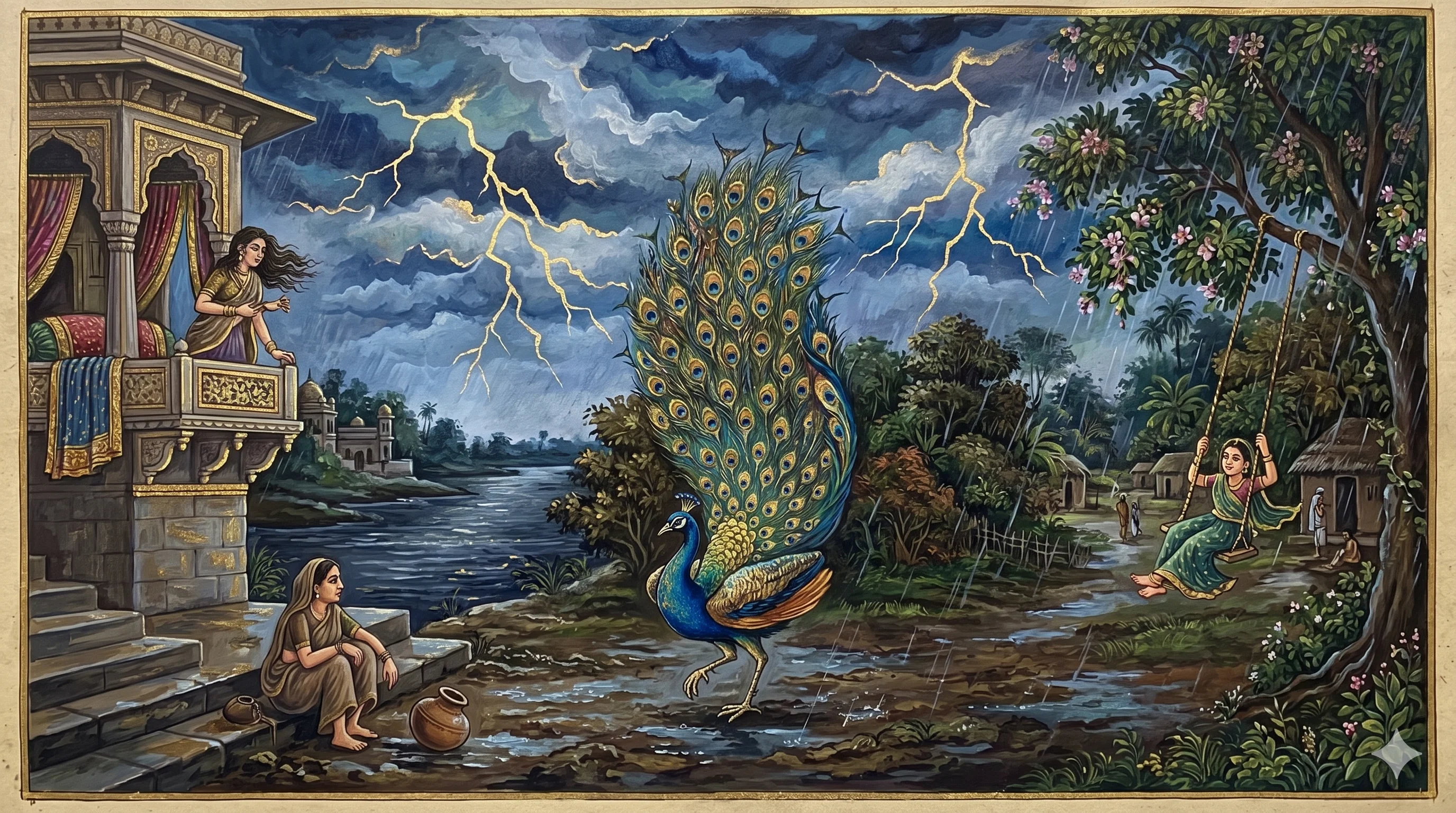
The monsoon arrives and the poet's mind becomes a peacock — shivering, dancing, spreading its feathers into the storm. Meghani's most intoxicating lyric, where thunder becomes music and every creature in the landscape surrenders to rain's ecstasy.
મોર બની થનગાટ કરે, મન મોર બની થનગાટ કરે.
ઘનઘોર ઝરે ચહુ ઓર,
મારું મન મોર બની થનગાટ કરે.
બહુ રંગ ઉમંગનાં પીંછ પસારીને બાદલસું નિજ નેનન ધારીને
મેઘમલાર ઉચારીને આકુલ પ્રાણ કોને કલ-સાદ કરે.
મારું મન મોર બની થનગાટ કરે.
ઘર ઘરર ઘરર મેઘઘટા ગગને ગગને ગરજાટ ભરે
ગુમરી ગુમરી ગરજાટ ભરે. (2)
નવે ધાન ભરી સારી સીમ ઝૂલે, નદીયું નવજોબન ભાન ભૂલે,
નવ દીન કપોતની પાંખ ખૂલે (2)
મઘરા મઘરા મલકાઇને મેડક નેહસું નેહસું બાત કરે.
ગગને ગગને ઘુમરાઇને પાગલ
મેઘઘટા ગરજાટ ભરે. … *મન મોર બની*
નવમેઘ તણે નીલ આંજણીએ મારાં ઘેઘૂર નેન ઝગાટ કરે
મારાં લોચનમાં મદઘેન ભરે (2)
પરછાઈ તળે હરિયાળી બની મારો આતમ નેન બિછાત કરે
સચરાચર શ્યામલ બાથ ધરે (2)
મારો પ્રાણ કરી પુલકાટ ગયો પથરાઇ સારી વનરાઇ પરે,
ઓ રે ! મેઘ આષાઢીલો આજ મારે દોય
નેન નીલાંજન-ઘેન ભરે … *મન મોર બની*
નદી-તીર કેરાં કૂણાં ઘાસ પરે પનિહારી એ કોણ વિચાર કરે,
પટકૂળ નવે પાણી-ઘાટ પરે ! (2)
એની સૂનમાં મીટ સમાઇ રહી, એની ગાગર નીર તણાઇ રહી,
એને ઘેર જવા દરકાર નહીં (2)
મુખ માલતીફૂલની કૂંપળ ચાવતી કોણ બીજા કેરું ધ્યાન ધરે !
પનિહાર નવે શણગાર નદી કેરે
તીર ગંભીર વિચાર કરે ! … *મન મોર બની*
ઓલી કોણ કરી લટ મોકળીયું ખડી આભ-મહેલ અટારી પરે
ઊંચી મેઘ-મહેલ અટારી પરે ! (2)
અને ચાકચમૂર બે ઉર પરે પચરંગીન બાદલ-પાલવડે
કરી આડશ કોણ ઊભેલ અરે ! (2)
ઓલી વીજ કેરે અંજવાસ નવેસર રાસ લેવા અંકલાશ ચડે,
ઓલી કોણ પયોધર સંઘરતી
વિખરેલ લટે ખડી મે'લ પરે ! … *મન મોર બની*
ઓલી કોણ હિંડોળ ચગાવત એકલ ફૂલ બકુલની ડાળ પરે,
ચકચૂર બની ફૂલ-ડાળ પરે ! (2)
વિખરેલ અંબોડાના અળ ઝૂલે, દિયે દેહ-નીંડોળ ને ડાળ હલે.
એની ઘાયલદેહના છાયલ-છેડલા
આભ ઊડી ફરકાટ કરે (2)
ઓલી કોણ ફંગોળ લગાવત એકલ ફૂલ બકુલની ડાળ પરે !
મોર બની થનગાટ કરે આજે … મન મોર બની.
This poem is pure monsoon — not described from a distance, but inhabited from the inside. Meghani's mind does not merely observe the peacock's dance; it becomes the peacock, spreading feathers of longing into the thunder. The seed was planted in the 1920s, when Meghani visited Rabindranath Tagore in Kolkata and heard him recite Navavarsha (New Rain), a Bengali poem composed in 1900 at Silaidaha that compared the heart's unrestrained joy to a peacock's dance. Deeply moved, Meghani carried that image for two decades before reimagining it in Gujarati for his 1944 anthology Ravindra-Veena — not a translation but an original composition that draws from the Megh Malhar tradition and moves through the Saurashtra landscape like the storm itself: from sky to field to river to rooftop to a girl swinging alone on a bakul branch.
The poem's most remarkable technical achievement is its sound. Meghani builds an entire weather system out of consonants: 'ઘર ઘરર ઘરર' rolls like thunder across the line, 'ગુમરી ગુમરી' swells like a cloud filling with rain, 'મઘરા મઘરા' croaks with the frogs. This is not ornamental alliteration — the sounds are the monsoon, and the reader doesn't so much read the poem as hear it arrive. Each stanza widens the frame: first the poet's own intoxication, then the fields and rivers, then the water-carrier lost in thought at the ghat, then the mysterious women on balconies and swings. The repetition of 'કોણ' (who?) through these later stanzas turns the monsoon into an erotic mystery — every figure half-glimpsed through curtains of rain.
Meghani absorbed hundreds of folk songs from Saurashtra's villages, and their collective pulse is audible here — the long, breath-spanning lines, the call-and-response structure of refrain and stanza, the way the poem begs to be sung rather than read. Man Mor Bani has been set to music countless times, most recently reaching a global audience when two stanzas were featured in the Bollywood film Goliyon Ki Raasleela Ram-Leela (2013). Where Tagore's Navavarsha captured the monsoon as a metaphor for renewal, Meghani made it unmistakably Gujarati — rooted in the red earth, the river ghats, and the bakul trees of Saurashtra. It is, in the deepest sense, a rain song — and like all great rain songs, it is really about desire.
ઝવેરચંદ મેઘાણી
Zaverchand Meghani — honoured by Mahatma Gandhi himself with the title *Rashtriya Shayar* (National Poet) — was the great collector and amplifier of Gujarat's voice. Born in Chotila, Saurashtra, he spent his life gathering folk songs, ballads, and oral histories from villages across the region, preserving them in landmark compilations like *Saurashtra ni Rasdhar*. But he was far more than an archivist: his original poetry pulsed with the rhythms he had absorbed from folk tradition, producing lyrics that could make a concert hall feel like a monsoon field. A fearless journalist and freedom fighter, he was imprisoned by the British for his inflammatory verses. He died on the eve of independence in 1947, just hours before Gandhi — the two losses inseparable in Gujarat's memory.
All poems by Zaverchand Meghani →