પસંદ કરેલી કૃતિ · selected work
એક જ દે ચિનગારી
Ek J De Chingari
Give Me But One Spark
Harihar Bhatt · 1925
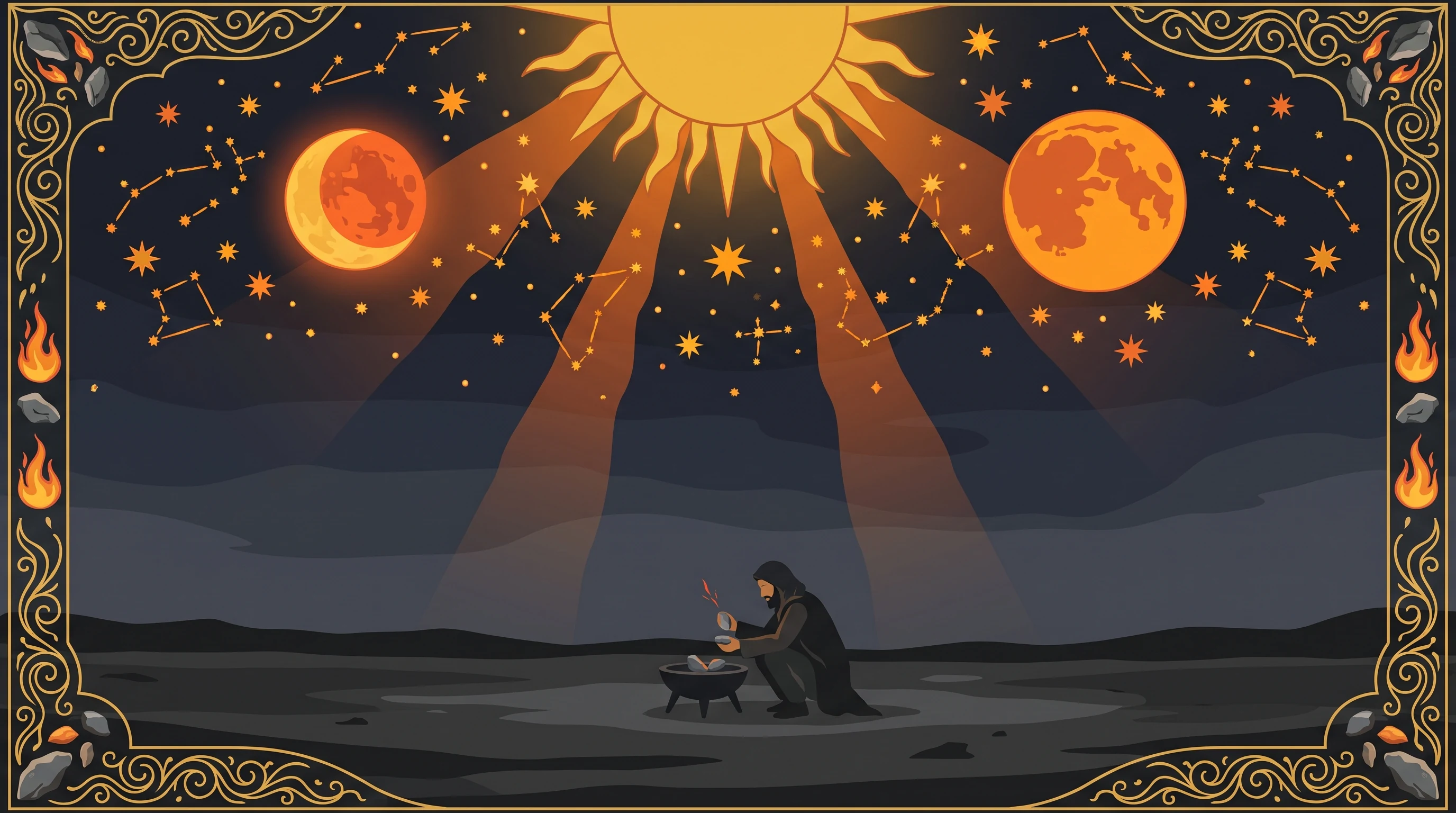
A man kneels over a cold brazier, striking flint against iron, while the sun and the moon and the whole sky burn above him. He does not ask for wealth or power or light. He asks for one spark.
એક જ દે ચિનગારી, મહાનલ !
એક જ દે ચિનગારી.
ચકમક લોઢું ઘસતાં ઘસતાં ખરચી જિંદગી સારી
જામગરીમાં તણખો ન પડ્યો, ન ફળી મહેનત મારી
મહાનલ… એક દે ચિનગારી…
ચાંદો સળગ્યો, સૂરજ સળગ્યો, સળગી આભઅટારી
ના સળગી એક સગડી મારી, વાત વિપતની ભારી
મહાનલ… એક દે ચિનગારી…
ઠંડીમાં મુજ કાયા થથરે, ખૂટી ધીરજ મારી
વિશ્વાનલ ! હું અધિક ન માગું, માગું એક ચિનગારી
મહાનલ… એક દે ચિનગારી…
Harihar Bhatt published this prayer in Kumar in 1925, and it did what almost no poem manages: it left literature and became liturgy. It entered the Ashram Bhajanavali, the book of prayers sung at Gandhi's Sabarmati Ashram, and from there into the morning assembly of Gujarati schools, where children still sing it without much idea of what they are asking for. Gandhi took it up in his prayer discourse of 8 November 1947, in the worst months of his life, and read it as a poem about grace: the cosmos is on fire, and one man cannot get a single ember to catch.
The whole poem turns on the smallness of the request. The poet does not ask for wealth, or power, or even for light. He addresses God as મહાનલ — great fire — and then as વિશ્વાનલ, the fire of the universe, and asks for the least divisible fragment of what that fire is: one spark. The imagery is not devotional in the ornamental sense; it is a man's hands and a cold hearth. He has worn out a lifetime striking flint against iron (ચકમક લોઢું ઘસતાં ઘસતાં ખરચી જિંદગી સારી), and the જામગરી, the slow-match that should carry the flame, has never taken it. Then the poem lifts its eyes and the scale detonates: ચાંદો સળગ્યો, સૂરજ સળગ્યો, સળગી આભઅટારી — the moon caught fire, the sun caught fire, the balcony of the sky caught fire — ના સળગી એક સગડી મારી, and my one small brazier did not. There is real bitterness in the arithmetic. Everything in creation has been lit. He is asking why he was skipped.
The biography sharpens the line rather than explaining it away. Bhatt was an astronomer as well as a poet: he taught the mathematics of the heavens, founded an observatory in Ahmedabad, edited the Sandesh almanac, and sat on the committee that reformed India's national calendar. The man writing the sun caught fire, the moon caught fire had spent his professional life calculating precisely those fires, and still could not warm himself. In the last stanza the body finally intrudes — ઠંડીમાં મુજ કાયા થથરે, ખૂટી ધીરજ મારી, in the cold my body shivers, my patience is finished — and the poem ends without being answered. No spark arrives. That refusal is the reason it has lasted a century: it is a prayer that stays a prayer, and does not soften itself into a promise.
હરિહર ભટ્ટ
Harihar Prannashankar Bhatt was born in Saurashtra in 1895, took his degree in Bombay, and taught school in Akola before Gandhi's movement pulled him in — he marched in the Dharasana salt satyagraha and served eighteen months in prison for it. He is remembered for a single poem. *એક જ દે ચિનગારી*, published in *Kumar* in 1925, entered the *Ashram Bhajanavali* sung at Sabarmati and then the school prayer of every Gujarati child, which is a strange fate for a verse about not being answered. His other life was stranger still: Bhatt was a serious astronomer, who taught the mathematics of the heavens, founded an observatory in Ahmedabad, edited the *Sandesh* almanac, and sat on the committee that reformed India's national calendar. He wrote five volumes on celestial computation. The man who asked God for one spark had spent his career measuring the fires of the sun and the moon, and knew better than most exactly how far away they were.
All poems by Harihar Bhatt →