પસંદ કરેલી કૃતિ · selected work
જાગને જાદવા
Jaag Ne Jadava
Wake Up, Yadava
Narsinh Mehta, Adi Kavi · c. 1450
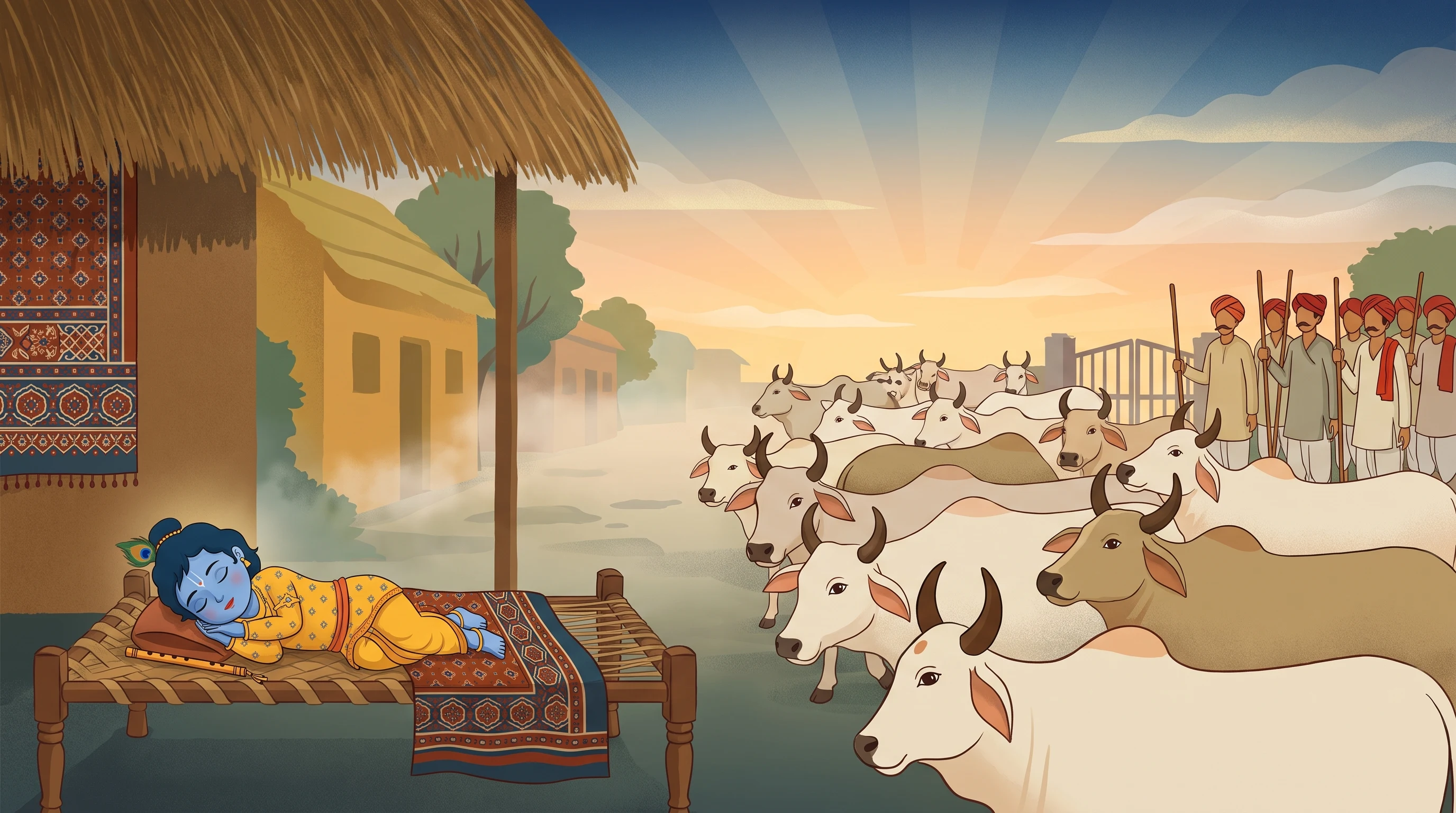
The dawn hymn of Gujarat. A devotee stands at Krishna's bedside and scolds God awake — the cows are waiting, the milk will go undrunk, and who else can carry the burden of the earth? Five centuries of Gujarati mornings have begun with this song.
જાગને જાદવા કૃષ્ણ ગોવાળિયા
તુજ વિના ધેનમાં કોણ જાશે ?
ત્રણસેં ને સાઠ ગોવાળ ટોળે મળ્યા
વડો રે ગોવાળિયો કોણ થાશે ? … જાગને
દહીંતણા દહીંથરા ઘી તણાં ઘેબરાં
કઢિયેલ દૂધ તે કોણ પીશે ?
હરિ તાર્યો હાથિયો, કાળી નાગ નાથિયો
ભૂમિનો ભાર તે કોણ વહેશે ? … જાગને
જમુનાને તીરે ગૌધણ ચરાવતાં
મધુરીશી મોરલી કોણ વહાશે ?
ભણે નરસૈંયો તારા ગુણ ગાઇ રીઝિયે
બૂડતાં બાંયડી કોણ સહાશે ? … જાગને
A પ્રભાતિયું is a hymn built for the hour before sunrise, and this is the most famous one in the language. Narsinh Mehta composed his dawn songs in fifteenth-century Junagadh to be sung as the household stirred — and in them the first duty of the morning is not to praise God but to wake him. The premise is pure village realism: Krishna is a cowherd, cowherds rise before light, and this one is still in bed. જાગને જાદવા કૃષ્ણ ગોવાળિયા — wake up, Yadava, Krishna the cowherd — તુજ વિના ધેનમાં કોણ જાશે? — without you, who will go out with the herd?
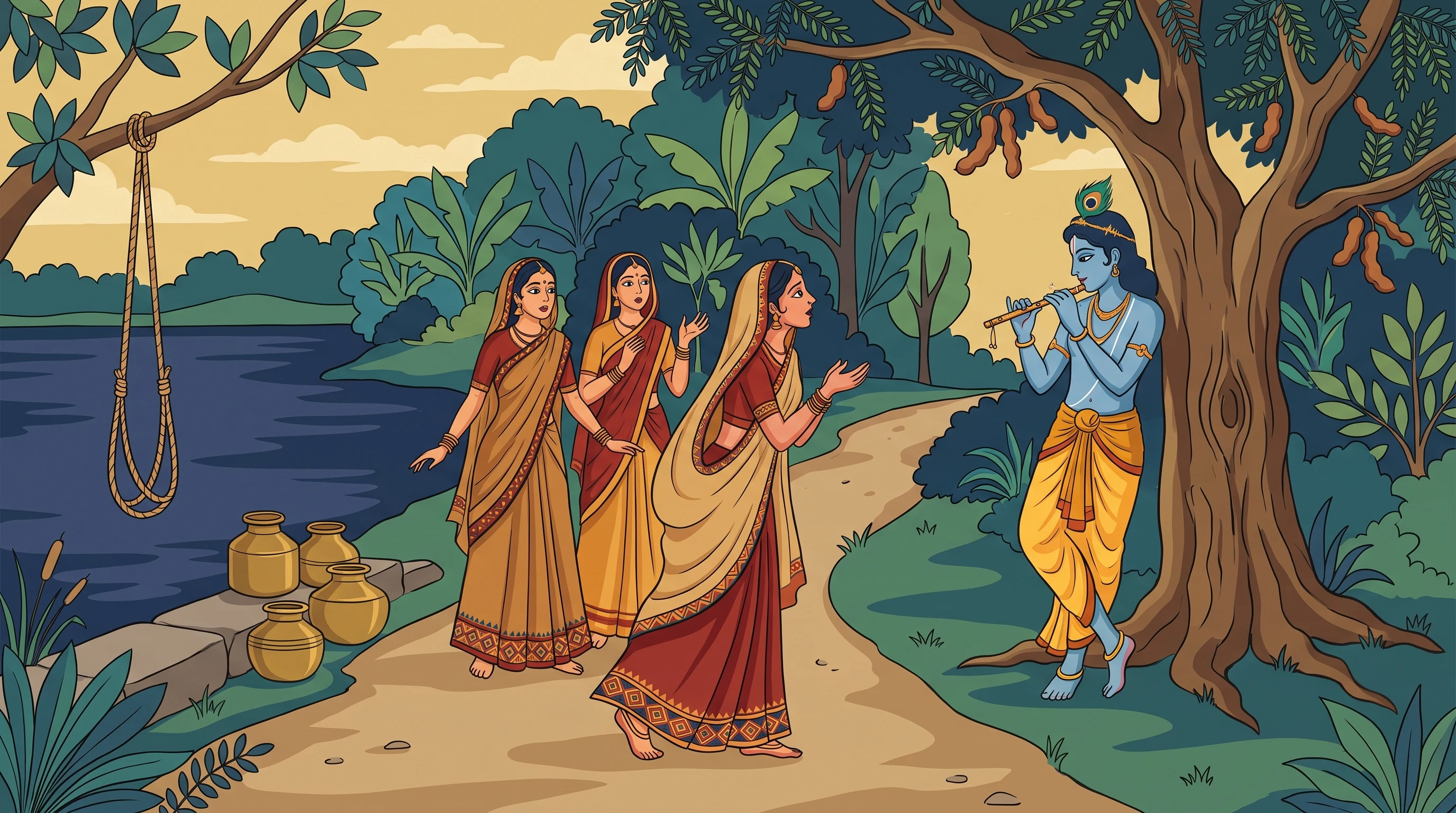
The whole poem is a pile-up of unanswerable questions, and that is its argument. Three hundred and sixty cowherds have gathered in the lane, but who will lead them? The દહીંથરાં and ઘેબરાં are made, the milk is thickened on the fire, but who will drink it? Then the questions quietly change scale. The one who saved the elephant and haltered the black serpent — હરિ તાર્યો હાથિયો, કાળી નાગ નાથિયો — who else will carry the burden of the earth? By the final stanza the flute on the Yamuna's bank and the drowning soul reaching for an arm belong to the same sentence, and the poem's domestic scolding stands revealed as theology: the world cannot begin its day, or be saved, without him. The taming of Kaliya that this poem cites in passing gets a whole poem of its own in જળકમળ છાંડી જાને બાળા.
What makes the conceit so durable is its tenderness. Narsinh addresses the lord of the universe in the voice a mother uses on a boy who has overslept, and the intimacy is the devotion — a god you may scold is a god who lives in your house. Sung at temple dawn services, at bhajan gatherings, and over the radio for as long as there has been radio in Gujarat, it remains the sound of a Gujarati morning; for many households the day formally begins when this song ends.
નરસિંહ મહેતા
Narsinh Mehta, revered as the *Adi Kavi* (First Poet) of Gujarati literature, was a 15th-century poet-saint whose devotional verses defined the bhakti tradition in Gujarat. Born into a Nagar Brahmin family in Junagadh, his life became legend — stories of his unwavering devotion to Krishna, his defiance of caste conventions, and his miraculous encounters became inseparable from his poetry. His most famous work, *Vaishnav Jan To*, became Mahatma Gandhi's favourite hymn and an anthem of the Indian independence movement five centuries after it was written.
All poems by Narsinh Mehta →