પસંદ કરેલી કૃતિ · selected work
રૂડી ને રંગીલી
Rudi Ne Rangili
Lovely and Full of Colour, Your Flute
Narsinh Mehta, Adi Kavi · c. 1450
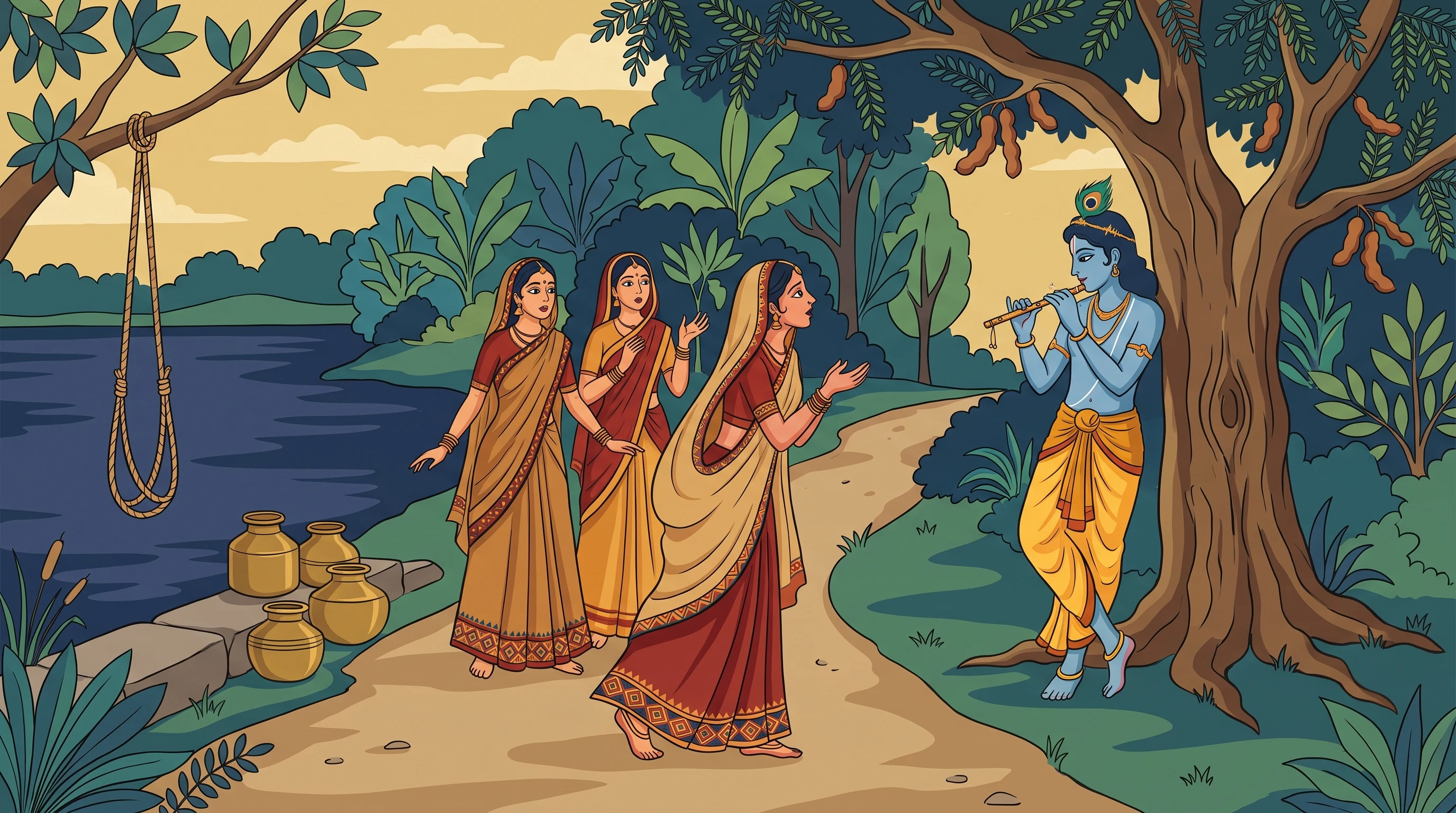
A gopi slips out 'on the pretext of fetching water,' leaves her pots on the lake bank, and finds Krishna blocking the path home with a flute and no intention of moving. Narsinh Mehta's most danceable poem — devotion disguised as a woman's song, still sung at every Navratri.
રૂડી ને રંગીલી રે વ્હાલા તારી વાંસળી રે લોલ
રૂડી ને રંગીલી રે વ્હાલા તારી વાંસળી રે લોલ
વાંસલડી મારે મંદિરિયે સંભળાય જો
આ પાણીડાંની મશે રે જીવણ જોવા નિસર્યાં રે લોલ
આ બેડાં તે મેલ્યા માન સરોવર પાળ જો
આ ઈંઢોળી વળગાડી આંબલિયાની ડાળમાં રે લોલ
આ ગોપી હાલ્યા વગડા તે વનની મોઝાર જો
આ કાન વણખોટીલા કેડો મારો રોકી ઊભા રે લોલ
આ કેડો મેલો પાતળિયા ભગવાન જો
આ સાસુડી હઠીલી મારી નણદલ મેણાં બોલશે રે લોલ
આ વાગે તારા ઝાંઝરનો ઝણકાર જો
આ હળવા હળવા હાલે ચાલે રે રાણી રાધિકા રે લોલ
જીવલડો મારો આકુળ વ્યાકુળ થાય જો
આ અહિયાં તો દીઠાં મેં તો કામણગારા કાનને રે લોલ
આ નીરખી નીરખી થઈ છું હું તો ન્યાલ જો
આ નરસૈંયાના સ્વામી અમને બાયું ભલે મળ્યાં રે લોલ
રૂડી ને રંગીલી વ્હાલા તારી વાંસળી રે લોલ
રૂડી ને રંગીલી વ્હાલા તારી વાંસળી રે લોલ
The flute reaches the gopi at home — વાંસલડી મારે મંદિરિયે સંભળાય — and the rest of the poem is what that sound makes her do. She invents an errand: પાણીડાંની મશે, on the pretext of water, she slips out to look at her જીવણ, her life. The props of the alibi are then abandoned one by one with wonderful specificity — the pots left on the embankment of Man Sarovar, the rope-sling hung up on a tamarind branch — and the respectable housewife walks off the path and into the wilderness. There Krishna is waiting, having engineered the whole thing, standing across the trail and declining to move. Her protest is the poem's most delicious line: કેડો મેલો પાતળિયા ભગવાન — clear the way, you slender god — followed immediately by the real fear, that a stubborn mother-in-law and a taunting sister-in-law are waiting at home with sharpened tongues. Desire and social terror pull the poem taut, and it never quite resolves; she looks and looks — નીરખી નીરખી થઈ છું હું તો ન્યાલ — and declares herself blessed beyond measure by exactly the encounter she claims to want to escape.
The form is a woman's dance-song, the "જો / રે લોલ" alternation of garba and lagna-geet, and Narsinh Mehta uses its conventions knowingly: the trailing રે લોલ is pure collective refrain, built for a circle of dancers, and the આ that opens nearly every line is the performer's pointing gesture — this pot, this tamarind, this impossible boy — a stage direction that fossilized into the words. This is bhakti smuggled inside a village genre. The theology is the standard gopi-bhav of the fifteenth century, the soul as a married woman risking scandal for God, but the surface is so perfectly a folk song that the tradition largely reabsorbed it as one: collections print it as an anonymous લોકગીત, and only the છાપ in the last stanza — નરસૈંયાના સ્વામી, Narsaiyo's lord — keeps the poet's name stitched into it. The pretext of the water-errand puts it in quiet conversation with Meerabai's નહિ રે વિસારું હરિ, where the same walk to the river ends not in an ambush but in a found treasure.
Its afterlife is in the feet as much as the voice: the song remains a fixture of the Navratri raas repertoire, and most Gujaratis meet it first as choreography — clapping in a circle to a fifteenth-century poem about the danger of listening to a flute — long before anyone tells them it is Narsinh Mehta, or that it is theology at all.
નરસિંહ મહેતા
Narsinh Mehta, revered as the *Adi Kavi* (First Poet) of Gujarati literature, was a 15th-century poet-saint whose devotional verses defined the bhakti tradition in Gujarat. Born into a Nagar Brahmin family in Junagadh, his life became legend — stories of his unwavering devotion to Krishna, his defiance of caste conventions, and his miraculous encounters became inseparable from his poetry. His most famous work, *Vaishnav Jan To*, became Mahatma Gandhi's favourite hymn and an anthem of the Indian independence movement five centuries after it was written.
All poems by Narsinh Mehta →