પસંદ કરેલી કૃતિ · selected work
નહિ રે વિસારું હરિ
Nahi Re Visaru Hari
I Shall Not Forget Hari
Meerabai · c. 1540
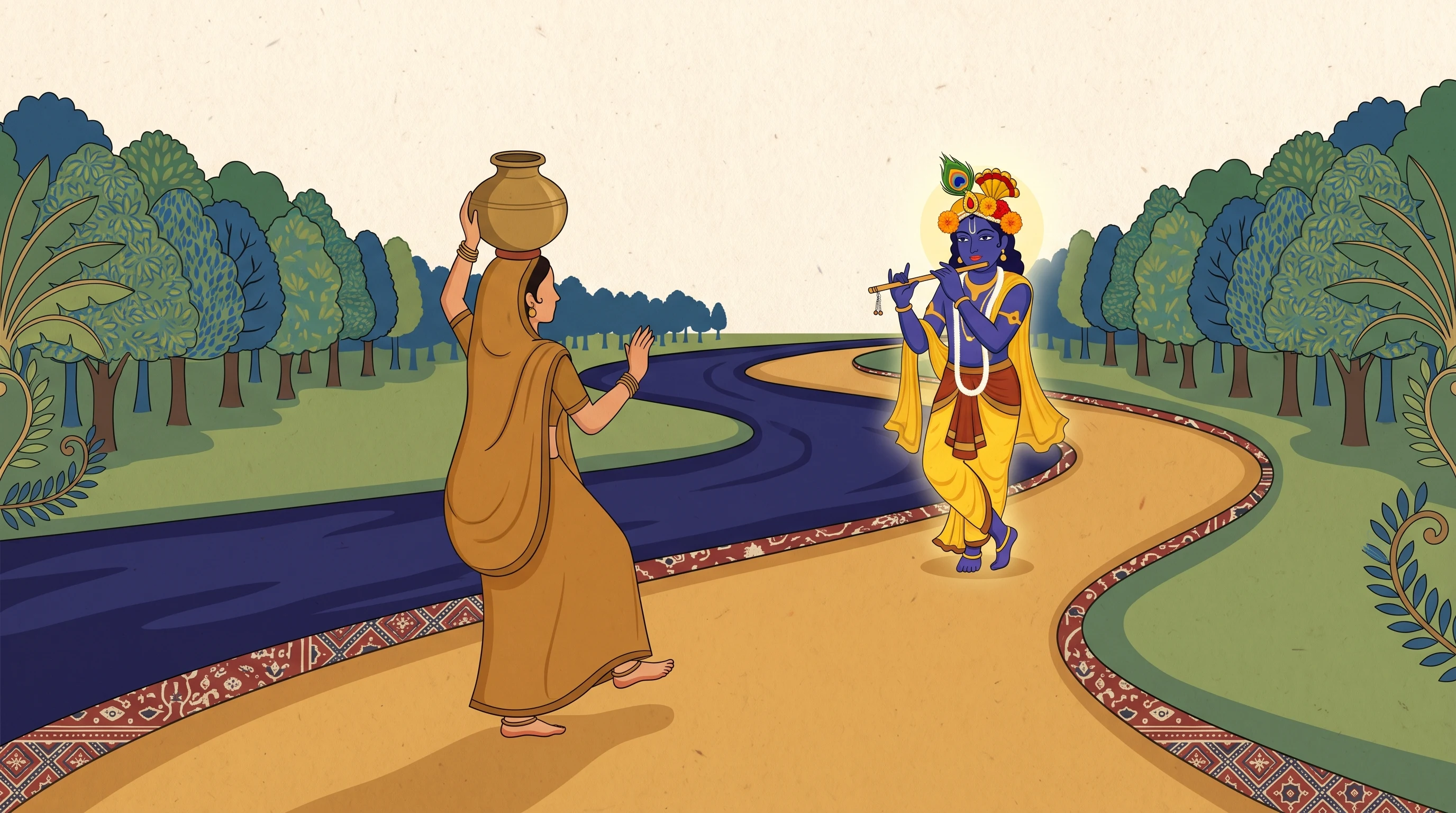
Meerabai's vow of remembrance. On the daily walk to fetch Yamuna water, pot balanced on her head, she finds 'a priceless thing' lying in the middle of the road — and swears never to let him out of her heart again.
નહિ રે વિસારું હરિ,
અંતરમાંથી નહિ રે વિસારું હરિ.
જલ જમુનાનાં પાણી રે જાતાં
શિર પર મટકી ધરી;
આવતાં ને જાતાં મારગ વચ્ચે
અમૂલખ વસ્તુ જડી … અંતરમાંથી
આવતાં ને જાતાં વૃન્દા રે વનમાં
ચરણ તમારે પડી;
પીળાં પિતાંબર જરકશી જામા,
કેસર આડ કરી … અંતરમાંથી
મોરમુગટ ને કાને રે કુંડલ,
મુખ પર મોરલી ધરી;
બાઇ મીરાં કહે પ્રભુ ગિરધરનાં ગુણ,
વિઠ્ઠલ વરને વરી … અંતરમાંથી
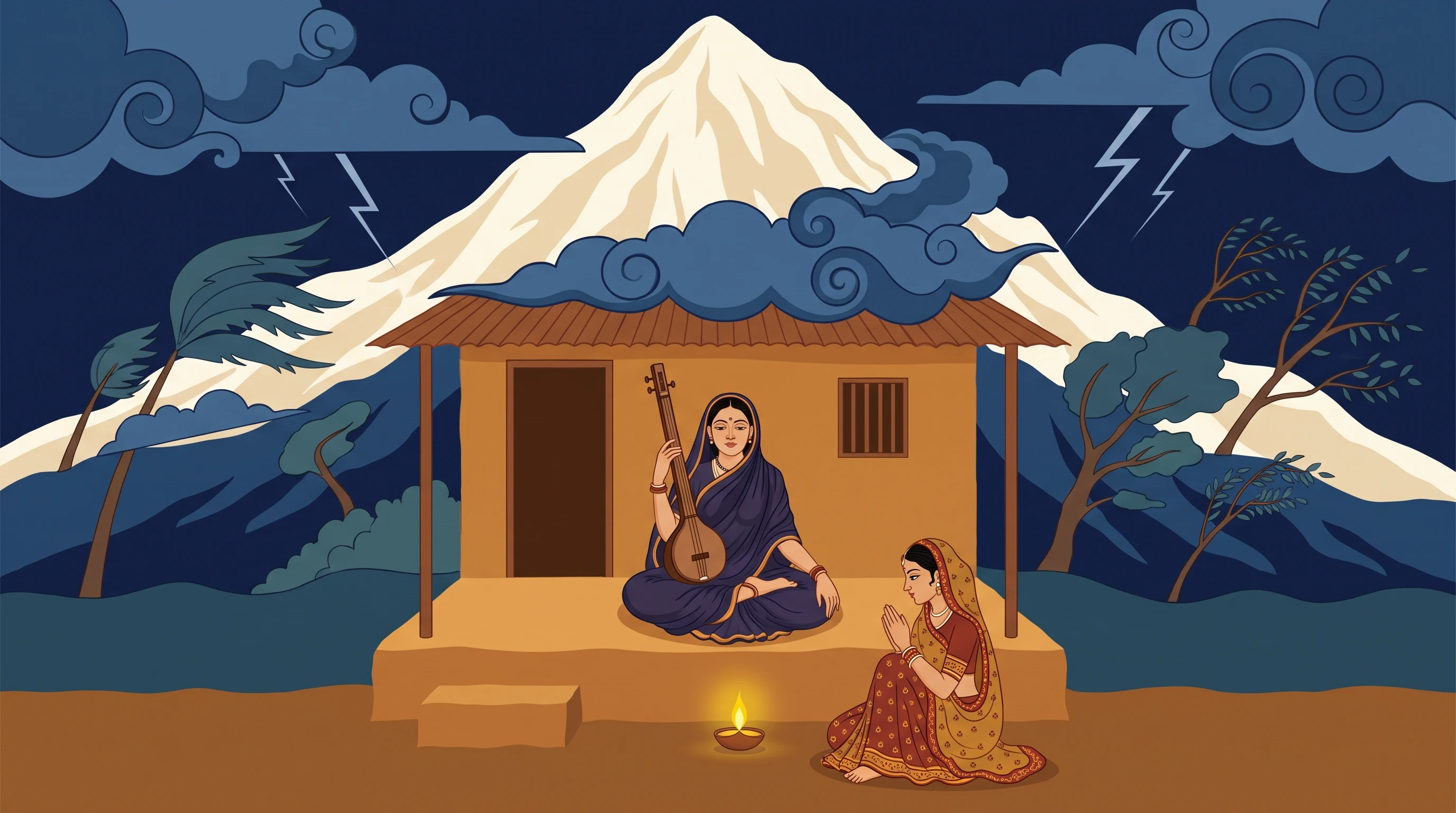
Meerabai's life story is the most famous in all of bhakti: the princess of Merta, married to the crown prince of Mewar and widowed young, who refused the decorum of a royal widow because she considered herself already married — to Krishna. Her defiance made her family's poison cup a legend and made her a wanderer, singing through Vrindavan and finally settling in Dwarka, where her last years were spent and where tradition says she disappeared into the temple idol itself. Her songs travelled the same roads she did, passing from Rajasthani into the bhajan repertoire of every neighbouring language; this pada lives in Gujarat's, sung in homes and bhajan mandalis as naturally as anything of Narsinh's.
The vow of the refrain — નહિ રે વિસારું હરિ, અંતરમાંથી — is not merely "I won't forget Hari" but "I won't let him out of my antar," the inner heart, as if forgetting were an eviction she refuses to carry out. What follows is the memory she is guarding, and it is deliberately ordinary: the daily walk to fetch Yamuna water, the મટકી balanced on her head, the coming and going of an errand — and then, મારગ વચ્ચે, in the middle of the road, અમૂલખ વસ્તુ જડી: a priceless thing, found. The verb જડી is what you say of a lost ring or a coin in the dust. Grace, in Meera's telling, is not attained by austerity; it is stumbled over on the way to the river. The rest of the poem simply looks at what she found, garment by garment — the yellow પિતાંબર, the brocade જામા, the saffron આડ on the forehead, peacock crown, earrings, the flute at his mouth — a darshan assembled with the slow relish of someone who intends never to need to look again.
Then the signature: બાઇ મીરાં કહે — Lady Meera says — and the final act of the poem, વિઠ્ઠલ વરને વરી, "I have wed the bridegroom Vitthal." That the Rajasthani princess ends her Gujarati-sung pada by marrying the Marathi saints' god of Pandharpur is the whole geography of bhakti in four words: one beloved, wearing whatever name the nearest road supplies. Beside the devotion of વૈષ્ણવ જન તો, which defines the ideal devotee from the outside, Meera's pada is the view from inside — not a definition of love but a refusal to surrender it.
મીરાંબાઈ
Meerabai was a Rajput princess of Merta who became the most beloved woman poet of the bhakti movement. Married into the royal house of Mewar and widowed young, she declared Krishna — her *ગિરધર ગોપાલ* — her true and only husband, and answered her in-laws' persecution, including the poison cup of legend, with songs instead of submission. She abandoned the court to wander as a mendicant singer, through Vrindavan and finally to Dwarka on the Gujarat coast, where she spent her last years and where tradition says she merged into the idol of Dwarkadhish. She composed in the mingled Rajasthani and Braj of her wandering, but her padas crossed effortlessly into Gujarati oral tradition, where generations of bhajan singers have made her an adopted voice of Gujarat's devotional canon alongside Narsinh Mehta.
All poems by Meerabai →