પસંદ કરેલી કૃતિ · selected work
મેરુ રે ડગે
Meru Re Dage
Though Meru Itself Should Shake
Gangasati · c. 14th century
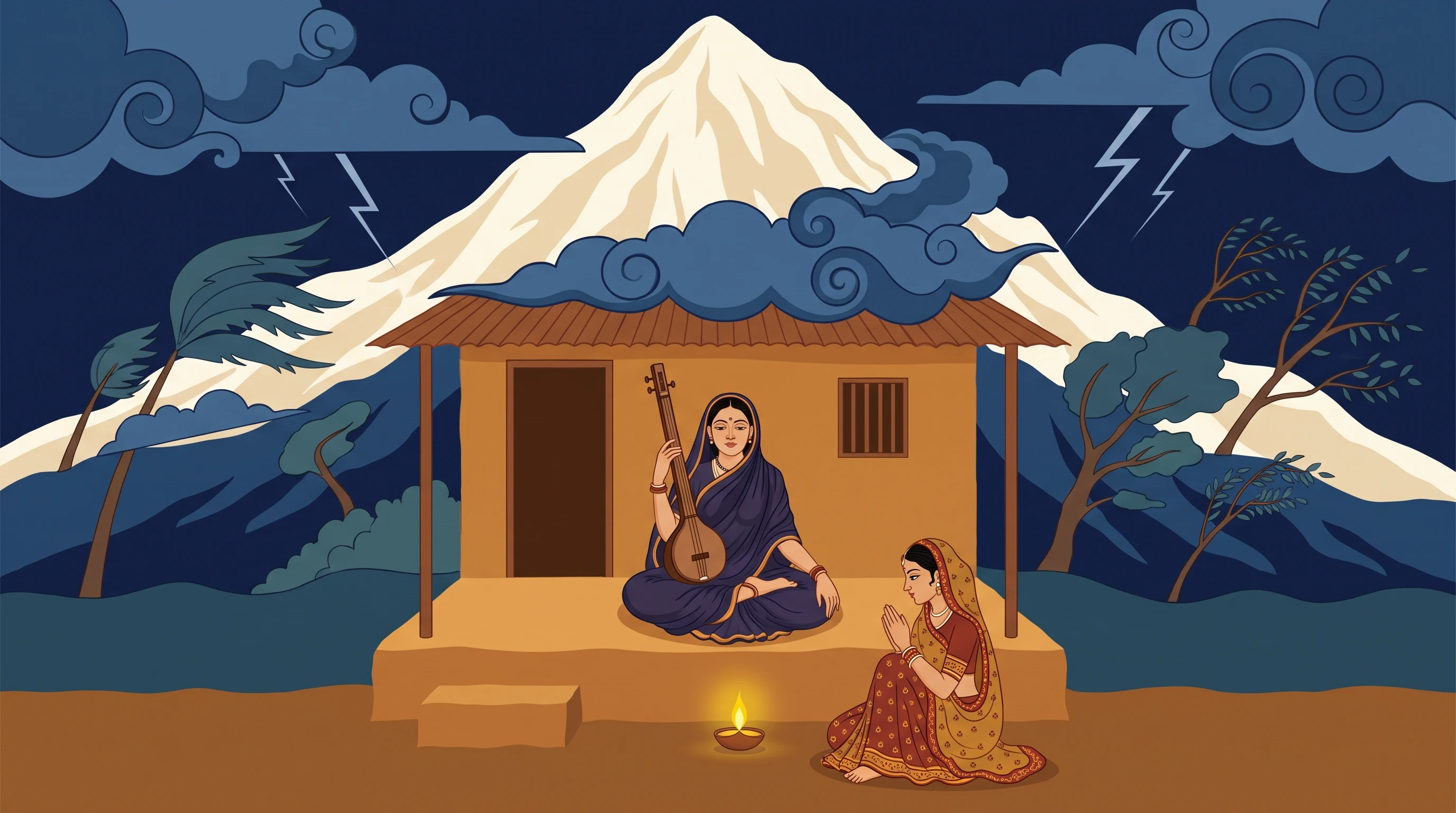
The axis of the universe may wobble and the cosmos crack — the devotee's mind does not move. Gangasati's most famous bhajan, sung to her disciple Panbai as part of a fifty-two-day spiritual curriculum, defines God's person by a single measure: stillness that out-mountains the mountain.
મેરુ રે ડગે ને જેનાં મન નો ડગે
મરને ભાંગી રે પડે ભરમાંડ રે;
વિપદ પડે પણ વણસે નહિ,
ઈ તો હરિજનનાં પરમાણ રે. મેરુ રે૦
ભાઈ રે! હરખ ને શોકની ના'વે જેને હેડકી ને
શીશ તો કર્યાં કુરબાન રે,
સતગુરુ વચનમાં શૂરા થઈ ચાલે,
જેણે મેલ્યાં અંતરનાં માન રે. મેરુ રે૦
ભાઈ રે! નિત્ય રે'વું સતસંગમાં ને
જેને આઠે પો'ર આનંદ રે,
સંકલ્પવિકલ્પ એકે નહિ ઉરમાં,
જેણે તોડી નાખ્યો માયા કેરો ફંદ રે. મેરુ રે૦
ભાઈ રે! ભગતી કરો તો એવી રીતે કરજો પાનબાઈ
રાખજો વચનુંમાં વિશવાસ રે,
ગંગા રે સતી એમ બોલિયાં રે,
તમે થાજો સતગુરુજીનાં દાસ રે. મેરુ રે૦
The frame of this bhajan is one of the most moving in Gujarati devotion. Tradition tells that when Gangasati's husband resolved to leave his body in samadhi, she asked to follow — and was given one task first: finish the teaching of Panbai, the young woman of the household in her spiritual care. She is said to have sung one bhajan each day for fifty-two days, a complete syllabus of the inner life delivered in the domestic second person, and then, the course concluded, to have taken samadhi herself. That is why these songs sound like no other bhakti in the language: they are not petitions to a god but lessons to a beloved student, calm, practical, and final — every stanza here but the first begins ભાઈ રે!, the Saurashtra singer's homely address, and the last turns to પાનબાઈ by name.
The opening image is a dare flung at the cosmos. Meru — the golden mountain at the axis of creation, the peg the universe turns on — may shake; the whole ભરમાંડ may crack and come down; the mind of God's person does not move. Calamity may fall, વિપદ પડે, but such a one does not spoil — ઈ તો હરિજનનાં પરમાણ રે: that, says Gangasati, is the proof, the assay-mark, of a હરિજન. What follows is the specification sheet: no hiccup of joy or grief; the head already offered, શીશ તો કર્યાં કુરબાન; walking soldier-brave, શૂરા થઈ, in the Satguru's word; inner pride set down; constant satsang; gladness through all eight watches of the day; not one સંકલ્પ or વિકલ્પ — not one scheme or second thought — left in the heart, the snare of maya snapped. The vocabulary is a warrior's, and that is Saurashtra's signature: in this soil even a woman teaching her daughter-in-law speaks of devotion as a battlefield where retreat is unthinkable.
Notably absent is any god's name. No Krishna, no Rama, no form to adore: only the Guru, the word, and the mind's own stillness — the abstract, nirgun stream of Saurashtra's bhajan tradition, carried here in a woman's voice across perhaps seven centuries. The song remains a fixture of the santvani stage, where a bhajanik will open it low and slow and let it climb; and beside the archive's other definitions of the ideal devotee — Narsinh's વૈષ્ણવ જન તો measures him by compassion — Gangasati's measure is sterner and stranger: be the thing that does not move when the universe does.
ગંગાસતી
Gangasati is the great woman mystic of the Saurashtra bhajan tradition, and almost everything about her life — even her century — belongs to oral memory rather than record; tradition places her somewhere between the twelfth and fourteenth centuries. Born in Rajpara and married into the Gohil household of Samdhiala near Bhavnagar, she is remembered through a single luminous story: when her husband resolved to take samadhi, he charged her with completing the spiritual education of Panbai, the young woman of the house in her care. Tradition holds that she then composed one bhajan a day for fifty-two days — a complete curriculum of the inner life, addressed simply and directly to *Panbai* — and, the teaching finished, took samadhi herself. The bhajans avoid the names of particular gods, speaking instead of the Guru, the word, and the unshakable mind, and they remain among the most sung verses in Saurashtra's santvani gatherings.
All poems by Gangasati →