કવિ પરિચય · poet portrait
દામોદર બોટાદકર
Damodar Botadkar
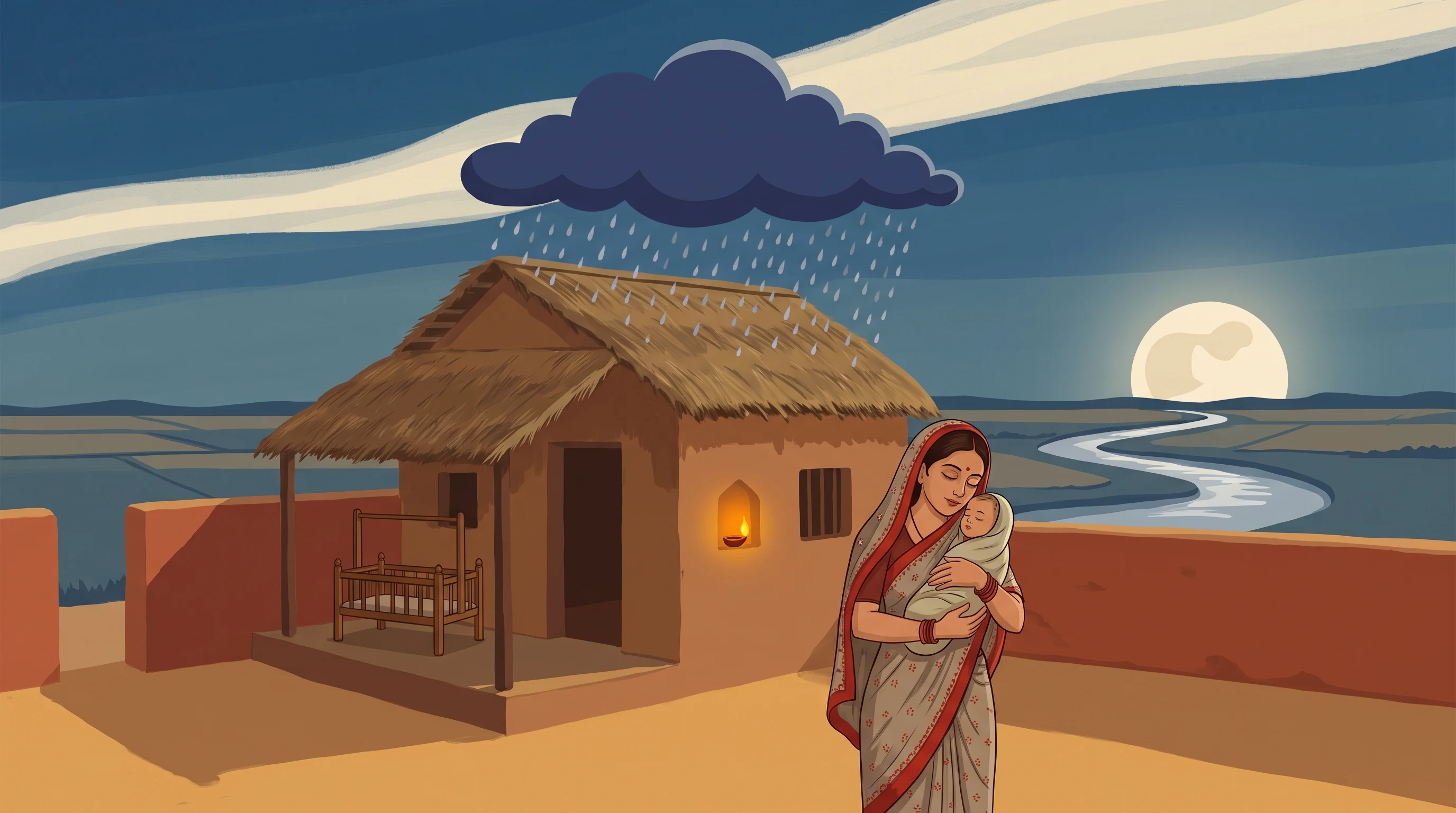
Damodar Khushaldas Botadkar made the Gujarati home his poetic universe. A schoolmaster’s life of near-poverty in Botad — he taught himself Sanskrit while working for a pittance — produced a poet who found his subject not in courts or cosmic visions but in the relationships of the family courtyard: mother, sister, daughter-in-law, the bride leaving for her in-laws’ house. He poured these into raas and geet written to folk tunes, gathered in collections he named after rivers — Kallolini, Strotasvini, Nirjharini, Rāstarangini, Shaivalini — as if each book were a stream of domestic feeling. The verses fit the mouths of Gujarat’s women so perfectly that many passed straight into the anonymous folk repertoire, sung at garba and cradle-side by people who never knew a poet had written them; his જનની, with its refrain that a mother’s equal cannot be found, became simply how Gujarati praises its mothers.