પસંદ કરેલી કૃતિ · selected work
જનની
Janani (Janani Ni Jod)
Mother
Damodar Botadkar · c. 1920
Honey is sweet and so is the monsoon — sweeter than both, my mother. Botadkar's geet measures her against the devs' milk, the Ganga's flow, and the twelve-month raincloud, and retires the competition with the line Gujarati still uses for every mother: her equal, friend, will not be found.
મીઠા મધુ ને મીઠા મેહુલા રે લોલ,
એથી મીઠી તે મોરી માત રે.
જનનીની જોડ સખિ ! નહિ જડે રે લોલ.
પ્રભુના એ પ્રેમતણી પૂતળી રે લોલ,
જગથી જુદેરી એની જાત રે. જનનીની૦
અમીની ભરેલ એની આંખડી રે લોલ,
વહાલનાં ભરેલાં એનાં વેણ રે. જનનીની૦
હાથ ગૂંથેલ એના હીરના રે લોલ,
હૈયું હેમંત કેરી હેલ રે. જનનીની૦
દેવોને દૂધ એનાં દોહ્યલાં રે લોલ,
શશીએ સિંચેલ એની સોડ્ય રે. જનનીની૦
જગનો આધાર એની આંગળી રે લોલ,
કાળજામાં કૈંક ભર્યા કોડ રે. જનનીની૦
ચિત્તડું ચડેલ એનું ચાકડે રે લોલ,
પળના બાંધેલ એના પ્રાણ રે. જનનીની૦
મૂંગી આશિષ ઉરે મલકતી રે લોલ,
લેતાં ખૂટે ન એની લહાણ રે. જનનીની૦
ધરતી માતા યે હશે ધ્રૂજતી રે લોલ,
અચળા અચૂક એક માય રે. જનનીની૦
ગંગાનાં નીર તો વધે ઘટે રે લોલ,
સરખો એ પ્રેમનો પ્રવાહ રે. જનનીની૦
વરસે ઘડીક વ્યોમવાદળી રે લોલ,
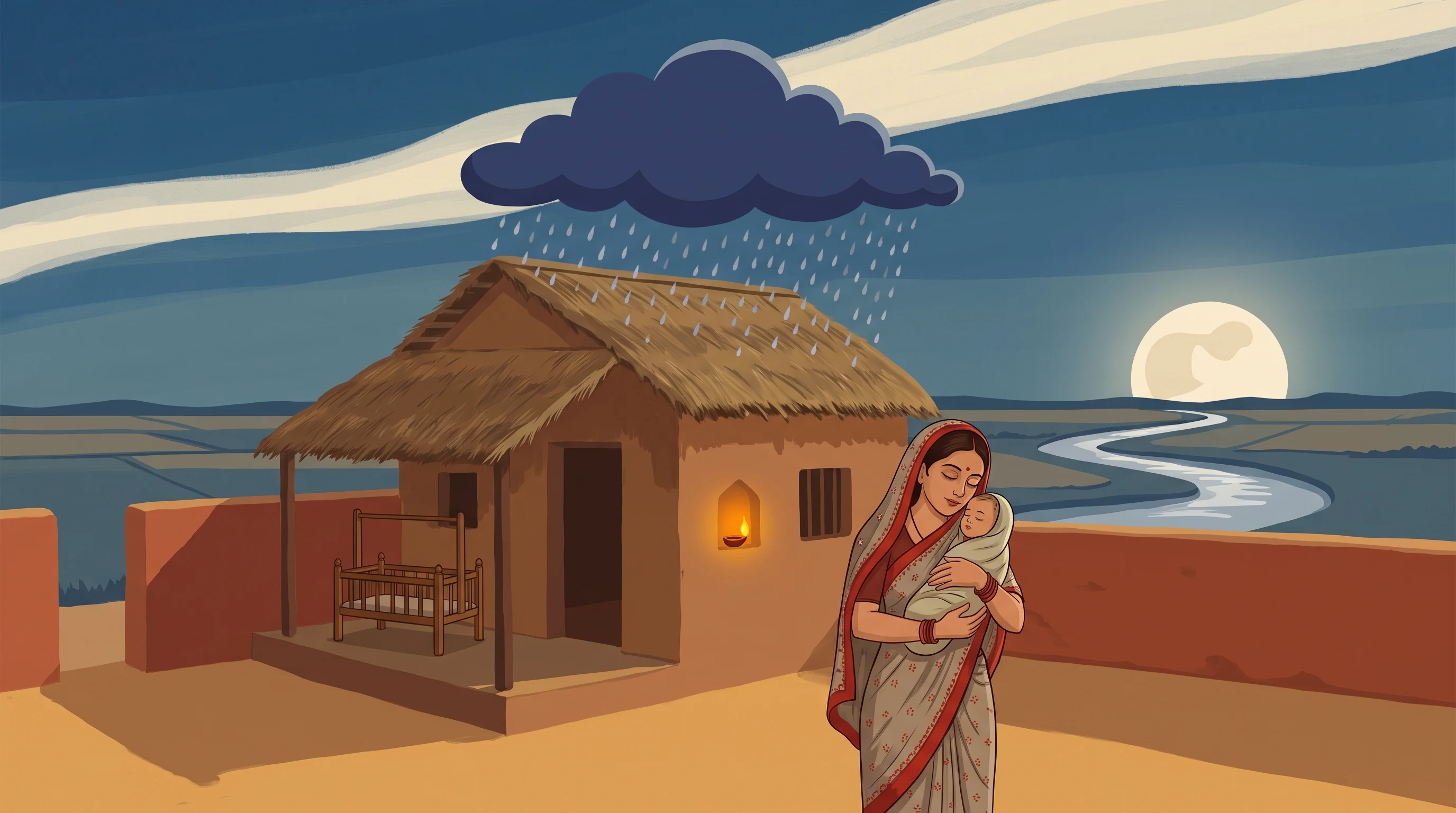
માડીનો મેઘ બારે માસ રે. જનનીની૦
ચળતી ચંદાની દીસે ચાંદની રે લોલ,
એનો નહિ આથમે ઉજાસ રે,
જનનીની જોડ સખિ ! નહિ જડે રે લોલ.
Damodar Botadkar spent his life as a poorly paid schoolmaster in Botad, teaching himself Sanskrit at night and writing verse about the one subject he owned completely: the Gujarati household. Where his contemporaries reached for nationalism or philosophy, he wrote the mother, the sister, the new bride, the daughter leaving home — and set them to folk tunes so the household itself could sing them back. This geet, published in રાસતરંગિણી in 1923 to the ઢાળ of a well-known folk song, is the summit of that project: a praise-poem to the mother built as a ladder of comparisons, each rung kicked away as soon as it is climbed. Honey is sweet; the monsoon is sweet; એથી મીઠી તે મોરી માત — sweeter than these, my mother. And then the refrain that Gujarati has never put down since: જનનીની જોડ સખિ! નહિ જડે રે લોલ — her equal, friend, will not be found.
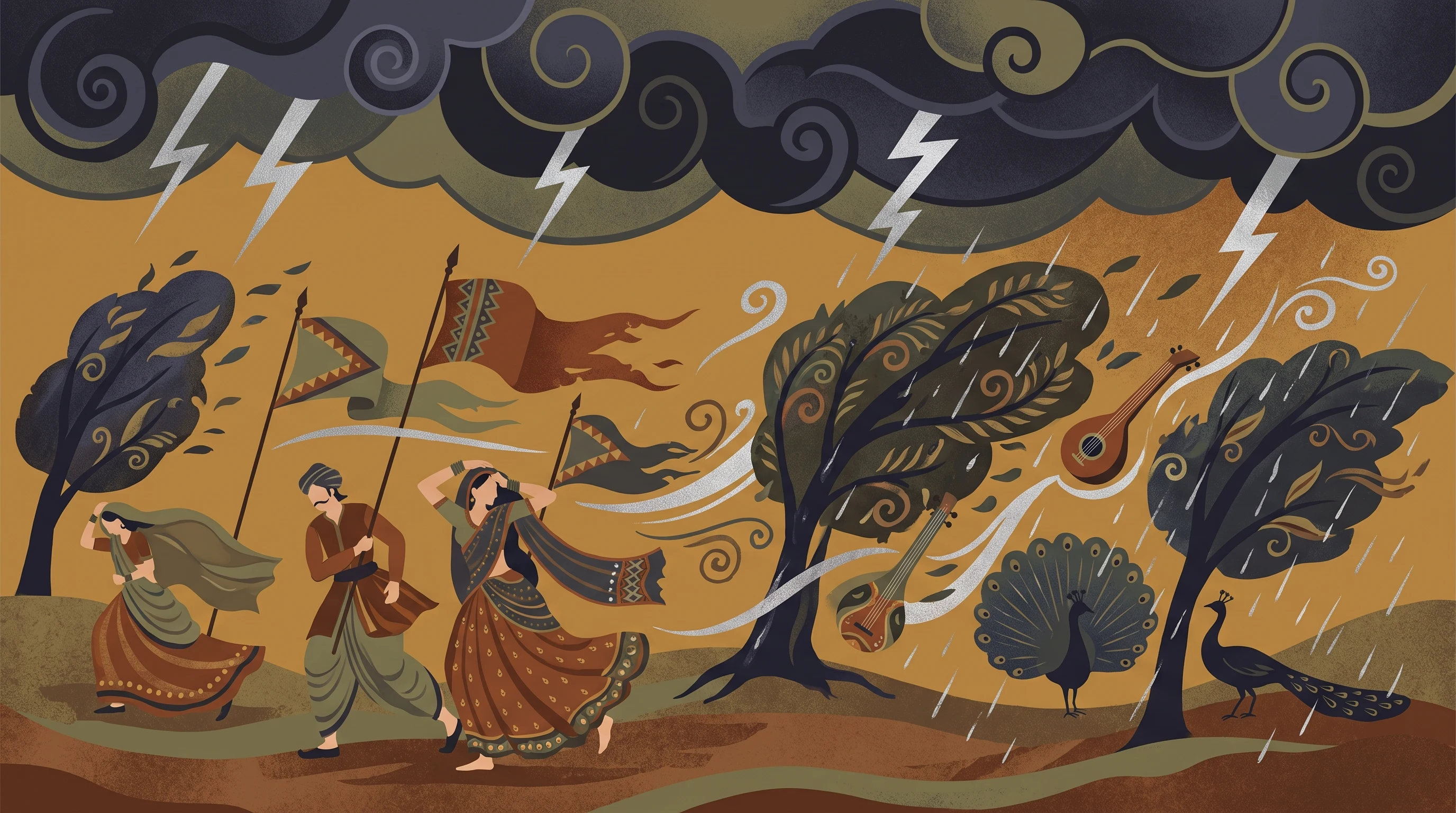
The comparisons are chosen with a craftsman's cunning, because every candidate is itself a superlative. She is a doll moulded of God's own love, a species apart from the world; her eyes are filled with અમી — nectar — and her words with tenderness; her hands are woven of silk-thread, her heart a cool spell of early winter. The gods find milk દોહ્યલાં — hard to come by — that she gives freely; the moon itself has watered the sheltering fold of her lap. One finger of hers holds up a child's entire world. Even the great constants fail the audition: Mother Earth, the poem suspects, must tremble sometimes — અચળા અચૂક એક માય — only mother is unmoving without fail; the Ganga's waters rise and fall, her love flows at one level; a sky-cloud rains for a moment, માડીનો મેઘ બારે માસ — mother's cloud rains all twelve months. The closing image seals it in silver: the shifting moon's light will set; એનો નહિ આથમે ઉજાસ — her radiance has no setting.
What happened to the poem afterward is Botadkar's truest monument: it dissolved into the tradition it imitated. Sung at cradles, in school assemblies, at garba, quoted in eulogies and stitched onto wall-hangings, the geet became so completely a folk possession that its authorship dropped away, the same fate that met Narsinh's રૂડી ને રંગીલી — in Gujarat, the highest honor a lyric can earn is to be mistaken for something the language always knew. The schoolmaster of Botad, who died a year after રાસતરંગિણી appeared, wrote the sentence with which his mother tongue now praises all its mothers.
દામોદર બોટાદકર
Damodar Khushaldas Botadkar made the Gujarati home his poetic universe. A schoolmaster's life of near-poverty in Botad — he taught himself Sanskrit while working for a pittance — produced a poet who found his subject not in courts or cosmic visions but in the relationships of the family courtyard: mother, sister, daughter-in-law, the bride leaving for her in-laws' house. He poured these into raas and geet written to folk tunes, gathered in collections he named after rivers — *Kallolini*, *Strotasvini*, *Nirjharini*, *Rāstarangini*, *Shaivalini* — as if each book were a stream of domestic feeling. The verses fit the mouths of Gujarat's women so perfectly that many passed straight into the anonymous folk repertoire, sung at garba and cradle-side by people who never knew a poet had written them; his જનની, with its refrain that a mother's equal cannot be found, became simply how Gujarati praises its mothers.
All poems by Damodar Botadkar →