પસંદ કરેલી કૃતિ · selected work
આવકારો
Aavkaro Mitho Aapje
A Sweet Welcome
Dula Bhaya Kag, Kag Bapu · 20th century
The gentlest code of conduct in Gujarati verse. Kag Bapu's instructions for receiving a guest — give a sweet welcome, listen without looking away, eat together, walk them to the gate — sung until they became the manners of a whole culture.
હે જી તારા આંગણિયા પુછીને જે કોઈ આવે રે,
આવકારો મીઠો… આપજે રે જી…
હે જી તારે કાને સંકટ કોઈ સંભળાવે રે,
બને તો થોડું… કાપજે રે જી…
માનવીની પાસે કોઈ… માનવી ન આવે રે…
તારા દિવસની પાસે દુ:ખિયાં આવે રે
આવકારો મીઠો… આપજે રે જી…
કેમ તમે આવ્યા છો ?… એમ નવ કે'જે રે…
એને ધીરે એ ધીરે તું બોલવા દેજે રે
આવકારો મીઠો… આપજે રે જી…
વાતું એની સાંભળીને… આડું નવ જોજે રે…
એને માથું એ હલાવી હોંકારો દેજે રે
આવકારો મીઠો… આપજે રે જી…
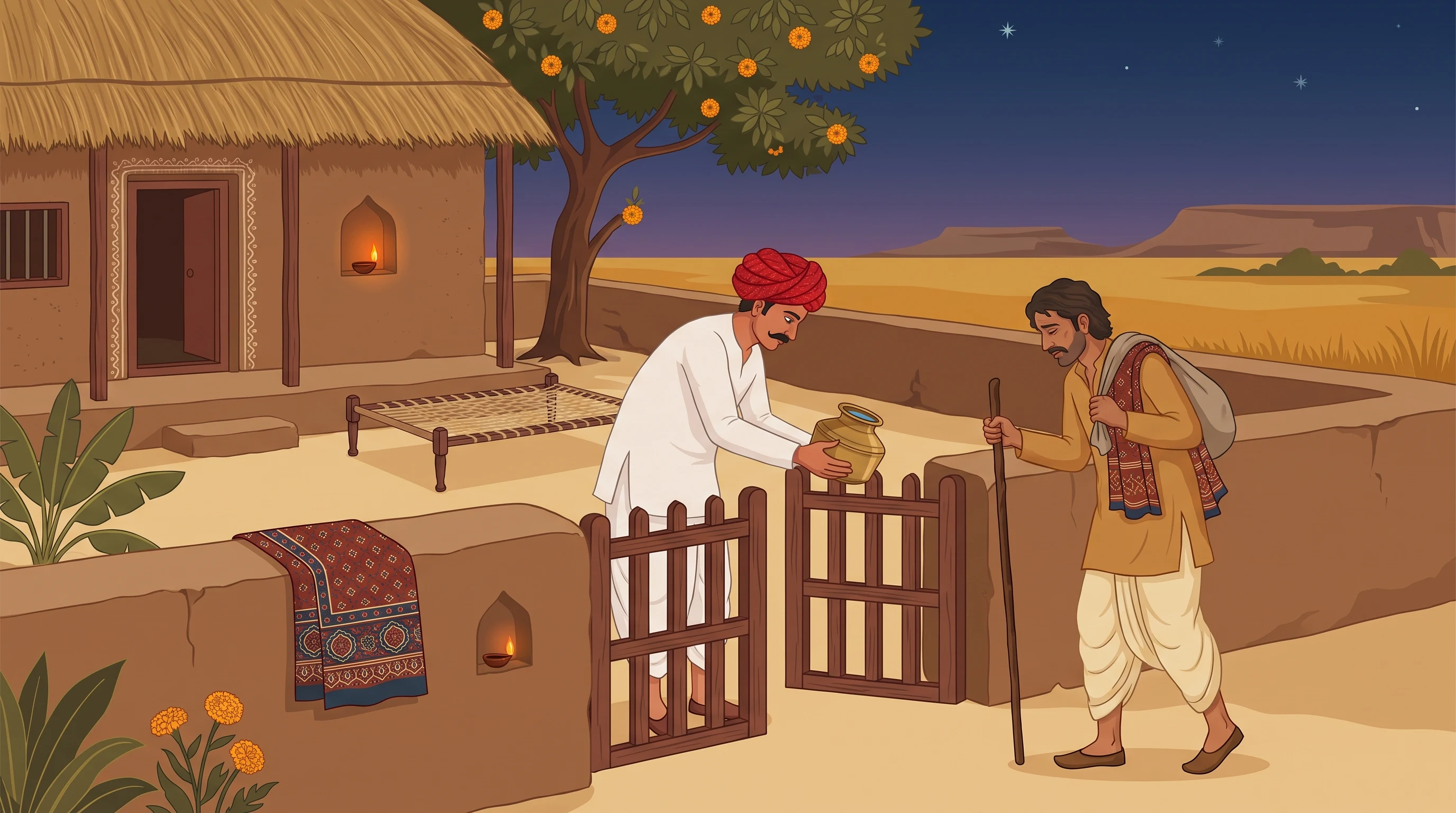
'કાગ' એને પાણી પાજે… સાથે બેસી ખાજે રે…
એને ઝાંપા એ સુધી તું મેલવા જાજે રે
આવકારો મીઠો… આપજે રે જી…
This is a geet of instruction, written in the second person the way a grandfather speaks: if someone asks their way to your courtyard, then give a sweet welcome. Dula Bhaya Kag came from the Charan community, the hereditary bards of Saurashtra, and his gift was to compress that tradition's public morality into lines a farmer could carry home from a night of santvani. Here the subject is the oldest duty of the village world — the guest — but Kag skips the mythological framing entirely. There is no god disguised as a traveller in this poem, no reward promised. The welcome is owed simply because someone came.
What lifts the poem above homily is its clear-eyed middle stanza. માનવીની પાસે કોઈ માનવી ન આવે રે — no one comes to a person; તારા દિવસની પાસે દુ:ખિયાં આવે રે — the suffering come to your days, your good fortune. It is a startlingly unsentimental account of why anyone knocks on a door: not for your company but because you have something and they, today, have less. And having said this plainly, the poem draws the opposite of the cynical conclusion — since it is need standing in your doorway, the courtesies matter more, not less. So the instructions become small and precise: don't ask why they've come, let them get to it slowly, don't look away while they talk, nod, give the હોંકારો — the little grunt of assent that tells a Gujarati speaker they are being heard. The final stanza carries Kag's signature in the Charan style, the poet stepping in by name to give the last three commands: water them, eat beside them, and walk them all the way to the ઝાંપો, the village gate.
The song entered the Gujarati school curriculum and never left, which means it has been recited by children for longer than most of them ever realise; sung on the folk stage, it became one of the most beloved items of the Saurashtra repertoire. Its afterlife is unusual for a poem: it functions less as literature than as etiquette, quoted at weddings and funerals and shop counters — આવકારો મીઠો આપજે — whenever someone needs reminding of how a guest is received.
દુલા ભાયા કાગ
Dula Bhaya Kag — known across Saurashtra simply as *Kag Bapu* — was a Charan bard who turned five years of village schooling into one of the great bodies of Gujarati folk verse. He herded cattle at thirteen in the countryside near Mahuva, absorbed the duha and chhand metres of his community's oral tradition, and went on to fill the multi-volume *કાગવાણી* with bhajans, prayers, duhas, and geets in a voice so rooted that much of it circulates as anonymous folk song. His concerns were a villager's ethics writ large: hospitality, the dignity of the poor, devotion without ritual pomp — and when the Bhoodan movement came to Saurashtra he gave away his own land to match his verse. He was awarded the Padma Shri in 1962, and his songs remain staples of the Gujarati school curriculum and the santvani stage alike.
All poems by Dula Bhaya Kag →