પસંદ કરેલી કૃતિ · selected work
ચારણ-કન્યા
Charan Kanya
The Charan Girl
Zaverchand Meghani, Rashtriya Shayar · 1928
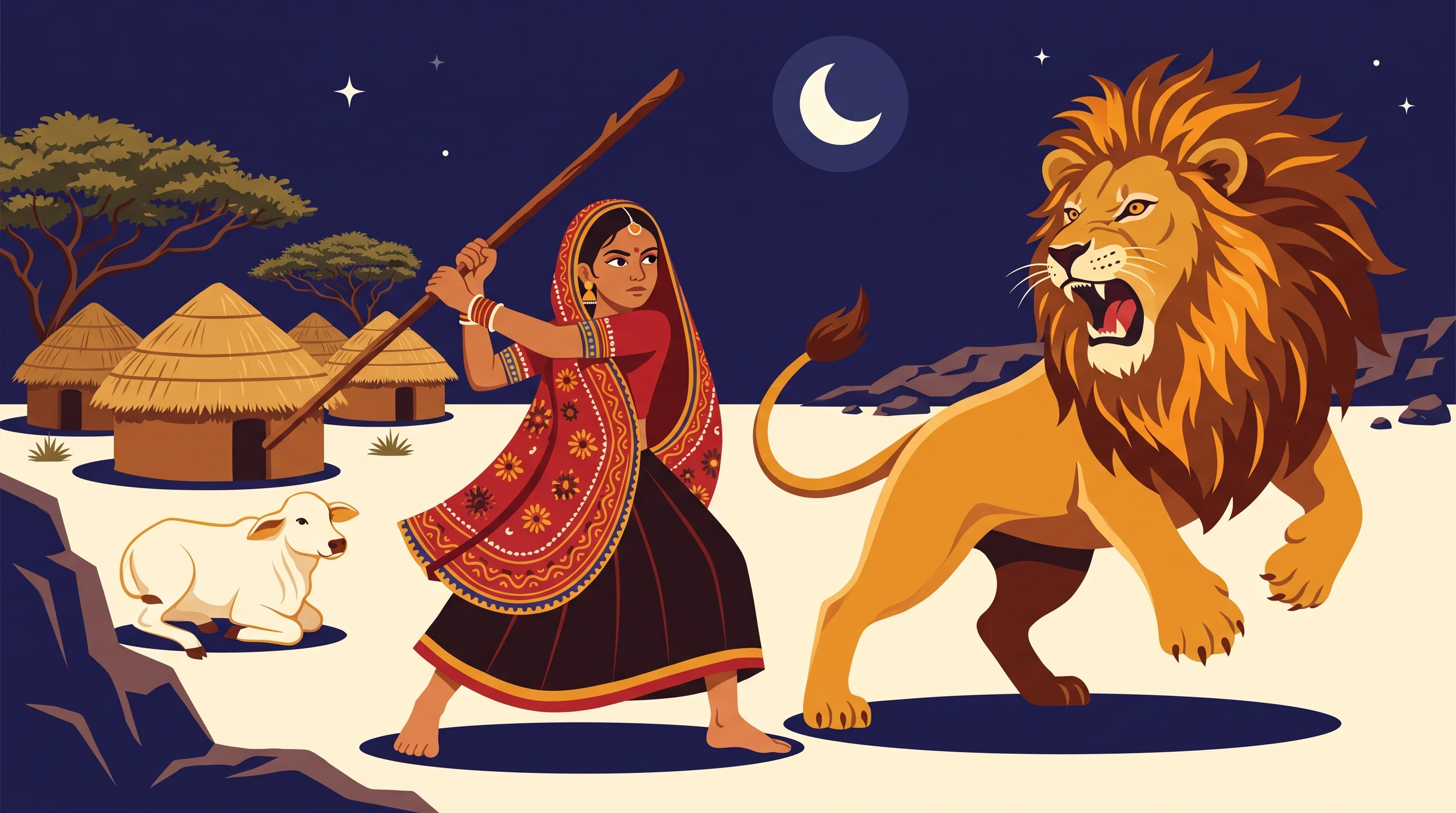
A real fourteen-year-old girl, a real lion, and a stick. Meghani spends seven roaring stanzas building the king of the Gir into a cosmic terror — then lets a barefoot Charan girl chase him off with insults and a staff. The most recited poem in Gujarati, and its proudest reversal.
સાવજ ગરજે !
વનરાવનનો રાજા ગરજે
ગર કાંઠાનો કેસરી ગરજે
ઐરાવત કુળનો અરિ ગરજે
કડ્ય પાતળિયો જોદ્ધો ગરજે
મ્હોં ફાડી માતેલો ગરજે
જાણે કો જોગંદર ગરજે
નાનો એવો સમદર ગરજે !
ક્યાં ક્યાં ગરજે!
બાવળના ઝાળાંમાં ગરજે
ડુંગરના ગાળામાં ગરજે
કણબીના ખેતરમાં ગરજે
ગામ તણા પાદરમાં ગરજે
નદીઓની ભેખડમાં ગરજે
ગિરિઓની ગોહરમાં ગરજે
ઊગમણો આથમણો ગરજે
ઓરો ને આઘેરો ગરજે.
થર! થર! કાંપે
વાડામાં વાછડલાં કાંપે
કૂબામાં બાળકડાં કાંપે
મધરાતે પંખીડાં કાંપે
ઝાડ તણાં પાંદડલાં કાંપે
પહાડોના પત્થર પણ કાંપે
સરિતાઓનાં જળ પણ કાંપે
સૂતાં ને જાગંતાં કાંપે
જડ ને ચેતન સૌએ કાંપે
આંખ ઝબૂકે !
કેવી એની આંખ ઝબૂકે !
વાદળમાંથી વીજ ઝબૂકે
જોટે ઊગી બીજ ઝબૂકે
જાણે બે અંગાર ઝબૂકે
હીરાના શણગાર ઝબૂકે
જોગંદરની ઝાળ ઝબૂકે
વીર તણી ઝંઝાળ ઝબૂકે
ટમટમતી બે જ્યોત ઝબૂકે
સામે ઊભું મોત ઝબૂકે.
જડબાં ફાડે!
ડુંગર જાણે ડાચાં ફાડે!
જોગી જાણે ગુફા ઉઘાડે!
જમ રાજાનું દ્વાર ઉઘાડે!
પૃથ્વીનું પાતાળ ઉઘાડે!
બરછી સરખા દાંત બતાડે
લસ! લસ! કરતી જીભ ઝુલાવે.
બ્હાદર ઉઠે!
બડકંદાર બિરાદર ઉઠે
ફરસી લેતો ચારણ ઉઠે
ખડગ ખેંચતો આહિર ઉઠે
બરછી ભાલે કાઠી ઉઠે
ઘરઘરમાંથી માટી ઉઠે
ગોબો હાથ રબારી ઉઠે
સોટો લઇ ઘરનારી ઉઠે
ગાય તણા રખવાળો ઉઠે
દૂધમલા ગોવાળો ઉઠે
મૂછે વળ દેનારા ઉઠે
ખોંખારો ખાનારા ઉઠે
માનું દૂધ પીનારા ઉઠે
જાણે આભ મિનારા ઉઠે
ઊભો રે'જે !
ત્રાડ પડી કે ઉભો રે'જે!
ગિરના કુત્તા ઉભો રે'જે!
કાયર દુત્તા ઉભો રે'જે!
પેટભરા ! તું ઉભો રે'જે!
ભૂખમરા ! તું ઉભો રે'જે!
ચોર–લૂંટારા ઉભો રે'જે!
ગા–ગોઝારા ઉભો રે'જે!
ચારણ-કન્યા !
ચૌદ વરસની ચારણ–કન્યા
ચુંદડિયાળી ચારણ–કન્યા
શ્વેત સુંવાળી ચારણ–કન્યા
બાળી ભોળી ચારણ–કન્યા
લાલ હીંગોળી ચારણ–કન્યા
ઝાડ ચડન્તી ચારણ–કન્યા
પ્હાડ ઘુમન્તી ચારણ–કન્યા
જોબનવંતી ચારણ–કન્યા
આગ–ઝરંતી ચારણ–કન્યા
નેસ–નિવાસી ચારણ–કન્યા
જુગદમ્બા–શી ચારણ–કન્યા
ડાંગ ઉઠાવે ચારણ–કન્યા
ત્રાડ ગજાવે ચારણ–કન્યા
હાથ હિલોળી ચારણ–કન્યા
પાછળ દોડી ચારણ–કન્યા.
ભયથી ભાગ્યો !
સિંહણ, તારો ભડવીર ભાગ્યો
રણ મેલીને કાયર ભાગ્યો
ડુંગરનો રમનારો ભાગ્યો
હાથીનો હણનારો ભાગ્યો
જોગીનાથ જટાળો ભાગ્યો
મોટો વીર મુછાળો ભાગ્યો
નર થઇ તું નારીથી ભાગ્યો
નાનકડી છોડીથી ભાગ્યો.
અસ્ત્રીના સતથી એ ભાગ્યો
સાચી હિમ્મતથી એ ભાગ્યો !
Meghani prefaced this poem, published in વેણીનાં ફૂલ in 1928, with a plain factual note: at a nes — a herders' hamlet — near Tulsishyam in the Gir forest, a fourteen-year-old Charan girl named Hirbai had, about two years earlier, single-handedly driven off the lion that killed her calf, refusing to let it taste the carcass, armed with nothing but a stick. That a poem this mythic in voltage rests on a documented incident is the whole point. Meghani spent his life collecting Saurashtra's folk heroism, and here he caught it live: not a legend from five centuries ago but a girl who was still a teenager when Gujarat started reciting her.
The construction is pure percussion. Each stanza opens with a two-word detonation — સાવજ ગરજે!, the lion roars! — and then hammers its verb through an entire litany: he roars in the thorn thickets, in the ravines, in the farmer's field, at the village edge; everything trembles, calves in the pens, children in the huts, the very stones of the hills; his eyes flash like lightning, like twin embers, like death standing opposite. For seven stanzas Meghani inflates the lion into a cosmic force — his open jaws are the door of Yama's kingdom, the underworld unlidded — and the whole countryside of Saurashtra's martial castes rises to meet him, Charan with axe, Ahir with sword, Kathi with lance, even the housewife with her cane. And then the eighth stanza simply repeats, fifteen times, whose poem this actually is: ચૌદ વરસની ચારણ-કન્યા — fourteen years old, in her chundadi, tree-climbing, hill-roaming, fire-spitting, જુગદમ્બા-શી — like the Mother Goddess herself — raising her staff and running at the animal the whole world was trembling from. Her insults do what no spear in the poem does: she calls him dog of the Gir, belly-stuffer, cow-slaughterer — and the king runs. The final stanza is addressed, with perfect cruelty, to the lioness: your hero fled, madam — being male, he ran from a female, from a little girl, from a woman's truth and honest courage.
The poem became — and remains — the most electrifying recitation piece in the language, a hundred years of schoolchildren discovering they can make a room shake with it. It sits beside Meghani's other portrait of fearless Saurashtra womanhood, શિવાજીનું હાલરડું, but where that poem sings courage into a sleeping infant, this one watches courage happen in the open, in daylight, with a stick. Bards still perform it at dayros across Gujarat, and in the land of the Gir lion it carries a double pride: the only place on earth the lion survives is also the place that sings, fondly and forever, about the day a girl made him run.
ઝવેરચંદ મેઘાણી
Zaverchand Meghani — honoured by Mahatma Gandhi himself with the title *Rashtriya Shayar* (National Poet) — was the great collector and amplifier of Gujarat's voice. Born in Chotila, Saurashtra, he spent his life gathering folk songs, ballads, and oral histories from villages across the region, preserving them in landmark compilations like *Saurashtra ni Rasdhar*. But he was far more than an archivist: his original poetry pulsed with the rhythms he had absorbed from folk tradition, producing lyrics that could make a concert hall feel like a monsoon field. A fearless journalist and freedom fighter, he was imprisoned by the British for his inflammatory verses. He died on the eve of independence in 1947, just hours before Gandhi — the two losses inseparable in Gujarat's memory.
All poems by Zaverchand Meghani →