પસંદ કરેલી કૃતિ · selected work
આંધળી માનો કાગળ
Andhali Ma No Kagal
A Blind Mother's Letter
Indulal Gandhi, Kavi · c. 1935
A blind, illiterate mother in a Saurashtra village dictates a letter to her son who vanished into Mumbai five years ago — no money, no word, nothing but silence. Stanza by stanza she sets her hunger and rags against the city comforts she imagines he now enjoys, until the letter ends where her poverty always does: at the door, asking for alms.
અમૃત ભરેલું અંતર જેનું, સાગર જેવડું સત્,
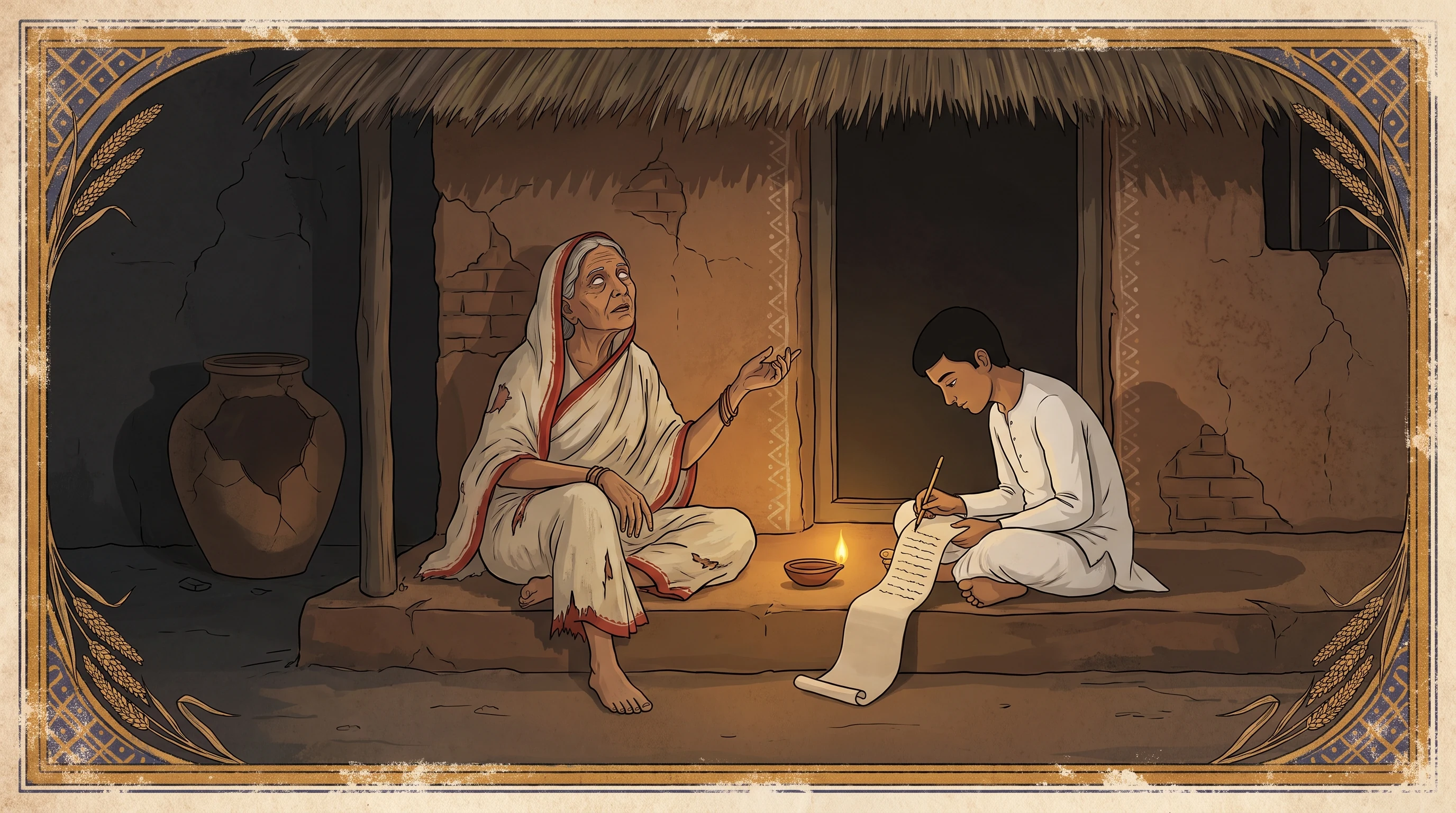
પૂનમચંદના પાનિયા આગળ ડોશી લખાવે ખત,
ગગો એનો મુંબઇ કામે;
ગીગુભાઇ નાગજી નામે.
લખ્ય કે માડી ! પાંચ વરસમાં પ્હોંચી નથી એક પાઇ
કાગળની એક ચબરખી પણ, તને મળી નથી ભાઇ !
સમાચાર સાંભળી તારા,
રોવું મારે કેટલા દ્હાડા ?
ભાણાનો ભાણિયો લખે છે કે, ગગુ રોજ મને ભેળો થાય,
દન આખો જાય દાડિયું ખેંચવા રાતે હોટલમાં ખાય,
નિત નવાં લૂગડાં પ્હેરે
પાણી જેમ પઇસા વેરે.
હોટલનું ઝાઝું ખાઇશ મા, રાખજે ખરચી-ખૂટનું માપ,
દવાદારૂના દોકડા આપણે કાઢશું ક્યાંથી, બાપ !
કાયા તારી રાખજે રૂડી,
ગરીબની ઇ જ છે મૂડી.
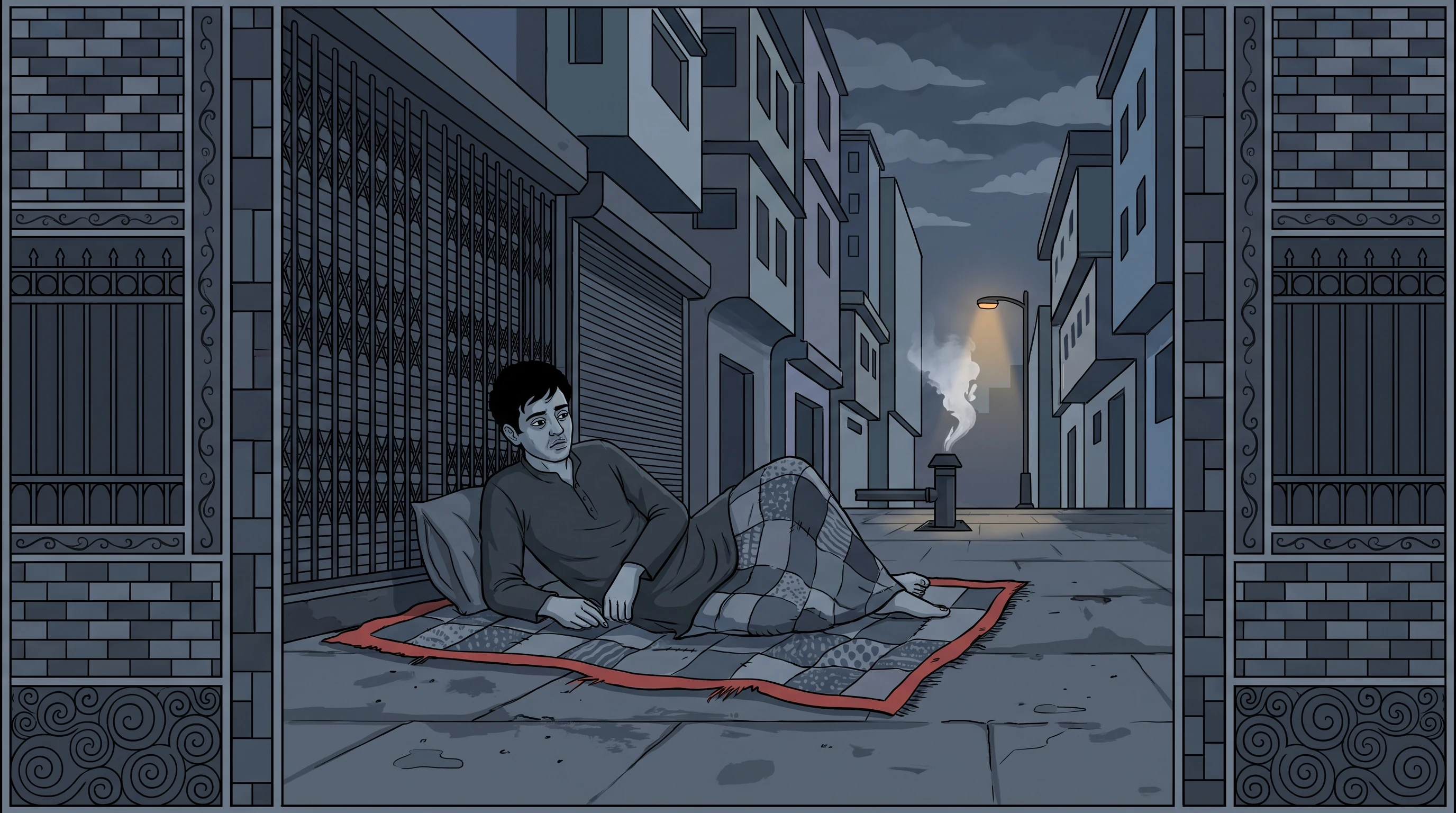
ખોરડું વેચ્યું ને ખેતર વેચ્યું, કૂબામાં કર્યો છે વાસ,
જારનો રોટલો જડે નહિ તે દી પીઉં છું એકલી છાશ,
તારે પકવાનનું ભાણું,
મારે નિત જારનું ખાણું.
દેખતી તે દી દળણાં, પાણી કરતી ઠામેઠામ,
આંખ વિનાનાં આંધળાંને હવે કોઇ ન આપે કામ,
તારે ગામ વીજળીદીવા,
મારે આંહીં અંધારાં પીવાં.
લિખિતંગ તારી આંધળી માના વાંચજે ઝાઝા જુહાર
એકે રહ્યું નથી અંગનું ઢાંકણ, ખૂટી છે કોઠીએ જાર.
હવે નથી જીવવા આરો,
આવ્યો ભીખ માગવા વારો.
Indulal Gandhi wrote this poem in the early years of the Gandhian era, when a steady stream of Saurashtra's young men were leaving their villages for Bombay in search of wages — a migration that hollowed out families left behind with no way to follow the news or demand an accounting. The poem's entire architecture rests on a simple, devastating device: a blind mother, unable to read or write, sits before the village letter-writer Punamchand and dictates a letter to her son Gigubhai — called simply ગગો (Gago, "my boy") in her mouth — gone five years to the city without a single coin or scrap of paper sent home. The poem never leaves her voice. Everything the reader learns of the son's life in Bombay — his new clothes, his hotel meals, his spending "like water" (પાણી જેમ પઇસા વેરે) — arrives secondhand, filtered through a nephew's letter and a mother's aching guesswork.
The poem's power lies in a rhetorical hinge repeated, with variation, at the close of nearly every stanza: તારે... મારે... — "you have... I have..." Against the son's imagined new clothes she sets her own unravelling wardrobe; against his restaurant meals, her single bowl of buttermilk on the nights the millet runs out; against the city's electric lights (તારે ગામ વીજળીદીવા), her own life spent drinking darkness (મારે આંહીં અંધારાં પીવાં) — a line made literal by her blindness and figurative by her poverty in the same breath. Gandhi writes in the rough Kathiyawadi dialect of Saurashtra rather than literary Gujarati — દા'ડા, કૂબો, ખરચી-ખૂટ — so that the mother's voice never once sounds composed; it sounds spoken, interrupted, dictated on the spot. The poem builds not toward accusation but toward disclosure: only in the final stanza, almost as an aside tucked into her closing greetings, does she reveal that she has sold the house and field, that her grain jar is empty, and that she has no choice left but to beg.
Few Gujarati poems have travelled as far from the page as this one. It entered school primers and radio broadcasts, was set to music and sung by artists including Asha Bhosle, and was so thoroughly absorbed into popular memory that many who can recite it by heart could not name its author — commenters on Gujarati literary sites still argue over whether it is a folk song or a poem at all. Its fame was durable enough to provoke answers: Gandhi himself wrote a companion piece, દેખતા દીકરાનો જવાબ (The Seeing Son's Reply), which finally lets the son speak and reveals him to be as destitute as the mother who pities him — and at least one other Gujarati poet is known to have attempted a reply in the son's voice, though neither has come close to eclipsing the original. Nearly a century on, the mother's letter remains one of Gujarati literature's most reliable instruments for provoking tears in a classroom — proof that a single dictated letter, in the right hands, can outlive both its writer and its reader.
ઇન્દુલાલ ગાંધી
Indulal Fulchand Gandhi was born in the small Saurashtra village of Maknasar, near Morbi, and rose from a betel-leaf shopkeeper to one of the most widely recited voices of the Gandhian era (*ગાંધીયુગ*) of Gujarati literature. Educated through evening classes after primary schooling in Rajkot, he moved between journalism, radio scriptwriting, and production work at All India Radio's Rajkot centre, all while publishing poetry collections including *Tejrekha* (1931), *Jivanana Jal* (1933), and *Khandit Murti* (1935). He wrote plays and short stories as well as verse, but is remembered above nearly everything else for a single poem — *આંધળી માનો કાગળ* (A Blind Mother's Letter) — whose plainspoken Kathiyawadi voice moved so many readers that it slipped out of the printed page and into oral memory, sung and recited as though it belonged to no one in particular. He died in Rajkot in 1986, by then less a byline in an anthology than a phrase every Gujarati household could finish from memory.
All poems by Indulal Gandhi →