પસંદ કરેલી કૃતિ · selected work
દેખતા દીકરાનો જવાબ
Dekhta Dikra No Kagal
The Seeing Son's Reply
Indulal Gandhi, Kavi · c. 1935
The son from 'આંધળી માનો કાગળ' finally answers his blind mother — and the truth is worse than her letter feared. He is not living in comfort in Mumbai; he sleeps on a footpath outside the hotel where he labors, his own hunger matching hers line for line. Indulal Gandhi's reply refuses to resolve the ache it created.
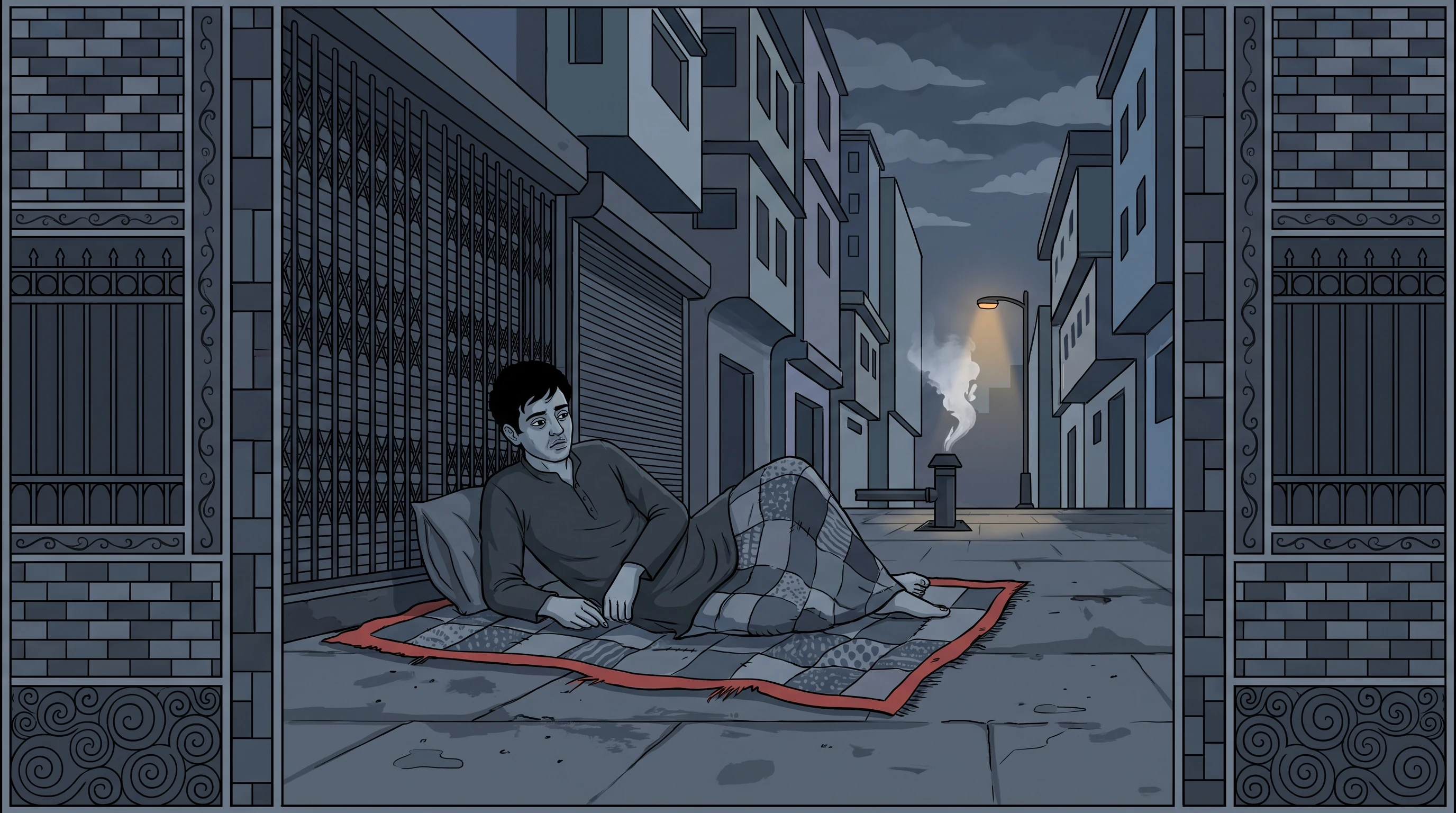
ફાટ્યાં-તૂટ્યાં જેને ગોદડી ગાભાં, આળોટવા ફૂટપાથ,
આંધળી ડોશીનો દેખતો દીકરો, કરતો મનની વાત.
વાંચી તારાં દુ:ખડાં માડી ! ભીની થઈ આંખડી મારી.
પાંચ વરસમાં પાઈ મળી નથી, એમ તું નાખતી ધા,
આવ્યો તે દિ’થી આ હોટલને ગણી, માડી વિનાના ‘મા’
બાંધી ફૂટપાયરી જેણે, રાખ્યો રંગ રાતનો એણે !
ભાણિયો તો માડી ! થાય ભેળો જે દિ’ મિલો બધી હોય બંધ,
એક જોડી મારાં લૂગડાંમા, એને, આવી અમીરીની ગંધ ?
ભાડે લાવી લૂગડાં મોંઘા, ખાતો ખારા દાળિયા સોંઘા.
દવાદારૂ આંહી આવે ન ઢૂંકડા, એવી છે કારમી વેઠ,
રાત ને દિવસ રળું તોયે મારું, ખાલી ને ખાલી પેટ,
રાતે આવે નીંદર રૂડી, મારી કને એટલી મૂડી.
જારને ઝાઝા જુહાર કે’જે, ઊડે આંહી મકાઈનો લોટ,
બેસવા પણ ઠેકાણું ના મળે, કૂબામાં તારે શી ખોટ ?
મુંબઈની મેડીયું મોટી, પાયામાંથી સાવ છે ખોટી.
ભીંસ વધીને ઠેલંઠેલા, રોજ પડે હડતાળ,
શે’રના કરતા ગામડામાં, મને દેખાય ઝાઝો માલ,
નથી જાવું દાડિયે તારે, દિવાળીએ આવવું મારે.
કાગળનું તારે કામ શું માડી ! વાવડ સાચા જાણ,
તારા અંધાપાની લાકડી થાવાના, મેં લીધા પચખાણ,
હવે નથી ગોઠતું માડી, વાંચી તારી આપદા કાળી.
Indulal Gandhi wrote દેખતા દીકરાનો જવાબ as a direct answer to his own આંધળી માનો કાગળ — the poem that made him famous, in which a blind Saurashtra mother dictates a letter to her son Gigubhai, five years silent in Bombay. That poem ends unresolved, in her voice alone, imagining him fed and prosperous while she starves. This poem closes the loop by finally letting the son speak — and what he says overturns everything the mother, and the reader, assumed. He is not living well. He sleeps on a torn quilt on the footpath (ફાટ્યાં-તૂટ્યાં જેને ગોદડી ગાભાં, આળોટવા ફૂટપાથ) outside the very hotel where he is employed, a detail so plain and so devastating that it recasts the entire correspondence: two people, equally poor, each imagining the other spared.
The poem's method is inversion by mirror. Where the mother's letter built each stanza toward a તારે... મારે... (you have... I have...) comparison that favored the imagined son, this reply turns the same rhetorical hinge back on itself: કૂબામાં તારે શી ખોટ? — what do you lack, in your hut? — a question that only makes sense if the son believes even her mud dwelling is more shelter than he has. He corrects, gently, the nephew's boastful letter that had reached her village (new clothes, restaurant meals), revealing it as borrowed clothes and cheap roasted gram eaten to save money. And in a detail that folds the whole poem back on itself, he asks કાગળનું તારે કામ શું માડી? — what use is a letter to you, mother? — a wry, aching acknowledgment that she cannot read it any more than she could write her own; both letters exist only because someone else's hand and voice stood between mother and son. Gandhi keeps the same Kathiyawadi diction and clipped, dictated cadence — કે'જે, દિ', માડી repeated like a held breath — so the son's voice answers in the same register the mother spoke in, as if the two letters were always one conversation split in half.
Where the mother's letter has become one of the most recited poems in Gujarati, sung by Asha Bhosle and absorbed so deeply into oral memory that many reciters cannot name its author, the reply never achieved the same reach — though it was set to music and recorded by the folk singer Hemant Chauhan, and it prompted still more answers from other poets, including at least one written decades later in the voice of a son who had emigrated to Canada. Gandhi's ending refuses the comfort a lesser poet might have supplied: no homecoming, no money sent, only a vow — તારા અંધાપાની લાકડી થાવાના, મેં લીધા પચખાણ (I have vowed to become the walking-stick for your blindness) — a promise made from a footpath, to a mother who still cannot see whether it will be kept. Read together, the two poems do not resolve into justice; they simply confirm that the letter never should have needed writing at all.
ઇન્દુલાલ ગાંધી
Indulal Fulchand Gandhi was born in the small Saurashtra village of Maknasar, near Morbi, and rose from a betel-leaf shopkeeper to one of the most widely recited voices of the Gandhian era (*ગાંધીયુગ*) of Gujarati literature. Educated through evening classes after primary schooling in Rajkot, he moved between journalism, radio scriptwriting, and production work at All India Radio's Rajkot centre, all while publishing poetry collections including *Tejrekha* (1931), *Jivanana Jal* (1933), and *Khandit Murti* (1935). He wrote plays and short stories as well as verse, but is remembered above nearly everything else for a single poem — *આંધળી માનો કાગળ* (A Blind Mother's Letter) — whose plainspoken Kathiyawadi voice moved so many readers that it slipped out of the printed page and into oral memory, sung and recited as though it belonged to no one in particular. He died in Rajkot in 1986, by then less a byline in an anthology than a phrase every Gujarati household could finish from memory.
All poems by Indulal Gandhi →