પસંદ કરેલી કૃતિ · selected work
ગૂજરાત મોરી મોરી રે
Gujarat Mori Mori Re
My Gujarat, My Own
Umashankar Joshi · 1934
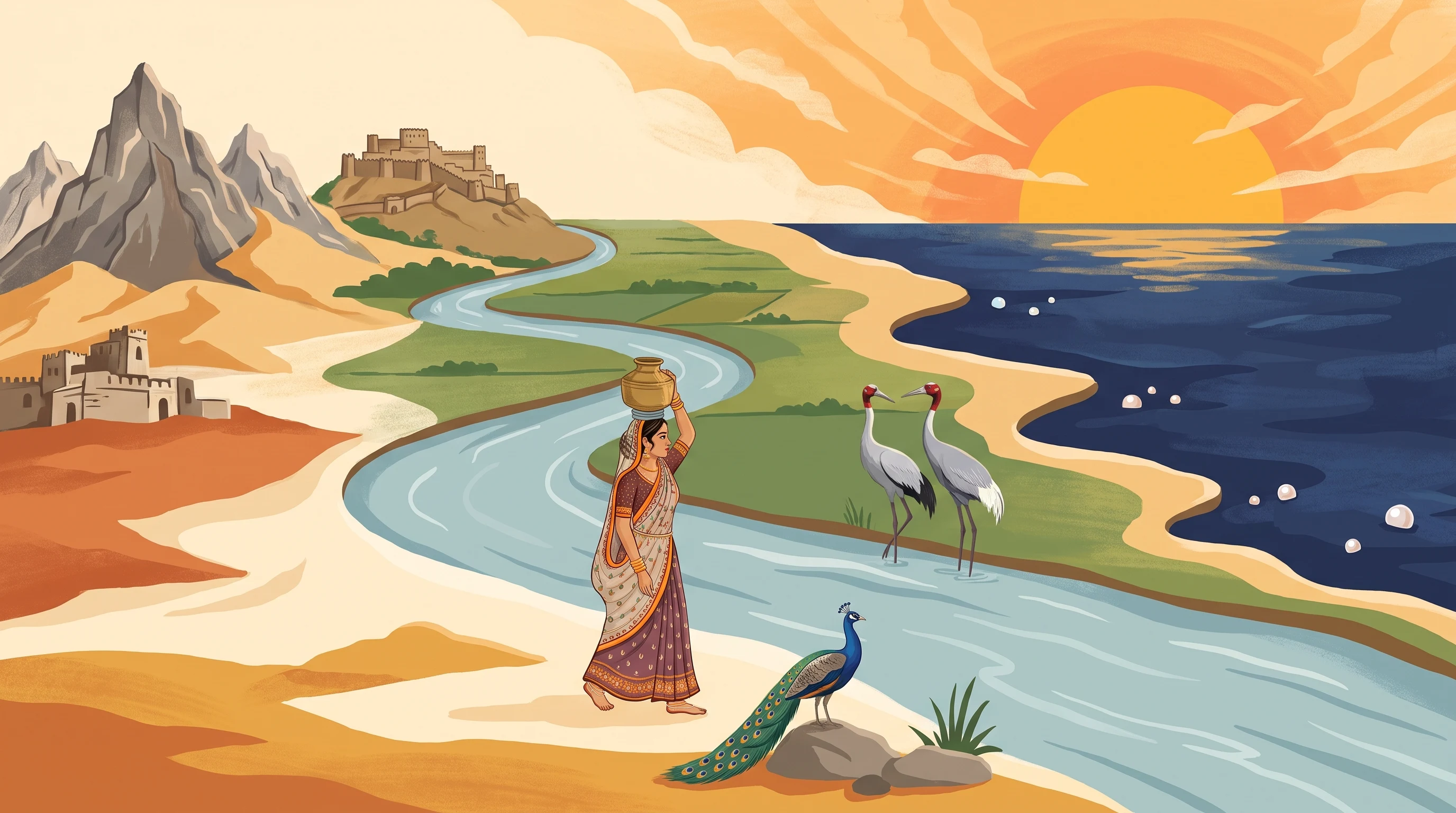
A 23-year-old in Bombay writes home to a Gujarat that was not yet a state — mountains, rivers, cranes, and a panihari's wet hair — and ends by warning that Narmad's Gujarat is hard to live up to and Gandhi's harder still. Sung every Gujarat Day since.
મળતાં મળી ગઈ મોંઘેરી ગૂજરાત
ગૂજરાત મોરી મોરી રે.
ભારતની ભોમમાં ઝાઝેરી ગૂજરાત
ગૂજરાત મોરી મોરી રે.
સાબરનાં મર્દાની સોણલાં સુણાવતી,
રેવાનાં અમરતની મર્મર ધવરાવતી,
સમદરનાં મોતીની છોળે નવરાવતી
ગૂજરાત મોરી મોરી રે.
ગિરનારી ટૂકો ને ગઢ રે ઇડરિયા,
પાવાને ટોડલે મા'કાળી મૈયા,
ડગલે ને ડુંગરે ભર દેતી હૈયાં.
ગૂજરાત મોરી મોરી રે.
આંખની અમીમીટ ઊમટે ચરોતરે;
ચોરવાડ વાડીએ છાતી શી ઊભરે!
હૈયાનાં હીર પાઈ હેતભરી નીતરે
ગૂજરાત મોરી મોરી રે.
કોયલ ને મોરને મેઘમીઠે બોલડે,
નમણી પનિહારીને ભીને અંબોડલે,
નીરતીર સારસ-શાં સુખડૂબ્યાં જોડલે
ગૂજરાત મોરી મોરી રે.
નર્મદની ગૂજરાત દોહ્યલી રે જીવવી,
ગાંધીની ગૂજરાત કપરી જીરવવી,
એક વાર ગાઈ કે કેમ કરી ભૂલવી?
ગૂજરાત મોરી મોરી રે.
ભારતની ભોમમાં ઝાઝેરી ગૂજરાત
ગૂજરાત મોરી મોરી રે.
મળતાં મળી ગઈ મોંઘેરી ગૂજરાત
ગૂજરાત મોરી મોરી રે.
Umashankar Joshi dated this song Bombay, 28 November 1934. He was twenty-three, already jailed twice in the civil-disobedience campaigns, living away from the hills of Idar he grew up under — and Gujarat itself was not a state but an idea, a language region inside Bombay Presidency. The song's premise is finding, not having: મળતાં મળી ગઈ મોંઘેરી ગૂજરાત — in meeting, I came to possess precious Gujarat. The dialectal refrain મોરી મોરી રે — "mine, o mine" — borrows the voice of the folk lullaby, and so does the poem's central conceit: Gujarat is a mother, recounting to her child the brave dreams of the Sabarmati, nursing it on the murmuring nectar of the Narmada, bathing it in spray of sea-pearls. The three verbs — સુણાવતી, ધવરાવતી, નવરાવતી — are what a mother does at bedtime, at the breast, at the bath.
The middle stanzas sing a geography lesson turned devotional circuit: the peaks of Girnar and the fort of Idar (the poet's own horizon as a boy), Mahakali on her perch at Pavagadh, the overflowing affection of Charotar's farmlands, orchards at Chorwad on the Saurashtra coast, koyal and peacock in rain-sweet voice, the panihari with her wet coiled hair, sarus cranes standing drowned in happiness by the water — pointedly, the whole map, mainland and peninsula, hill country and coast, one homeland. Then the final stanza refuses to let affection stay comfortable. Narmad's Gujarat — the fierce reformer's — is દોહ્યલી રે જીવવી, hard to live up to; Gandhi's Gujarat is કપરી જીરવવી, harder still to digest and endure. In 1934, with Gandhi's movement mid-struggle, the line handed every singer a responsibility along with the melody. Praise of the motherland, in Umashankar's hands, is a standard to be met.
When the state of Gujarat finally came into being on 1 May 1960, the song was waiting for it, and it has been sung at every Gujarat Day since — the modern companion to Narmad's જય જય ગરવી ગુજરાત, which the poem itself salutes in its closing turn. The archaic spelling ગૂજરાત, kept here as the poet wrote it, is its own small time capsule: the orthography of the Gandhian generation, holding the year 1934 inside every refrain.
ઉમાશંકર જોશી
Umashankar Joshi — poet, short-story writer, playwright, essayist, critic, editor and scholar — is one of the towering figures of modern Gujarati literature, often called a father-figure of its poetry. Born in the village of Bamna in Idar taluka, he came of age in the Gandhian era, joining the freedom movement as a student and serving time in jail during the civil-disobedience campaigns; his verse ever after fused lyric intimacy with social conscience. His first collection, *Gangotri* (1934), announced a major new voice, and the books that followed — *Nishith*, *Prachina*, *Aatithya*, *Vasant-varsha* — deepened it. In 1967 he became the first Gujarati writer to receive the Jnanpith Award, India's highest literary honour, for *Nishith*. For decades he edited the influential literary quarterly *Sanskriti*, served as Vice-Chancellor of Gujarat University and President of the Sahitya Akademi, and sat in the Rajya Sabha. His humanist credo lives in his most quoted line — *વ્યક્તિ મટીને બનું વિશ્વમાનવી*, "ceasing to be an individual, let me become a world-human."
All poems by Umashankar Joshi →