પસંદ કરેલી કૃતિ · selected work
જય જય ગરવી ગુજરાત
Jai Jai Garvi Gujarat
Victory, Victory, Noble Gujarat
Narmad, Father of Modern Gujarati Literature · c. 1873
Written in 1873 as the preface to his own Gujarati dictionary, Narmad's anthem maps Gujarat through its guardian deities, rivers, and warrior kings, closing every stanza on the same cry of pride. More than a century later, it became the region's official state song.
જય! જય! ગરવી ગુજરાત!
દીપે અરુણું પ્રભાત
જય! જય! ગરવી ગુજરાત!
ધ્વજ પ્રકાશશે ઝળળળળ કસુંબી, પ્રેમશૌર્યઅંકિત,
તું ભણવ ભણવ નિજ સંતતિ સહુને પ્રેમભક્તિની રીત. –
ઊંચી તુજ સુંદર જાત
જય! જય! ગરવી ગુજરાત!
ઉત્તરમાં અંબામાત,
પૂરવમાં કાળી માત,
છે દક્ષિણ દિશમાં કરંત રક્ષા કુંતેશ્વર મહાદેવ,
ને સોમનાથ ને દ્વારકેશ એ પશ્ચિમ કેરા દેવ.
છે સહાયમાં સાક્ષાત્
જય! જય! ગરવી ગુજરાત!
નદી તાપી નર્મદા જોય,
મહી ને બીજી પણ જોય,
વળી જોય સુભટના જુદ્ધરમણ ને રત્નાકર સાગર,
પર્વત પરથી વીર પૂર્વજો દે આશિષ જયકર;
સંપે સોહે સહુ જાત
જય! જય! ગરવી ગુજરાત!
તે અણહિલવાડના રંગ,
તે સિદ્ધરાજ જયસંગ;
તે રંગ થકી પણ અધિક સરસ રંગ થશે સત્વરે માત!
શુભ શકુન દીસે મધ્યાહ્ન શોભશે વીતી ગઈ છે રાત;
જન ઘૂમે નર્મદા સાથ
જય! જય! ગરવી ગુજરાત!
Narmad wrote this poem in 1873, and its first appearance was not on a public stage but in the preface to Narmakosh — the dictionary he had just spent years compiling, the first of its kind for the Gujarati language. That pairing was deliberate. Narmad had spent his career arguing that Gujaratis needed a language of their own to think and quarrel and reform in — Sanskrit was for scholars, English was for the colonial civil service, but Gujarati belonged to no one until someone gave it a dictionary and, apparently, an anthem. To open a lexicon with a hymn of regional pride was to say: here is the vessel, and here is what fills it.
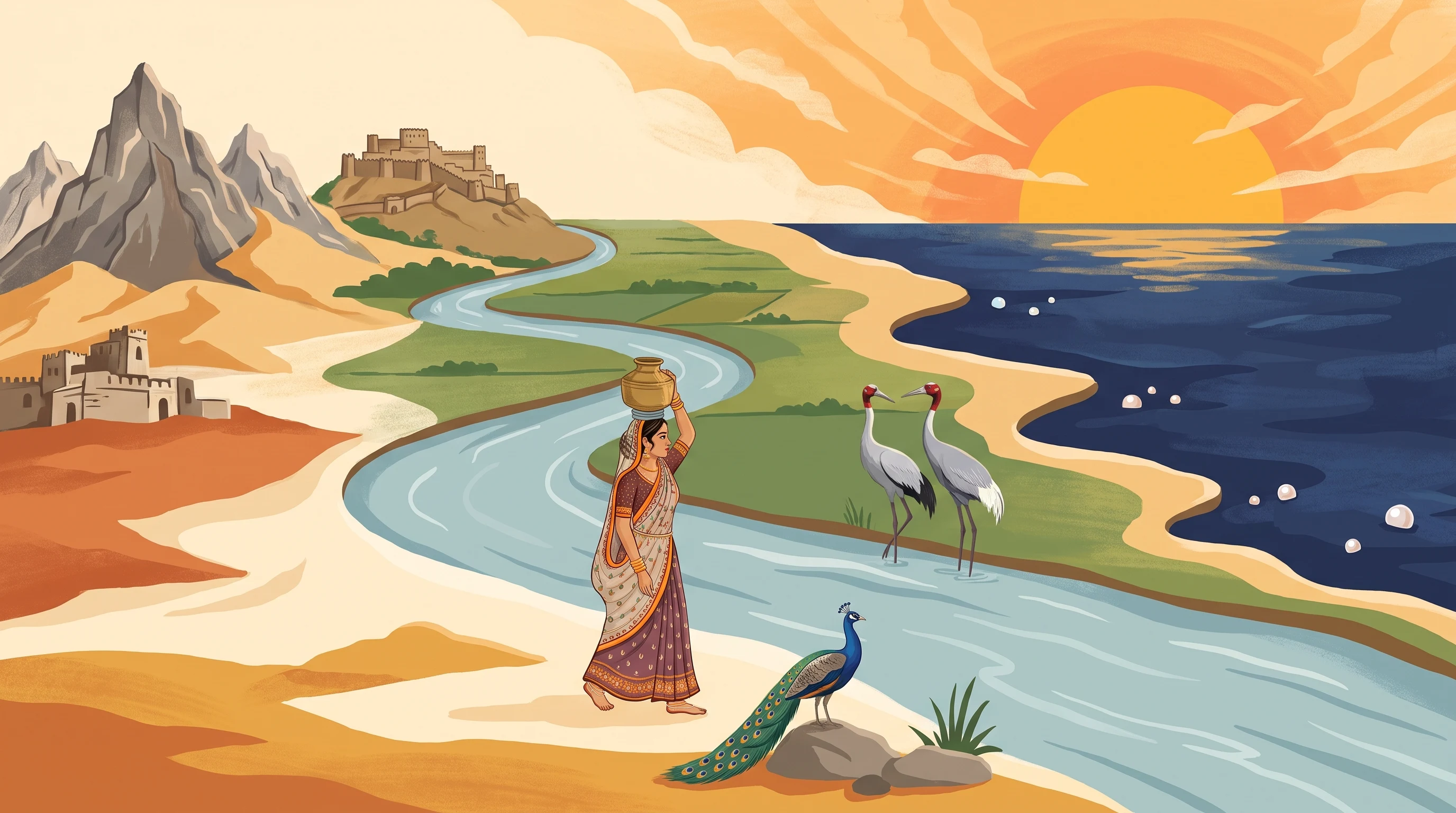
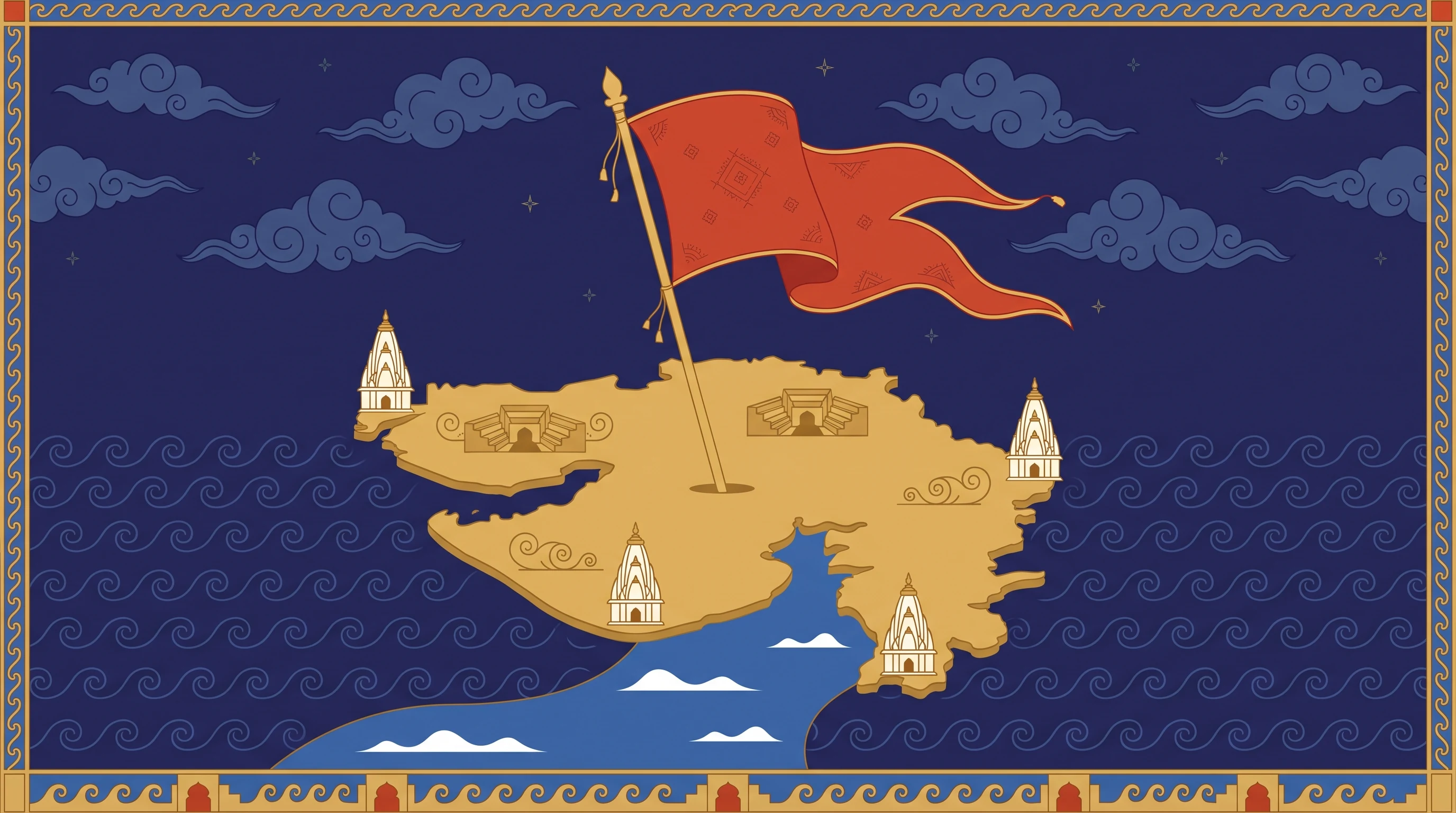
The poem's structure does something unusual for a patriotic verse — it makes its case geographically rather than mythologically. Each stanza adds another layer of place: the four guardian deities marking Gujarat's borders at ઉત્તરમાં અંબામાત (Ambaji to the north) through પશ્ચિમ કેરા દેવ (the gods of the west, Somnath and Dwarka); the rivers Tapi, Narmada, and Mahi running toward રત્નાકર સાગર, the jewel-bearing sea; and finally history itself, invoked through તે અણહિલવાડના રંગ, તે સિદ્ધરાજ જયસંગ — the glory days of the Anhilwad Patan kingdom under Siddhraj Jaysinh. The refrain જય! જય! ગરવી ગુજરાત! is a devotional cry borrowed from temple worship, redirected from god to homeland — an old form doing new, secular work.
Narmad — who carried the singular epithet Veer (the brave) for a lifetime of reformist writing that scandalized orthodox Surat — could not have known his verse-preface would outlive both his dictionary and the princely and colonial Gujarat he was describing. The poem passed through decades as an unofficial rallying song, sung in schools and at public gatherings long before the state of Gujarat existed in its present form. In 2011, on the state's golden jubilee, the Government of Gujarat made that informal status official, adopting it as the state anthem and commissioning a new orchestral setting from composer A. R. Rahman — a fitting second life for a poem that began, a century and a half earlier, as the opening page of a dictionary.
નર્મદ
Narmad — born Narmadashankar Lalshankar Dave in Surat — was the poet, essayist, orator, and lexicographer who single-handedly dragged Gujarati literature out of its courtly and devotional past and into the modern age. He compiled *Narmakosh*, the first Gujarati dictionary, wrote *Mari Hakikat* (the language's first autobiography), and used his pen against caste orthodoxy and religious fanaticism with a fearlessness that earned him the permanent epithet *Veer* — the brave — a title no other Gujarati writer has carried. His rallying cry *"યા હોમ કરીને પડો, ફતેહ છે આગે"* (Leap in with resolve — victory lies ahead) still circulates as a Gujarati proverb for taking the plunge. Narmad died in Bombay in 1886, having spent barely two decades of writing to lay the foundations — language, literary form, and public voice — that every Gujarati poet after him would build on.
All poems by Narmad →