પસંદ કરેલી કૃતિ · selected work
ના હઠવું
Na Hathvu
No Stepping Back
Narmad, Father of Modern Gujarati Literature · c. 1860
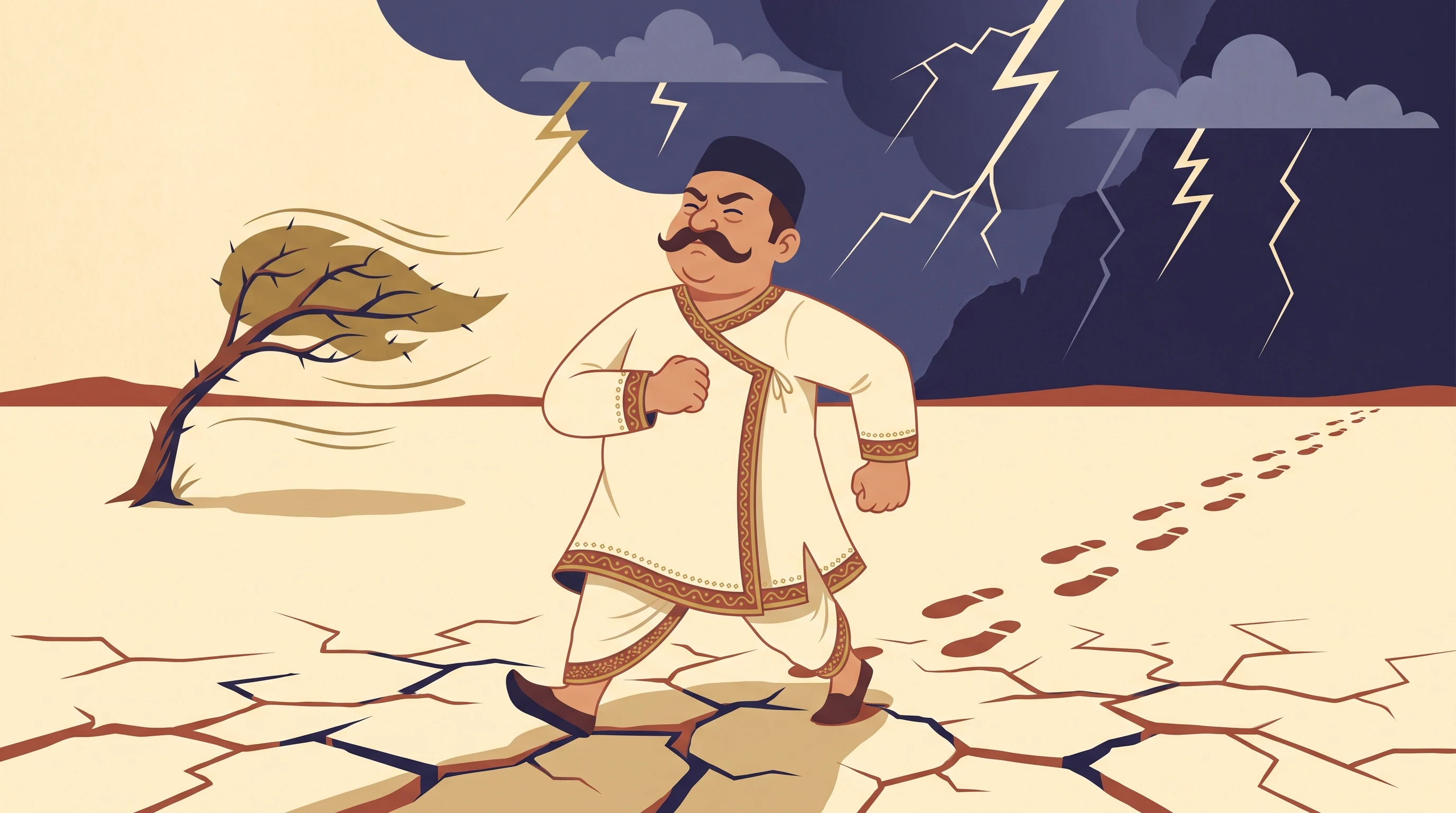
Once the step is taken, no stepping back; once the word is given, no wilting. Narmad's pugnacious creed of commitment — think first, then plant the foot, and hold it though the sky falls or the earth splits. The reformer's temper distilled into couplets Gujarat still quotes.
ડગલું ભર્યું કે ના હઠવું ના હઠવું;
વેણ કાઢ્યું કે ના લટવું ના લટવું.
સમજીને તો પગલું મૂકવું, મૂકીને ના બીવું;
જવાય જો નહિ આગળ તોયે, ફરી ન પાછું લેવું.
સંકટ મોટું આવી પડતે, મોઢું ન કરવું વીલું;
કળેબળે ખૂબ લડવું પણ ના કરવું ફરવા ઊંચું.
જ્યાં ઊભા ત્યાં ચોટી રહીને, વચન લેવું સબળું;
આભ પડો કે પૃથ્વી ફાટો, તોય ન કરીએ નબળું.
ફતેહ કરીને આગળ વધશું, અથવા અહીંયાં મરશું,
પણ લીધેલું તે પાળીશું, રે વજજરનું કરશું.
તજી હામ ને ઠામ મૂકવા, ખૂણા જે કો ખોળે;
ધિઃક કાયર તે અપજસરૂપી, ખાળકૂંડીમાં બોલે.
નાસી જતાં હસે શત્રુઓ, સાથી ફિટ કહી કાઢે;
બીકણ બાયલા નામર્દા એ, નામ મળે ઉપાડે.
પોતાનો પસ્તાવો થાયે જખ મારી રે ભારે;
મૂઆ નહિ કાં કરી પરાક્રમ, રણે ઉઠાવ્યું જ્યારે.
શૂરવીર તે જસનો લોભી, હિંમતમદિરા પીએ;
ઉમંગથી તે ધસી વધે વા, ખૂબ ટકાવી રાખે.
ભણીગણી જન પુખ્ત વિચારે, પાયો નાખે મજબૂત;
કો કાળે પણ જસ મોટો લે, નર્મદ કેરું સાબૂત.
Narmad picked more fights than any writer in nineteenth-century Gujarat — with caste orthodoxy, with child marriage, with his own patrons, ultimately with poverty itself — and this is the creed he fought them on. The opening couplet is barked like a drill command, each refusal doubled for stubbornness: ડગલું ભર્યું કે ના હઠવું ના હઠવું — a step once taken, no retreating, no retreating; a word once given, no wilting, no wilting. Gujarati absorbed the line so completely that it functions as a proverb; people who have never read Narmad still deploy it at moments of commitment, which is precisely the afterlife he would have wanted.
What keeps the poem from being mere chest-thumping is the couplet that comes immediately after the thunder: સમજીને તો પગલું મૂકવું — place the step with understanding first. Like Brahmanand's warriors and Gangasati's unmoving mind elsewhere in this archive, Narmad's heroism begins in deliberation: think, then commit, then never look back — even if the way forward closes, the foot does not return. From there the poem builds its escalating oath — hold your ground where you stand, let the sky fall or the earth split open, આભ પડો કે પૃથ્વી ફાટો, and still show nothing weak; win and advance, or die on the spot, but keep what was pledged with a heart made of adamant. And then, characteristically, Narmad spends three full couplets on the alternative, because shame was always his sharpest instrument: the man who abandons daring and hunts a corner to hide in becomes disgrace embodied, croaking ખાળકૂંડીમાં — in the gutter-pit; enemies laugh as he runs, comrades spit ફિટ, and the names that stick — બીકણ, બાયલા, નામર્દા — are the ones his century reserved for its worst insult, unmanliness.
The last two couplets supply the psychology and the signature. The hero, Narmad says with disarming frankness, is જસનો લોભી — greedy for glory — drunk on હિંમતમદિરા, the liquor of daring; and the educated man who thinks maturely and lays his foundation strong will take the biggest glory of all in some age or other: નર્મદ કેરું સાબૂત — Narmad's own guarantee, the chhap doubling as a signed promissory note. Half a century later, when Gujarat needed a vocabulary for satyagraha's unblinking stubbornness, it discovered the arsenal already stocked — by the quarrelsome reformer who also gave this archive its anthem, જય જય ગરવી ગુજરાત.
નર્મદ
Narmad — born Narmadashankar Lalshankar Dave in Surat — was the poet, essayist, orator, and lexicographer who single-handedly dragged Gujarati literature out of its courtly and devotional past and into the modern age. He compiled *Narmakosh*, the first Gujarati dictionary, wrote *Mari Hakikat* (the language's first autobiography), and used his pen against caste orthodoxy and religious fanaticism with a fearlessness that earned him the permanent epithet *Veer* — the brave — a title no other Gujarati writer has carried. His rallying cry *"યા હોમ કરીને પડો, ફતેહ છે આગે"* (Leap in with resolve — victory lies ahead) still circulates as a Gujarati proverb for taking the plunge. Narmad died in Bombay in 1886, having spent barely two decades of writing to lay the foundations — language, literary form, and public voice — that every Gujarati poet after him would build on.
All poems by Narmad →