પસંદ કરેલી કૃતિ · selected work
રે શિર સાટે નટવરને વરીએ
Re Shir Sate Natavarne Varie
Wed Natwar at the Price of Your Head
Brahmanand Swami · c. 1820
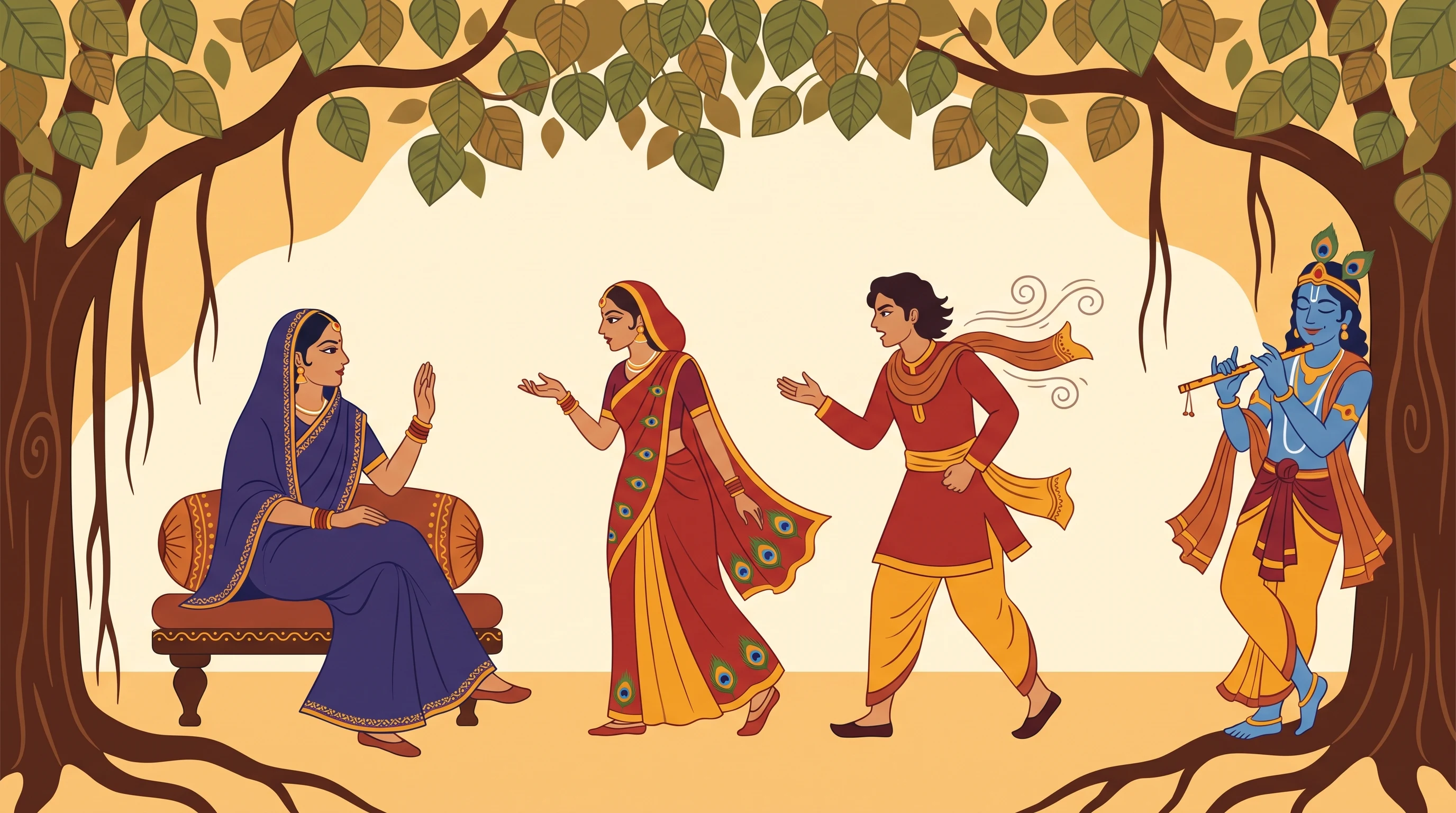
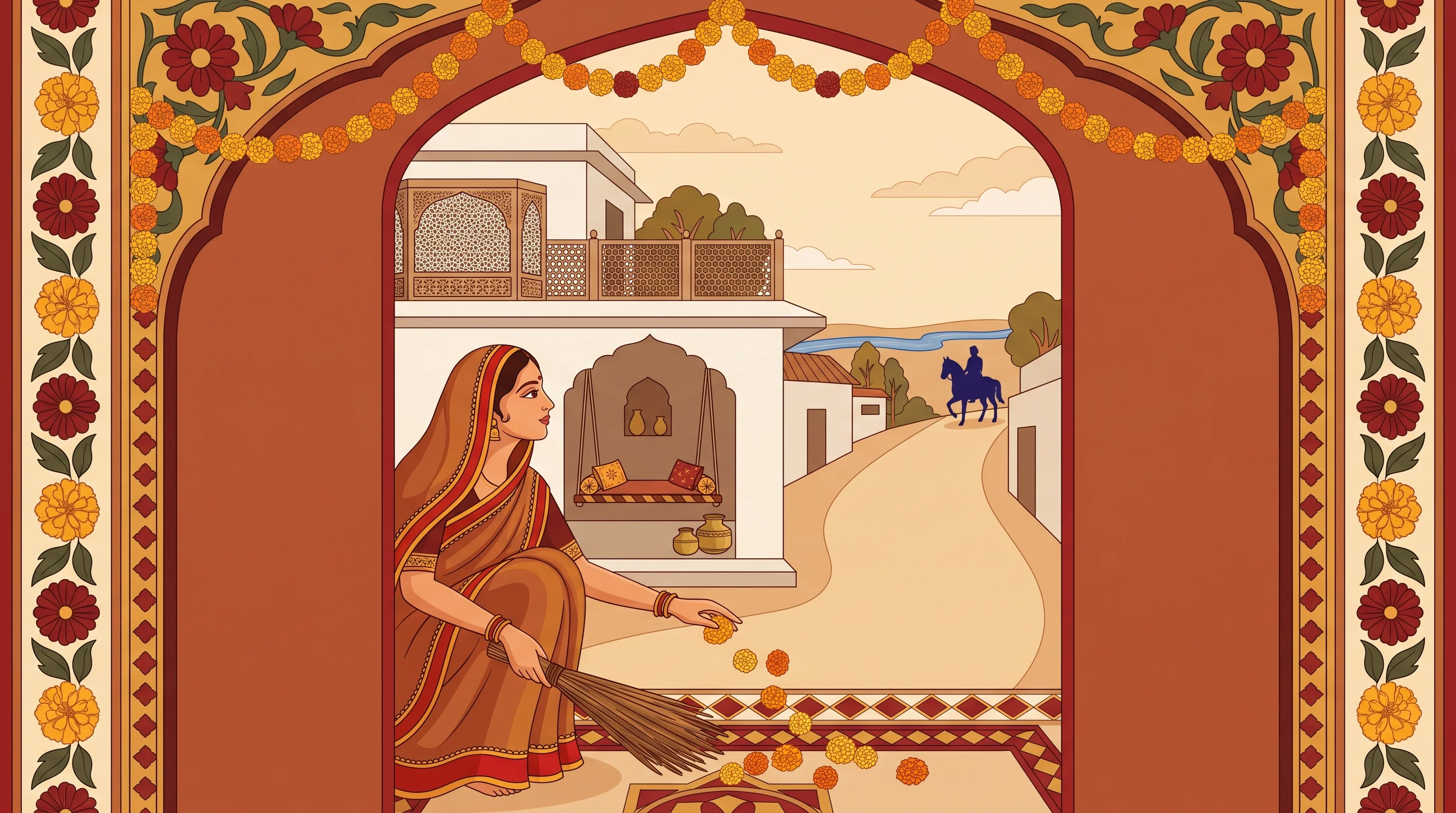
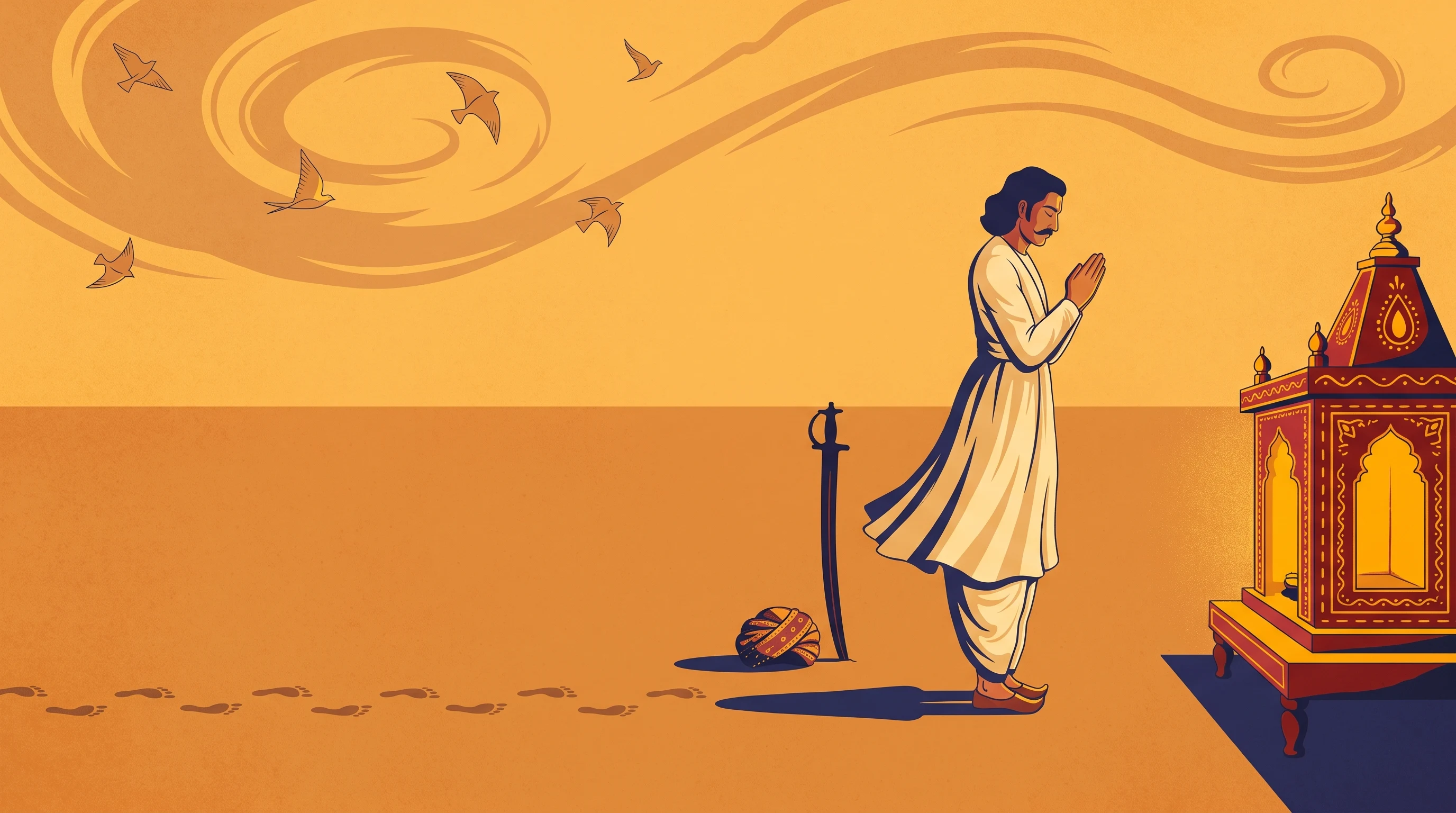
A marriage proposal with a bride-price of one head. Brahmanand Swami — court bard turned sadhu — sets the terms of devotion in his old war-poet's voice: search yourself first, don't ride to this battle on bravado, and once you've stepped toward Natwar, never step back. Die there rather than return with a disgraced face.
રે શિર સાટે નટવરને વરીએ, રે પાછાં તે પગલાં નવ ભરીએ;
રે અન્તર દૃષ્ટિ કરી ખોળ્યું, રે ડહાપણ ઝાઝું નવ ડોળ્યું;
એ હરિ સારુ માથું ઘોળ્યું.
રે સમજ્યા વિના નવ નીસરીએ, રે રણમધ્યે જઈને નવ ડરીએ;
ત્યાં મુખપાણી રાખી મરીએ. રે શિર૦
રે પ્રથમ ચડે શૂરો થઈને, રે ભાગે પાછો રણમાં જઈને;
તે શું જીવે ભૂંડું મુખ લઈને. રે શિર૦
રે પેહેલું જ મનમાં ત્રેવડીએ, રે હોડે હોડે જુદ્ધે નવ ચડીએ;
જો ચડીએ તો કટકા થઈ પડીએ. રે શિર૦
રે રંગ સહિત હરિને રટીએ, રે હાક વાગે પાછા નવ હટીએ;
બ્રહ્માનંદ કહે ત્યાં મરી મટીએ. રે શિર૦
Before he was Brahmanand Swami he was Ladudan Gadhvi, a Charan — the hereditary war-bards of Rajasthan and Kathiawar, whose Dingal verse was engineered to make soldiers forget the value of their own lives. Courts competed to keep him. Then he met Sahajanand Swami, and the most celebrated bard of his generation set down his court honors to become a sadhu of the young Swaminarayan sampradaya. What he did not set down was the arsenal: this kirtan takes the oldest bargain of bhakti — everything for God — and prices it the way a Charan would, in heads. શિર સાટે નટવરને વરીએ: wed Natwar, the dancer-lord Krishna, with your skull as the bride-price. And the second half of the ṭek adds the clause that gives the poem its steel: રે પાછાં તે પગલાં નવ ભરીએ — those footsteps, once taken, are never walked back.
The genius of the kirtan is that it is not a recruiting song. It spends most of its five verses trying to talk the unready out of enlisting. Search yourself with the inner eye first, it says — અન્તર દૃષ્ટિ કરી ખોળ્યું — and don't over-flourish your cleverness; don't set out at all without understanding, સમજ્યા વિના નવ નીસરીએ. Weigh it fully in the mind beforehand, and above all રે હોડે હોડે જુદ્ધે નવ ચડીએ — don't ride into this war out of rivalry and bravado, because the half-committed are the ones who end up in pieces. The contempt is saved for the deserter, sketched in one brutal question: the man who charges in playing the hero and then bolts from the field — તે શું જીવે ભૂંડું મુખ લઈને — what kind of living is left to him, carrying that face? Better, says the old war-bard, to die where you stand with your honor bright, મુખપાણી રાખી — keeping the water of the face, that untranslatable Kathiawari idiom for dignity intact.
The last verse turns the noise of battle into the practice of the name: chant Hari with full color, રંગ સહિત, stand fast when the war-cry sounds, and — the chhap sealing it — બ્રહ્માનંદ કહે ત્યાં મરી મટીએ: die there, and be done with dying. The kirtan sits in the great Saurashtra lineage of devotion-as-battlefield — the same register as Gangasati's મેરુ રે ડગે, with its heads already offered and its unflinching mind — and it is still sung in Swaminarayan mandirs every day, a two-hundred-year-old reminder that the gentlest theology in Gujarat keeps its terms of enlistment written in a soldier's hand.
બ્રહ્માનંદ સ્વામી
Brahmanand Swami was born Ladudan Gadhvi, a Charan bard from the village of Khan near Mount Abu, trained in the martial Dingal poetry of his caste and celebrated in the princely courts of Rajasthan and Kathiawar. At the height of that worldly career he met Sahajanand Swami — Bhagwan Swaminarayan — and walked away from royal patronage to take the ochre robe, becoming one of the new sampradaya's *ashta kavis*, its eight poet-saints, and by common consent the most brilliant of them. Thousands of kirtans are attributed to him, collected as *Brahmanand Kavya*, in which the court poet's polish and the war-bard's cadence are turned wholly toward God. He was a builder as well as a singer, supervising the construction of the great temples at Vadtal, Junagadh, and Muli, where he presided until his death in 1832 — and where his kirtans are still sung every day.
All poems by Brahmanand Swami →