પસંદ કરેલી કૃતિ · selected work
શ્યામ રંગ સમીપે ન જાવું
Shyam Rang Samipe Na Javu
I Will Not Go Near Shyam's Color
Dayaram, Garbi Kavi · c. 1820
A playful Dayaram garbi where the speaker swears off every dark thing, only to reveal that Shyam's color has already taken over her imagination.

શ્યામ રંગ સમીપે ન જાવું,
મ્હારે આજ થકી શ્યામ રંગ સમીપે ન જાવું.
જેમાં કાળાશ તે સહુ એક સરખું,
સર્વમાં કપટ હશે આવું ? મ્હારે આજ૦
કસ્તુરીની બિંદી તો કરૂં નહીં,
કાજળ ન આંખમાં અંજાવું. મ્હારે આજ૦
કોકિલાનો શબ્દ સૂણું નહીં,
કાગવાણી શકુનમાં ન લાવું. મ્હારે આજ૦
નીલાંબર કાળી કંચુકી ન પહેરૂં,
જમુનાનાં નીરમાં ન ન્હાવું. મ્હારે આજ૦
મરકતમણિ ને મેઘ દૃષ્ટે ન જોવાં,
જાંબુ વંત્યાક ન ખાવું. મ્હારે આજ૦
'દયા'ના પ્રીતમ સાથે મુખે નીમ લીધો,
મન કહે પલક ના નિભાવું. મ્હારે આજ૦
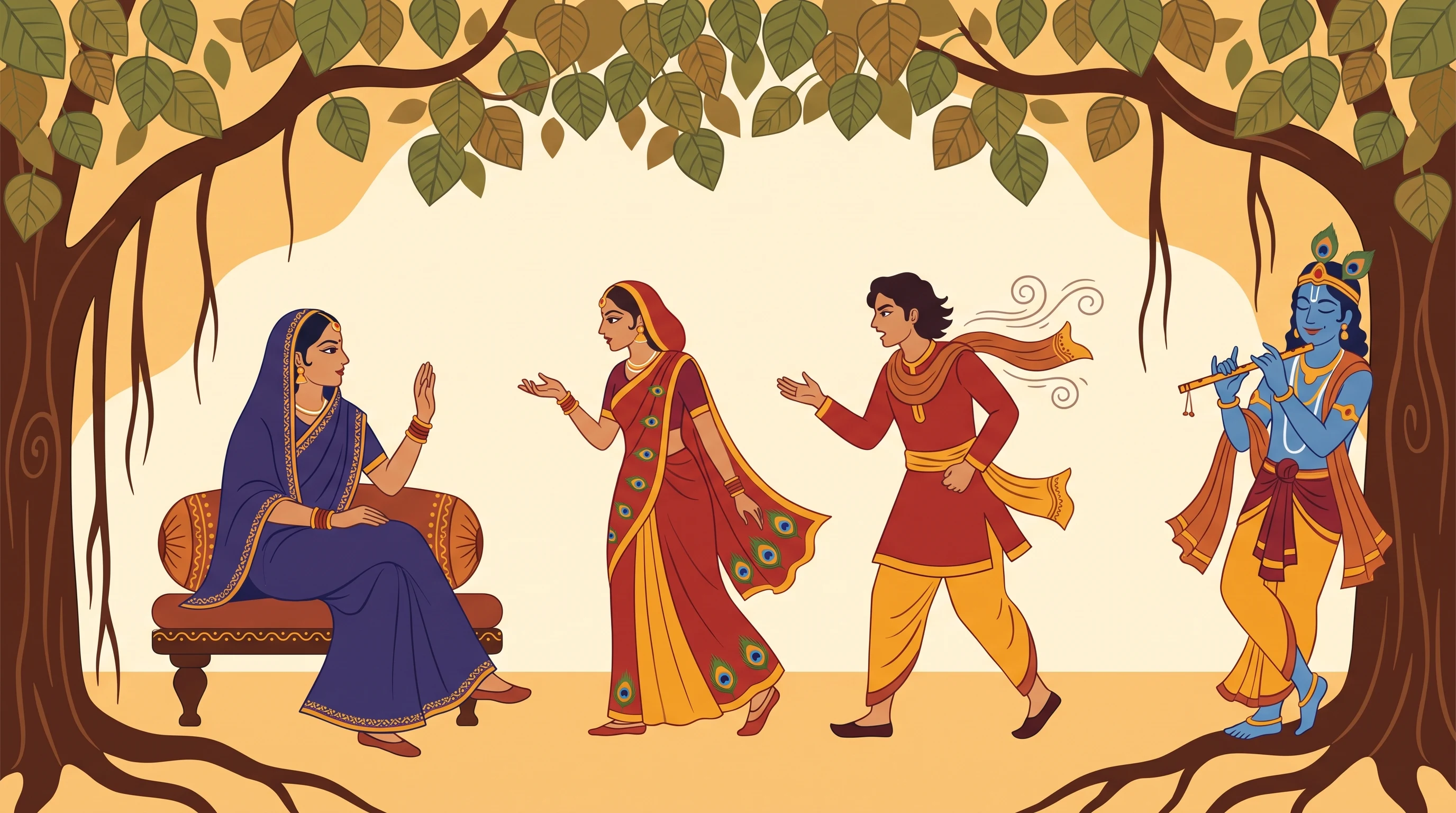
Dayaram's garbi is built on a comic devotional contradiction. The speaker announces a vow: શ્યામ રંગ સમીપે ન જાવું -- I will not go near the color of Shyam. But the vow immediately becomes impossible because the world is full of Shyam's color: musk, kohl, the koel's dark song, the crow's omen, blue garments, black bodice, Yamuna water, emerald, cloud, jamun fruit.
This is not rejection; it is obsession wearing the mask of caution. The speaker pretends that every dark thing may contain deceit -- સર્વમાં કપટ હશે આવું ? -- but the real danger is love. The more she lists what she will avoid, the more completely Krishna's presence spreads through ordinary things. The color becomes a theology of attention.
The last couplet turns the joke inward. Dayaram signs the poem with 'દયા'ના પ્રીતમ, and the speaker admits that the vow was only made by the mouth; the mind says it cannot keep it for even a blink. That is the emotional genius of Dayaram's garbi tradition: surrender arrives through teasing, protest, and failed self-control.
દયારામ
Dayaram was among the last great classical voices of Gujarati bhakti poetry and the master of the Gujarati garbi. Working in the Vaishnav devotional tradition, he gave Krishna-bhakti a distinctly intimate, playful, and musical Gujarati idiom. His poems often speak through the voice of the gopi: teasing, wounded, resistant, and helplessly drawn toward Shyam. The emotional range of his garbis made them living songs, carried by performance as much as by manuscripts.
All poems by Dayaram →