પસંદ કરેલી કૃતિ · selected work
એક રાજા હતો એક રાણી હતી
Ek Raja Hato Ek Rani Hati
There Was a King, There Was a Queen
Barkat Virani 'Befaam' · 20th century
Every Gujarati fairy tale begins the same way: there was a king, there was a queen. Befaam opens with the nursery formula and then quietly turns it on us — that was your story and mine, and it is already in the past tense. Six couplets later the sky itself is a torn blanket and the poet's death is a feast among his enemies.
એક રાજા હતો એક રાણી હતી
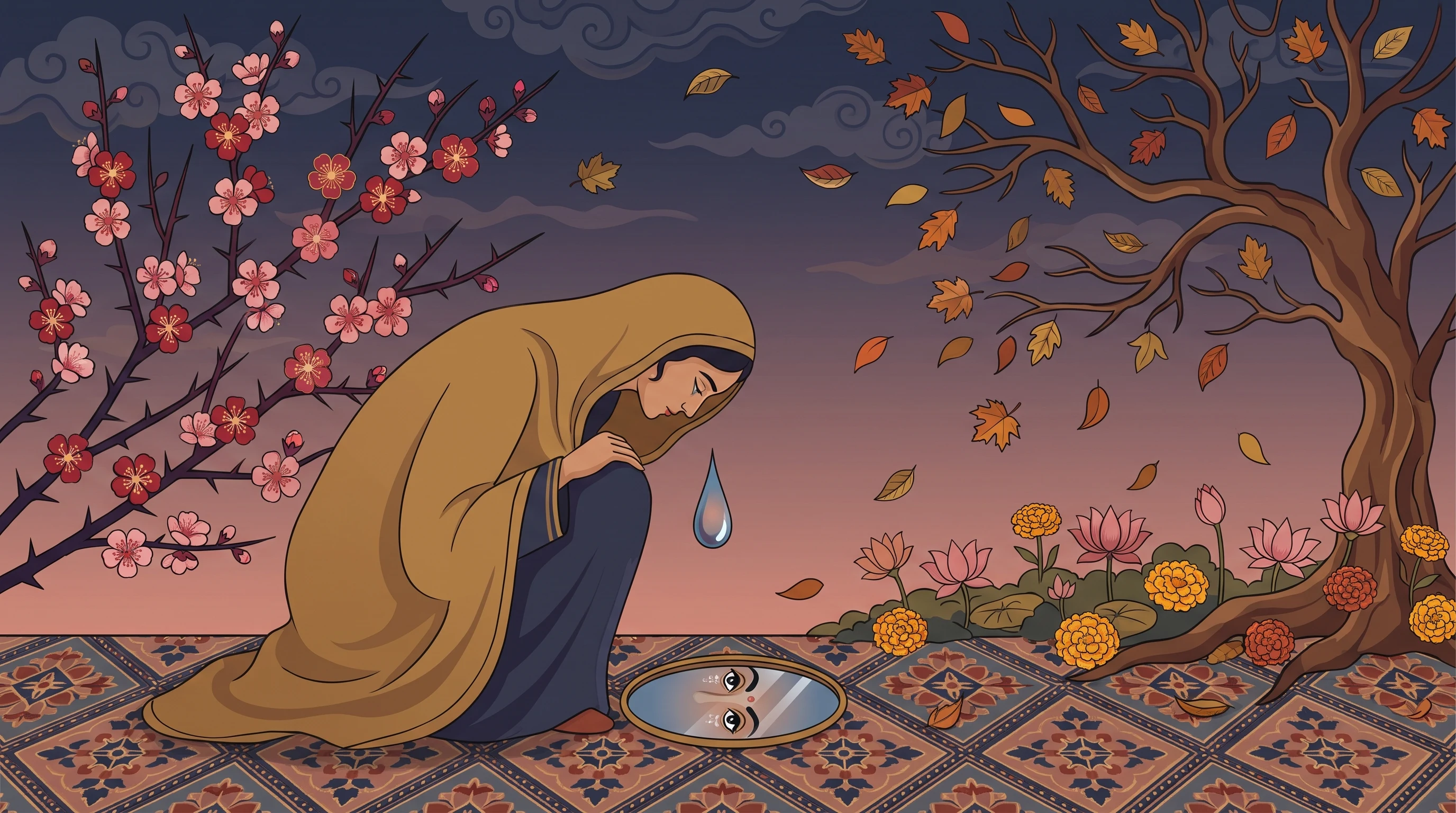
એ તો તારી ને મારી કહાણી હતી
કયાં હું ભુલો પડયો એ ખબર ના પડી
મારી તો વાટ આખી અજાણી હતી
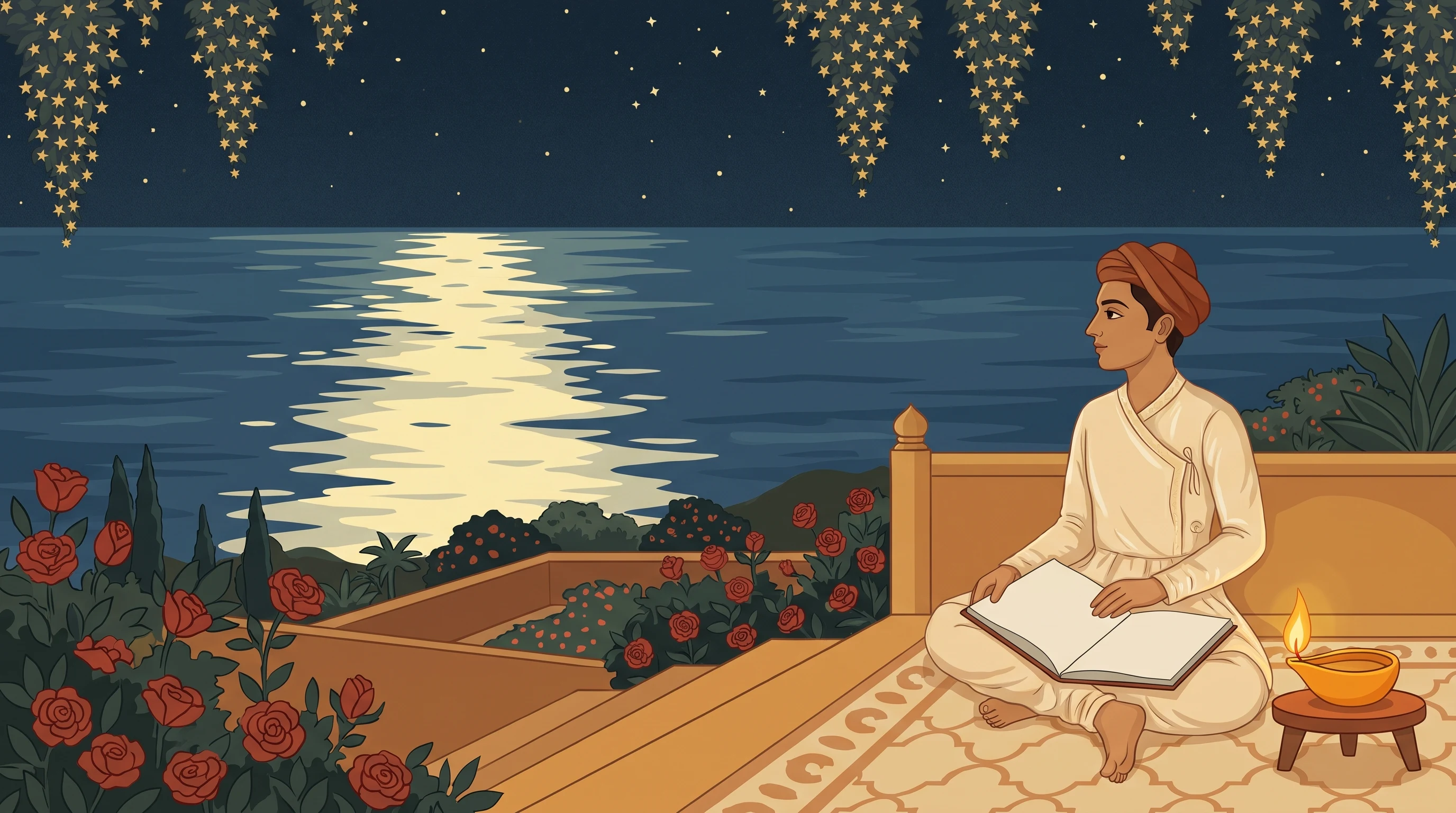
માત્ર એના અનુભવ થયા સૌ નવા
પ્રીત તો એની સાથે પુરાણી હતી
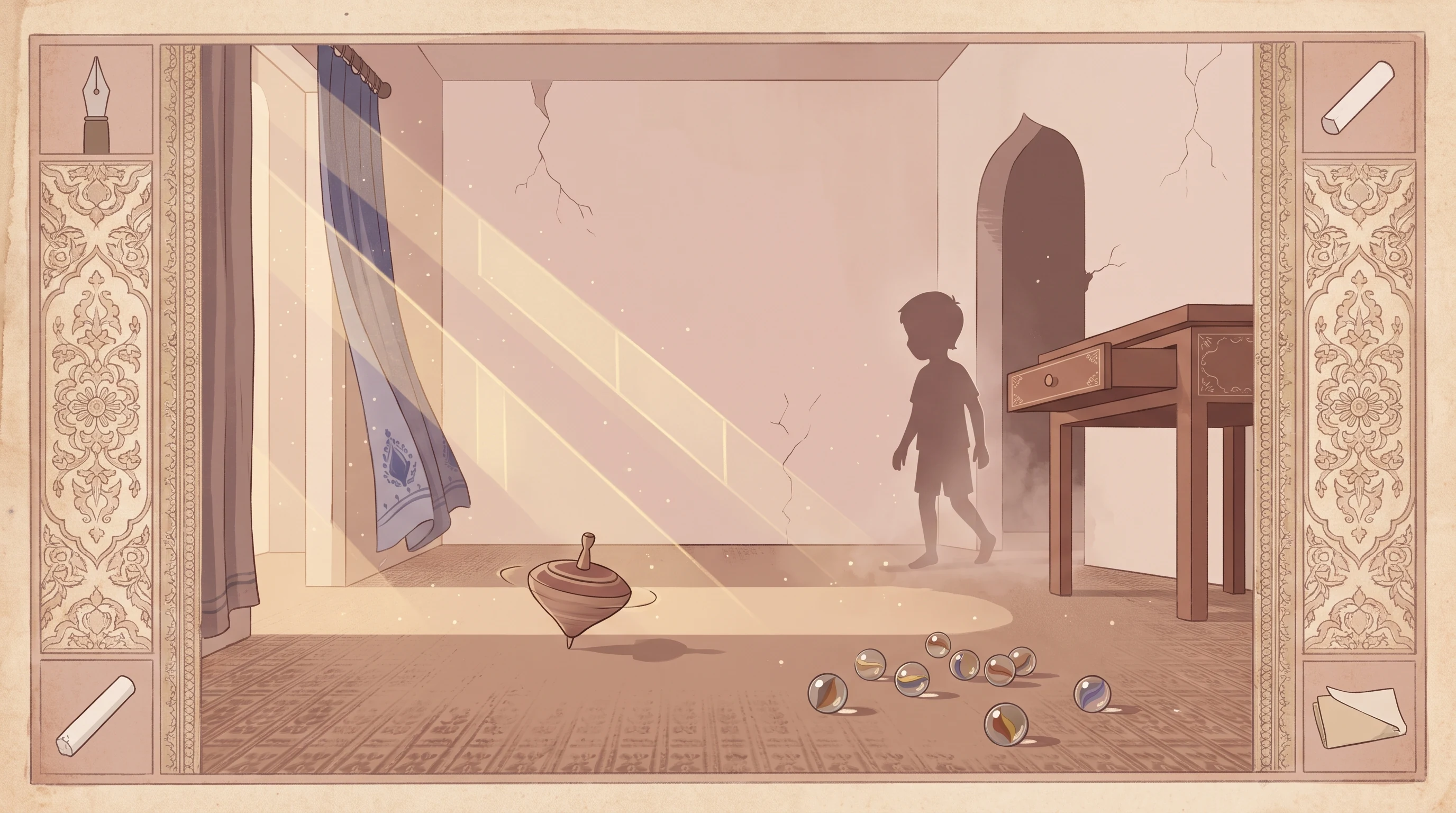
જિંદગી ના મે દિવસો જ ખર્ચ્યા કર્યા
જિંદગીમાં બીજી કયાં કમાણી હતી
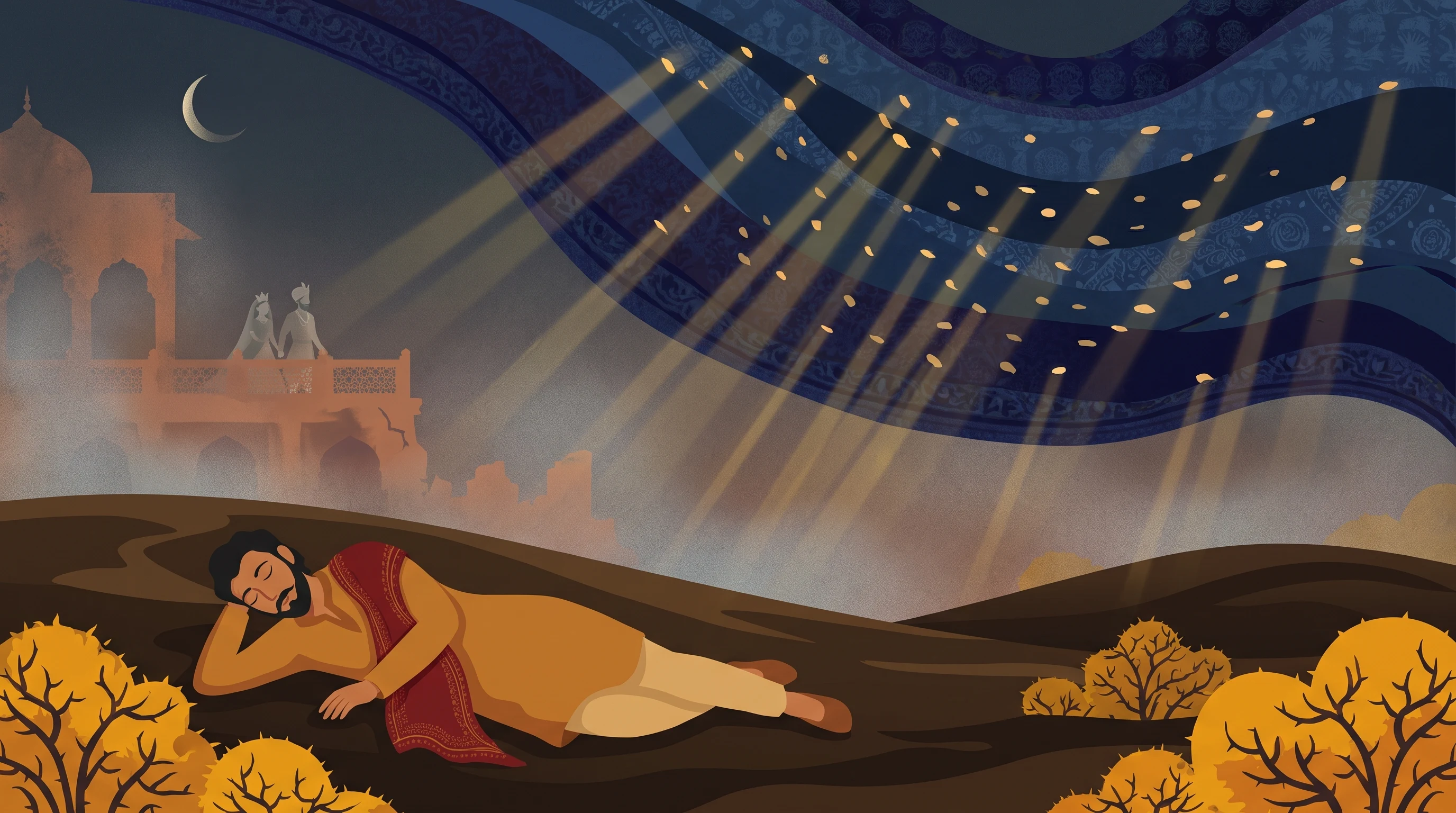
એક ચાદર હતી આભની ઓઢવા
રાતના જોયું તો એ ય કાણી હતી
ભવ્ય કેવું હતુ મોત 'બેફામ'નું
તે દિ'ને દુશ્મનોમાં ઉજાણી હતી.
'એક રાજા હતો, એક રાણી હતી' is not originally Befaam's line — it belongs to every Gujarati childhood, the ritual opening of a grandmother's bedtime story. The ghazal's whole devastation is in what he does with it in the second line: 'એ તો તારી ને મારી કહાણી હતી' — that was your story and mine. The lovers are promoted to king and queen and buried in the same breath, because the fairy-tale formula only ever describes people who are gone. The radif હતી, "was," then holds every couplet that follows in that same completed past: the poem is not a love story but the telling of one afterwards, from the far side of its ending.
The middle couplets walk back through the life the opening has already closed. The speaker lost his way without ever noticing the moment it happened — the whole road, વાટ, was unfamiliar from the start. Love itself is the one old thing in a life of new bewilderments: only the experiences were new, the affection was ancient, પુરાણી. Then the ghazal's bleakest accounting, delivered with a shrug: he only ever spent his days, for what other income did life offer? The most celebrated sher makes destitution cosmic. The speaker owns a single blanket — the sky — and when night falls and he actually looks at it, he finds that even this is કાણી, riddled with holes. In one stroke the stars stop being ornaments and become the tears in a poor man's only cover.
The maqta performs Befaam's signature turn toward his own death, but with unusual bitterness worn as grandeur: how magnificent was Befaam's death — that day, તે દિ', there was a feast, ઉજાણી, among his enemies. Even his dying is narrated in the fairy-tale past, the last event of the story the first line promised. Ashit Desai's musical setting, sung in his own voice, gave the ghazal its wide afterlife, and its opening couplet has become one of those lines Gujarati listeners can complete before the singer does.
બરકત વિરાણી 'બેફામ'
Barkatali Ghulamhussain Virani, who wrote as 'Befaam' — "the unrestrained" — was born in the village of Ghanghali near Sihor in Bhavnagar district and composed his first ghazal at fourteen. He abandoned his matriculation in 1942 to join the Quit India movement, then moved to Mumbai in 1945 at the urging of the ghazal master Shayda, whose daughter Ruqaiya he later married. He spent his working life at All India Radio while writing lyrics for Gujarati films such as *Akhand Saubhagyavati* (1963) and *Kulvadhu* (1977), and his ghazal collections — *Mansar* (1960), *Ghata* (1970), *Pyas* (1980) and *Parab* — made him one of the poets who carried the Gujarati ghazal from the mushaira into the concert hall. His signature was the closing couplet: having once ended a ghazal on his own death, he made the habit a discipline, and generations of listeners came to wait for the maqta where Befaam would meet his grave with a straight face and a wry smile. He died in Mumbai on 2 January 1994.
All poems by Barkat Virani 'Befaam' →