પસંદ કરેલી કૃતિ · selected work
જે આંસુ ખોઉં છું
Je Aansu Khou Chhu
The Tears I Lose
Barkat Virani 'Befaam' · c. 1973
A love poem written like an account book: the poet tallies his lost tears and names the only repayment he will accept — a little dampness in the beloved's eyes. Befaam's ghazal moves from bargaining to blindness to fate's backwards seasons, and ends where his ghazals always end: at his own grave, finally a fixed address.
જે આંસુ ખોઉં છું એનો મને અવેજ મળે,
કે હું રડું તો તમારાં નયનમાં ભેજ મળે.
તમારી પ્રીત મળે, ને ફક્ત મને જ મળે;
પછી ભલેને વધારે નહીં, તો સ્હેજ મળે.
મળે છે સ્નેહના સાથી ઘણાય દુનિયામાં,
હૃદયને હઠ છે – પ્રથમ જે મળ્યાં'તાં એ જ મળે.
કહે છે એને બધા આંધળો મહોબ્બતમાં,
તમારા રૂપનું જેનાં નયનને તેજ મળે.
નસીબ એ જ કે વાગે વસંતમાં કાંટા,
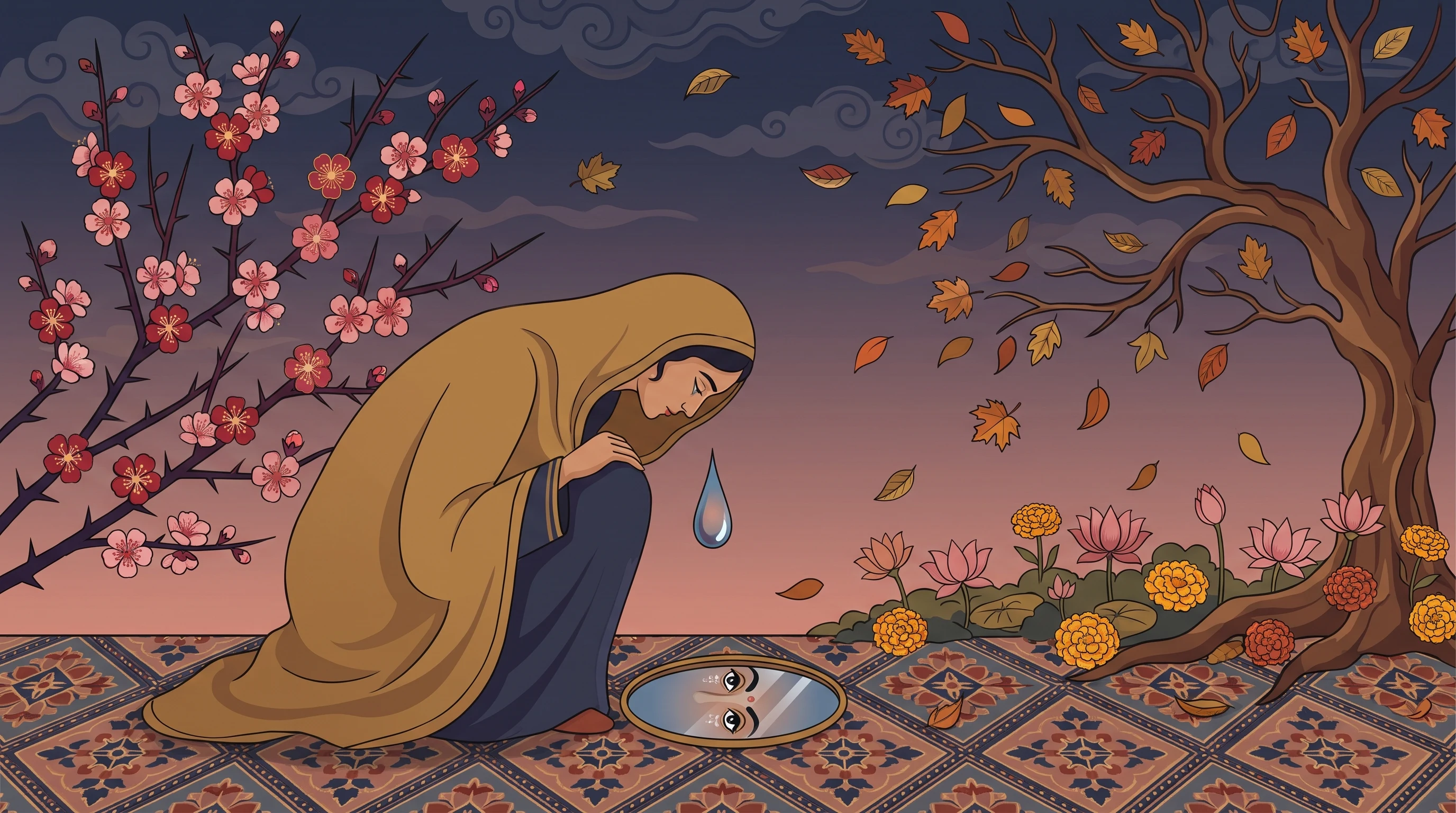
ને પાનખર હો છતાંયે ફૂલોની સેજ મળે.
જો મળવું હોય તો 'બેફામ'ની કબર પર જા,
હવે એ રખડુ નથી કે તને બધે જ મળે.
The ghazal announces its method in its first word of consequence: અવેજ, recompense, the term a trader would use for value received in exchange. Befaam files his tears as a loss and names the settlement he wants — that when he weeps, some answering moisture should appear in the beloved's eyes, 'તમારાં નયનમાં ભેજ મળે'. It is an audacious way to open a love poem, and it sets the tone for a ghazal in which enormous feeling keeps arriving dressed in the most modest of demands. The second sher asks not for more love but for sole possession of it: let it be slight, સ્હેજ, so long as it is his alone. The third gives the heart's economics away entirely — companions in affection are everywhere, but the heart is stubborn, 'હૃદયને હઠ છે', and will accept only the ones it met first.
The later couplets widen from bargaining to fate. The man the world calls blind with love is quietly corrected: his eyes are not dark, they are lit — it is the beloved's beauty, તેજ, that has flooded them. Then comes the ghazal's most quotable paradox, destiny rendered as backwards botany: to be pricked by thorns in spring and offered a bed of flowers in the autumn, everything arriving in the wrong season. The poem appeared in print in the Mumbai poetry monthly Kavita in 1973, in the years when Befaam's ghazals were moving out of the mushaira and into the repertoire of Gujarati ghazal singers.
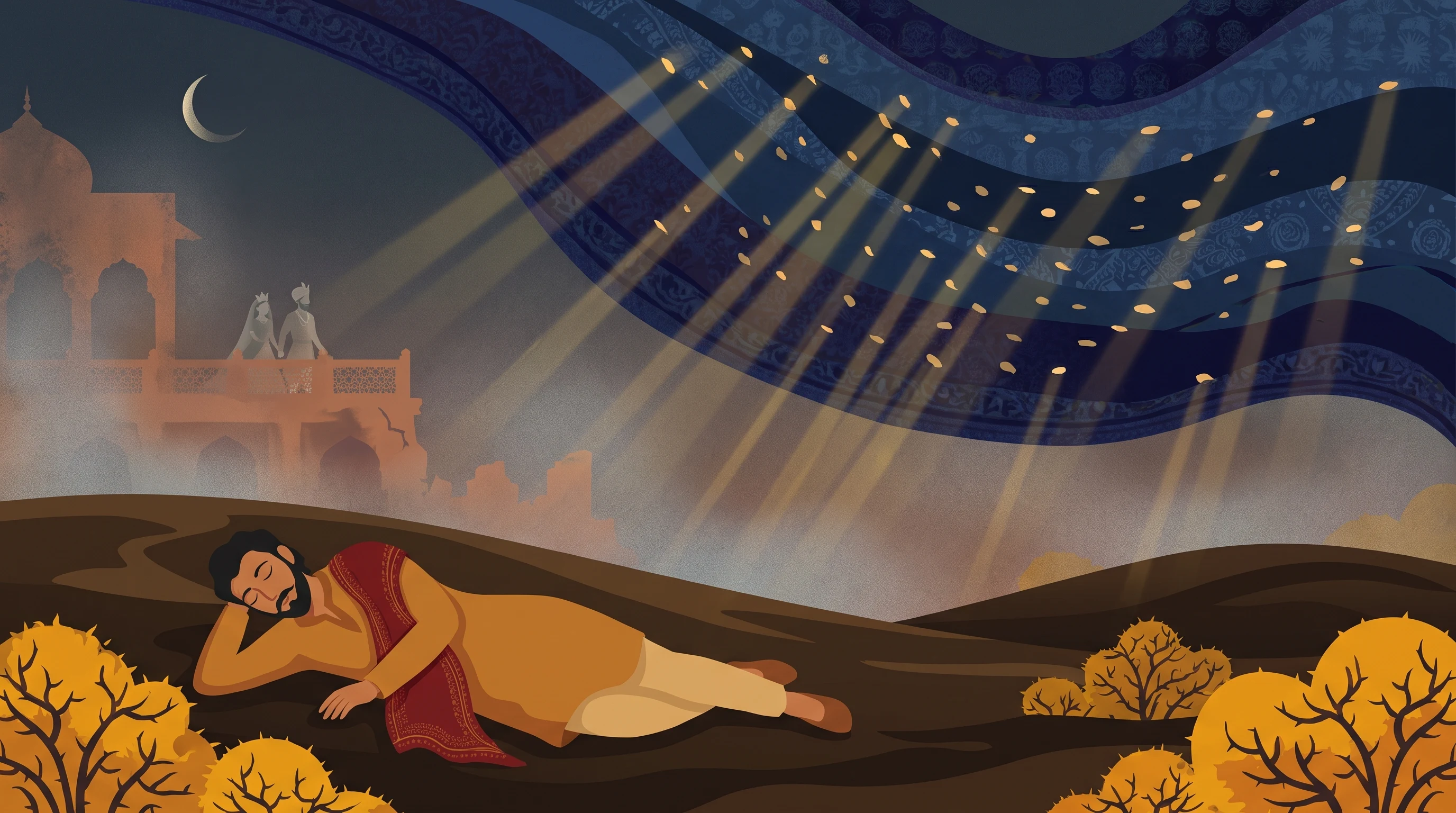
The maqta is Befaam performing his most famous ritual. Having ended one early ghazal on his own death, he resolved to face it in the closing couplet of nearly every ghazal he wrote, and audiences learned to lean forward for it. Here the ritual arrives with a shrug of black comedy: if you want to meet Befaam, go to his grave — he is no longer the vagrant, રખડુ, you might run into anywhere. The wanderer's death is recast as a courtesy to his visitors: at last, an address.
બરકત વિરાણી 'બેફામ'
Barkatali Ghulamhussain Virani, who wrote as 'Befaam' — "the unrestrained" — was born in the village of Ghanghali near Sihor in Bhavnagar district and composed his first ghazal at fourteen. He abandoned his matriculation in 1942 to join the Quit India movement, then moved to Mumbai in 1945 at the urging of the ghazal master Shayda, whose daughter Ruqaiya he later married. He spent his working life at All India Radio while writing lyrics for Gujarati films such as *Akhand Saubhagyavati* (1963) and *Kulvadhu* (1977), and his ghazal collections — *Mansar* (1960), *Ghata* (1970), *Pyas* (1980) and *Parab* — made him one of the poets who carried the Gujarati ghazal from the mushaira into the concert hall. His signature was the closing couplet: having once ended a ghazal on his own death, he made the habit a discipline, and generations of listeners came to wait for the maqta where Befaam would meet his grave with a straight face and a wry smile. He died in Mumbai on 2 January 1994.
All poems by Barkat Virani 'Befaam' →