પસંદ કરેલી કૃતિ · selected work
ગુજારે જે શિરે તારે
Gujare Je Shire Tare
Whatever He Sends Upon Your Head
Balashankar Kantharia, Klant Kavi · c. 1885
The ghazal that became a Gujarati proverb: whatever the Lord of the world sends upon your head, bear it lightly. Fifteen couplets of stoic, smiling counsel from the founder of the Gujarati ghazal — keep no company of good or bad, sip only the wine of God's love, and string your poems into a garland for His neck.
ગુજારે જે શિરે તારે જગતનો નાથ તે સ્હેજે,
ગણ્યું જે પ્યારું પ્યારાએ અતિ પ્યારું ગણી લેજે.
દુનિયાની જૂઠી વાણી વિષે જો દુઃખ વાસે છે,
જરાયે અંતરે આનંદ ના ઓછો થવા દેજે.
કચેરી માંહી કાજીનો નથી હિસાબ કોડીનો,
જગતકાજી થઈને તું વહોરી ના પીડા લેજે.
જગતના કાચના યંત્રે ખરી વસ્તુ નહીં ભાસે,
ન સારા કે નઠારાની જરાયે સંગતે રહેજે.
રહેજે શાંતિ સંતોષે સદાયે નિર્મળે ચિત્તે,
દિલે જે દુઃખ કે આનંદ કોઈને નહીં ક્હેજે.
વસે છે ક્રોધ વૈરી ચિત્તમાં તેને તજી દેજે,
ઘડી જાયે ભલાઈની મહાલક્ષ્મી ગણી લેજે.
રહે ઉન્મત્ત સ્વાનંદે ખરું એ સુખ માની લે,
પીએ તો શ્રી પ્રભુના પ્રેમનો પ્યાલો ભરી પીજે.
કટુ વાણી સુણે જો કોઈની, વાણી મીઠી ક્હેજે,
પરાઈ મૂર્ખતા કાજે મુખે ના ઝેર તું લેજે.
અરે પ્રારબ્ધ તો ઘેલું રહે છે દૂર માગે તો,
ન માગ્યે દોડતું આવે ન વિશ્વાસે કદી રહેજે.
અહો શું પ્રેમમાં રાચે? નહીં ત્યાં સત્ય પામે તું?
અરે તું બેવફાઈથી ચડે નિંદા તણે નેજે.
લહે છે સત્ય જે સંસાર, તેનાથી પરો રહેજે,
અરે એ કીમિયાની જો મઝા છે તે પછી ક્હેજે.
વફાઈ તો નથી આખી દુનિયામાં જરા દીઠી,
વફાદારી બતા'વા ત્યાં નહીં કોઈ પળે જાજે.
રહી નિર્મોહી શાંતિથી રહે એ સુખ મોટું છે,
જગત બાજીગરીનાં તું બધાં છલબલ જવા દેજે.
પ્રભુના નામનાં પુષ્પો પરોવી કાવ્યમાલા તું,
પ્રભુની પ્યારી ગ્રીવામાં પહેરાવી પ્રીતે દેજે.
કવિ રાજા થયો શી છે પછી પીડા તને કાંઈ?
નિજાનંદે હંમેશા બાલ મસ્તીમાં મઝા લેજે.
Before Balashankar Kantharia, the ghazal did not speak Gujarati. A Nadiad Brahmin who read Hafiz the way others read scripture, he imported the Persian form whole — the paired lines, the returning rhyme, the wine and the beloved — and naturalized it so completely that his best-known ghazal turned into a proverb. ગુજારે જે શિરે તારે જગતનો નાથ તે સ્હેજે — whatever the Lord of the world sends over your head, bear it lightly — is quoted at sickbeds and funerals by Gujaratis who have never heard the poet's name. The second line completes the theology in domestic terms: what the Beloved has counted as dear, you count as dearest. Acceptance, in this poem, is not resignation; it is agreeing with God's arithmetic.
What follows is a string of couplets in the imperative — લેજે, દેજે, રહેજે, કહેજે — a wisdom literature disguised as song. Don't let the world's false talk subtract one drop from your inner joy. In the court of the world the judge's own account is worth a cowrie — so don't volunteer for the job of judging it: જગતકાજી બનીને તું વહોરી ના પીડા લેજે. Through the world's machine of glass, જગતના કાચના યંત્રે, the true thing never shows — a startlingly modern image for distorted perception, a century before anyone spoke of media. Keep the company of neither the good nor the wicked; tell no one your grief or your joy; treat an hour spent in kindness as the great Lakshmi of your account books. When the couplet about drink finally arrives, Hafiz's tavern has become a temple without losing its intoxication: if you must drink, પીએ તો શ્રી પ્રભુના પ્રેમનો પ્યાલો ભરી પીજે — drink a brimming cup of God's love. And fate? પ્રારબ્ધ તો ઘેલું — destiny is a fool: chase it and it keeps its distance, ignore it and it comes running; either way, never trust it. Then the ghazal walks into its darkest and most Persian territory: love itself is interrogated — do you revel in it? is there truth to be had there? — and answered with a shrug worthy of Shiraz: વફાઈ તો નથી આખી દુનિયામાં જરા દીઠી — I have not seen a scrap of faithfulness in the entire world, so don't linger anywhere trying to prove yours. Stand apart from what the world calls truth, says the poet, and only then speak of the pleasure of that alchemy; remain unattached, and let all the sleights of the world's conjuring go by.
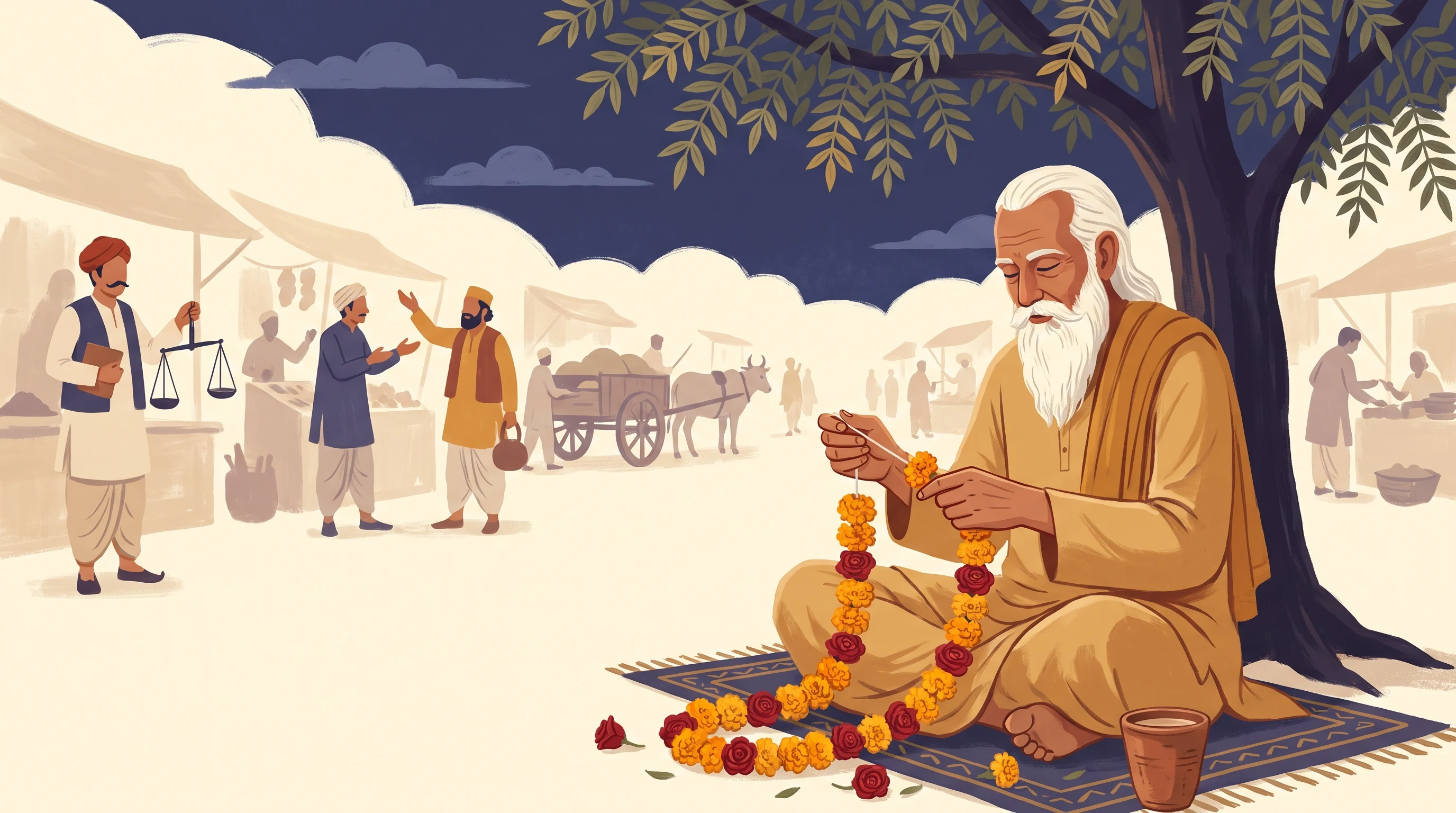
The closing movement is the poet's own job description: string the flowers of God's name into a garland of verse and place it, with love, around the Beloved's neck — poetry as worship, the કાવ્યમાળા as a temple offering. Then the maqta performs the wittiest signature in early Gujarati ghazal: નિજાનંદે હંમેશા બાલ મસ્તીમાં મઝા લેજે folds three of his pen names — Nijanand, Bal, Mast — into one line of self-delighting advice. You have become a king of poets; what do you care for anything now? The whole tradition that followed took the counsel literally. Kalapi's આપની યાદી, written a decade later, walks the road this ghazal paved — and Gujarati has never stopped walking it.
બાલાશંકર કંથારિયા
Balashankar Ullasram Kantharia is the founder of the Gujarati ghazal — the poet who carried the Persian forms of Hafiz into Gujarati and made them sound native. Born in Nadiad in 1858, he edited literary magazines, translated Sanskrit classics like the *Mrichchhakatika* and the Sufi ghazals of Hafez, and wrote under a fan of pen names — *Klant Kavi*, *Bal*, *Nijanand*, *Mast* — as if one self were too small for his moods. His long poem *ક્લાન્ત કવિ* gave him the sobriquet he is remembered by, and his *ગુજારે જે શિરે તારે* gave the language a proverb. A Shakta devotee with a Sufi's temperament, equally at home in Sanskrit metres and Persian radif, he died of plague in Vadodara at thirty-nine — but the generation he unlocked, Kalapi above all, made the ghazal one of Gujarati's permanent voices.
All poems by Balashankar Kantharia →