પસંદ કરેલી કૃતિ · selected work
જૂનું પિયેર ઘર
Junu Piyer Ghar
The Old Childhood Home
Balwantray Kalyanray Thakore, B. K. Thakore · c. 1920
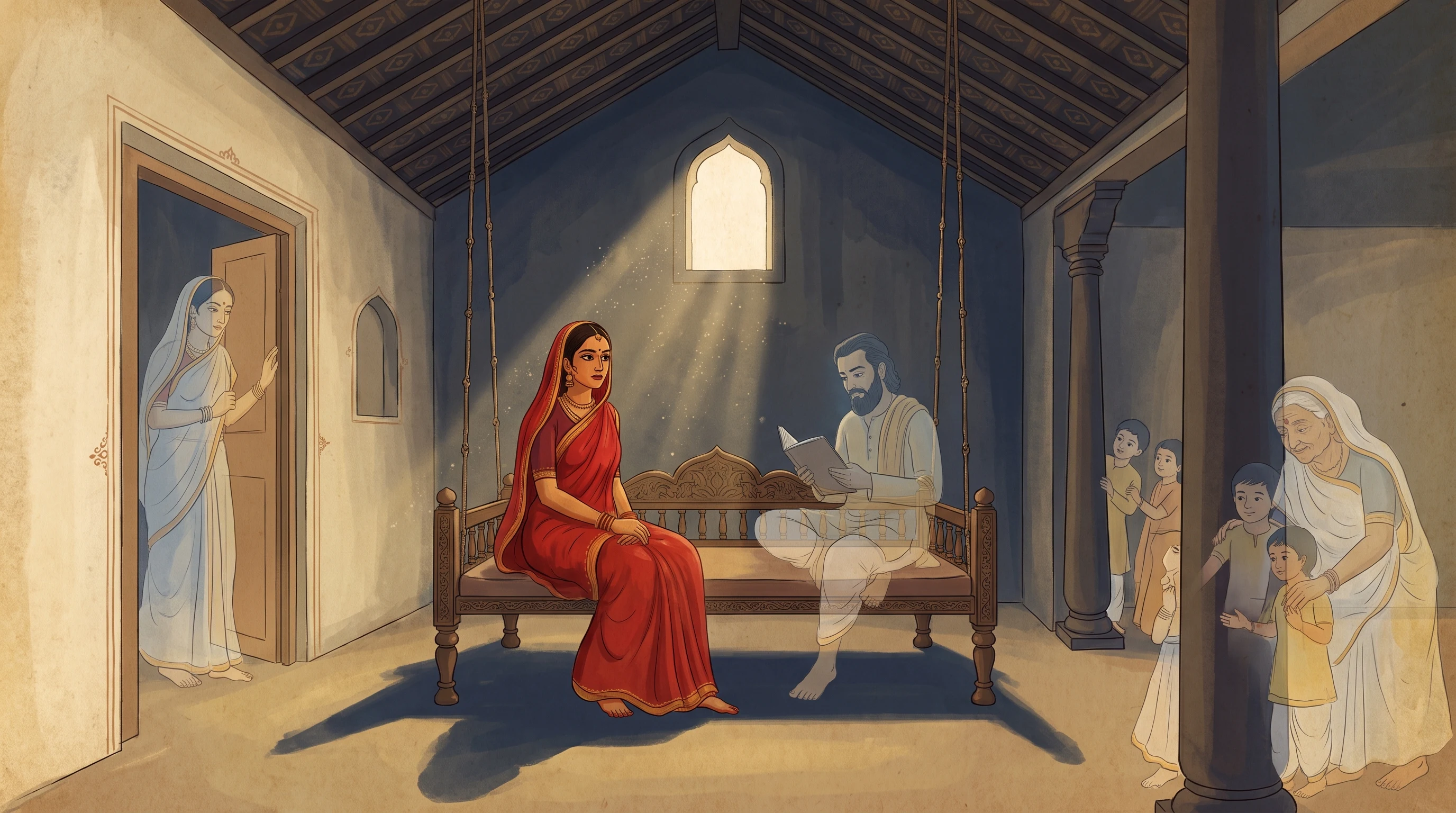
A married woman sits on the swing-cot of her parents' old house, and every room begins to replay — mother's smile, father's grave sweetness, the grandmother's stories, playmates hiding like grown-up fairies. Thakore's Mandakranta sonnet watches a whole life assemble from one seat, then bows out in prayer.
બેઠી ખાટે ફરિવળિ બધે મેડિયો ઓરડામાં,
દીઠાં હેતે સ્મૃતિપડ બધાં ઊકલ્યાં આપ રૂડાં,
માડી મીઠી, સ્મિત મધુર ને ભવ્ય મૂર્તી પિતાજી,
દાદી વાંકી રસિક કરતી ગોષ્ઠિથી બાળ રાજી;
સૂનાં સ્થાનો સજિવન થયાં, સાંભળૂં કંઠ જૂના,
આચારો કૈં વિવિધ ઢબના નેત્ર ઠારે સહૂનાં :
ભાંડૂ ન્હાનાં, શિશુસમયનાં ખટમિઠાં સોબતીઓ
જ્યાં ત્યાં આવી વય બદલિ સંતાય જાણે પરીઓ.
તોયે એ સૌ સ્મૃતિછબિ વિશે વ્યાપિ લે ચક્ષુ ઘેરી,
ન્હાની મોટી બહુરુપિ થતી એક મૂર્તી અનેરી :
ચૉરીથી આ દિવસ સુધિમાં એવિ જામી કલેજે
કે કૌમારે પણ મુજ સરે બાળવેશે સહેજે!
બેસી ખાટે પિયરઘરમાં ઝિંદગી જોઈ સારી
ત્યારે જાણી અનહદ ગતિ, નાથ મારા, ત્હમારી.
Balwantray Thakore was modern Gujarati poetry's great disciplinarian — the man who imported the sonnet, demanded વિચારપ્રધાન કવિતા, thought-driven poetry, over easy song, and wrote in an idiosyncratic clipped orthography (ફરિવળિ, બદલિ, એવિ — preserved here) that was itself a kind of argument. His reputation is granite; this sonnet is the tenderness the granite protected. Its speaker is a married woman back in her પિયર, her parents' home, and the whole poem happens from a single seat: she settles onto the ખાટ, the old swing-cot, having wandered the upper rooms — and the house begins to play itself back. The metre doing this work is મંદાક્રાન્તા, "the slow ascender," classical poetry's cadence of longing since the Meghaduta, its long unhurried line perfectly gaited for memory climbing stair by stair.
The octave fills the empty house. Layer on layer of સ્મૃતિપડ — memory-films — unspool of their own accord: sweet mother; father a ભવ્ય મૂર્તી, a grand and gentle presence; the bent grandmother whose relishing stories delighted the children; empty places coming alive, old voices audible again, the little siblings and ખટમિઠાં — sweet-and-sour — playmates of childhood. And then the sonnet's most delicate turn: those companions, met now જ્યાં ત્યાં, here and there in grown life, have changed with age and seem to hide from her — સંતાય જાણે પરીઓ — like fairies who cannot be caught in daylight. The sestet gathers all these faces into one: across every remembered image spreads a single strange, many-formed presence, small and large at once, settled in her chest from her wedding day to this one — so deeply that even her girlhood seems, in retrospect, to have been spent easily in its child-disguise.
The final couplet names it. Having seen, from one swing-cot in one old house, her entire life — ઝિંદગી જોઈ સારી — she knows at last the અનહદ ગતિ, the boundless, unstruck motion, નાથ મારા, ત્હમારી: my Lord, yours. The sonnet turns out to have been a devotional poem wearing a domestic sari; the presence hiding in every memory was God moving through a life disguised as its ordinary loves. It makes an exact pair with Thakore's other poem in this archive, ભણકારા — there the infinite arrives as sound-echoes on a riverbank at dusk; here it is discovered sitting quietly in the childhood home, where it had been all along.
બળવંતરાય કલ્યાણરાય ઠાકોર
Balwantray Kalyanray Thakore was one of the central makers of modern Gujarati poetry and criticism. He helped introduce disciplined modern forms, especially the sonnet, into Gujarati while arguing for a more exacting literary craft. His poetry often turns on atmosphere, inwardness, and music rather than public declaration. “Bhanakara” is remembered as an early Gujarati sonnet of unusual formal confidence, placing Thakore at the bridge between nineteenth-century reformist verse and twentieth-century modern lyric.
All poems by Balwantray Kalyanray Thakore →